
The Enigmatic Power of Charm: A Deep Dive into TTRPG Influence
Charm in tabletop RPGs transcends a simple spell, acting as a complex mechanical and narrative multitool. We dissect how "Charm" functions, impacts player agency, and shapes our imagined worlds at the table.
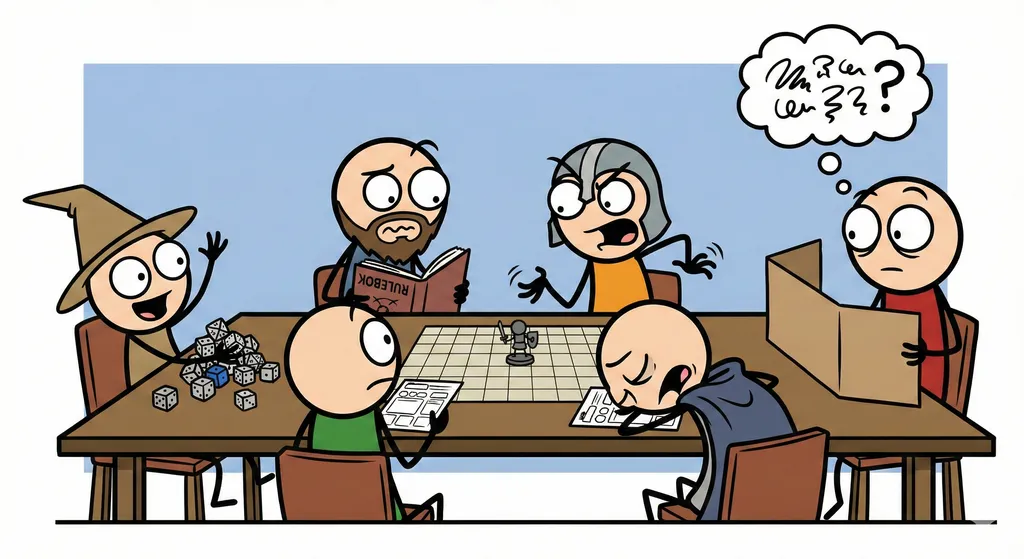
The recent #RPGaDAY2026 prompt from The Kind GM, focusing on "Charm," ignited a discussion far deeper than its simple dictionary definition might imply. In the intricate landscape of tabletop role-playing games, "charm" is not merely a single spell or a character trait; it is a multifaceted mechanical and narrative tool that shapes player interaction, GM challenge, and the very fabric of our imagined worlds. As veteran players, we know that true mastery lies not just in understanding the rules, but in appreciating their nuanced impact on the lived experience of the game.
At its core, "charm" in TTRPGs represents influence—the ability to sway the disposition or actions of another without resorting to overt coercion. Consider Dungeons & Dragons 5th Edition's iconic *Charm Person* spell. Its effect is deceptively simple: "You attempt to charm a humanoid you can see within range. It must make a Wisdom saving throw, and does so with advantage if you or your companions are fighting it. If it fails the saving throw, it is charmed by you until the spell ends or until you or your companions do anything harmful to it." The crucial detail, often overlooked by newer Game Masters, is the next line: "When the spell ends, the creature knows it was charmed by you." Furthermore, a charmed creature regards you as a "friendly acquaintance," not a puppet. This isn't mind control; it's a profound shift in attitude. The target won't endanger itself for you, nor will it act against its fundamental nature. It will, however, be inclined to listen, to assist within reason, and to view your suggestions favorably.
This distinction is vital. In systems like *Pathfinder 2e*, social influence is often tied to skill checks against a target's Will or Composure, or even specific social combat subsystems. *Vampire: The Masquerade* features Disciplines like Presence and Dominate, which offer varying degrees of emotional manipulation versus outright mental command, each with distinct mechanical costs and limitations. Even in games like *Cyberpunk RED*, a high Cool stat and savvy Streetwise checks can achieve a form of "charm" through sheer charisma and reputation. The common thread is that these mechanics represent a challenge for both player and GM: how far can influence truly extend before it becomes unacceptable control, or before the target’s natural instincts reclaim them? It demands GMs understand character motivations beyond simple stat blocks. For deeper insight into understanding social mechanics, look no further than its optional rules and guidance.
The thematic implications of charm are equally compelling. Why do certain creatures possess innate charm abilities? A succubus charms to lure victims, a fey creature to play mischievous games, a vampire to secure loyal thralls. These abilities aren't just arbitrary powers; they are intrinsic to their nature and their role within the ecosystem of the world. Charm, therefore, isn't just a spell slot expended; it's a window into the lore of a creature or culture. How do societies within your campaign world react to the potential for magical influence? Are there wards against it? Legal precedents? Social stigmas attached to those known for its use? The existence of charm magic can profoundly shape political intrigue, criminal underworlds, and even romantic entanglements, adding layers of complexity to your worldbuilding.
Ultimately, the verdict on charm's utility at the table hinges entirely on its interpretation. When handled with nuance, charm mechanics foster incredible narrative depth. Players are encouraged to think beyond combat, using their words and influence to navigate complex social scenarios, bypass obstacles, or even forge unlikely alliances. It pushes GMs to improvise, to truly embody the NPCs they portray, and to consider their reactions not as binary success/failure outcomes, but as shifts in disposition that open new narrative avenues. A truly charmed guard might not let you into the vault, but he might "accidentally" leave a window unlocked, or tell you about a secret passage he's heard rumors about.
Conversely, when charm is misinterpreted as mind control, it strips agency from NPCs, flattens social encounters into simple roll-and-win propositions, and ultimately diminishes the game. The challenge for GMs is to resist the urge to simplify, and instead, embrace the ambiguity and potential for dramatic irony that charm inherently offers. It’s a mechanic that demands sophistication from everyone at the table, transforming simple enchantment into a powerful, intricate tool for storytelling.
Top Pick: Xanathar's Guide to Everything
For its expanded rules and guidance on social interactions and spell interpretations, particularly around tricky spell effects.
Check Price on Amazon →Related Stories
D&D 2027: Beyond One D&D – Mechanics for the Next Era
Wizards of the Coast unveiled their D&D Vision for 2027 at GenCon, hinting at profound shifts. We dissect the potential mechanical and lore implications for GMs
Mutants of the Vast Swamp: A Cosmic Scar on Cormyr's Wilds
Travis Legge, JM Woiak, and Heather Shinn's Mutants of the Vast Swamp offers a compelling open-world 5th Edition adventure. We dissect how this starfall event w
The Hangman's Due: A Deep Dive into 5e Horror's Gritty Edge
Ben Forde's 'The Hangman's Due' on the DM's Guild offers a potent horror one-shot for 4th level D&D 5e parties, promising psychological dread over mere monster