
The Infinite Recursion: Cloning Commanders in Magic
Commander, the format championing singleton diversity, holds a fascinating paradox: the strategic power of copying your most vital card, your commander. This deep dive unpacks the intricate rules and compelling gameplay implications of creature replication.
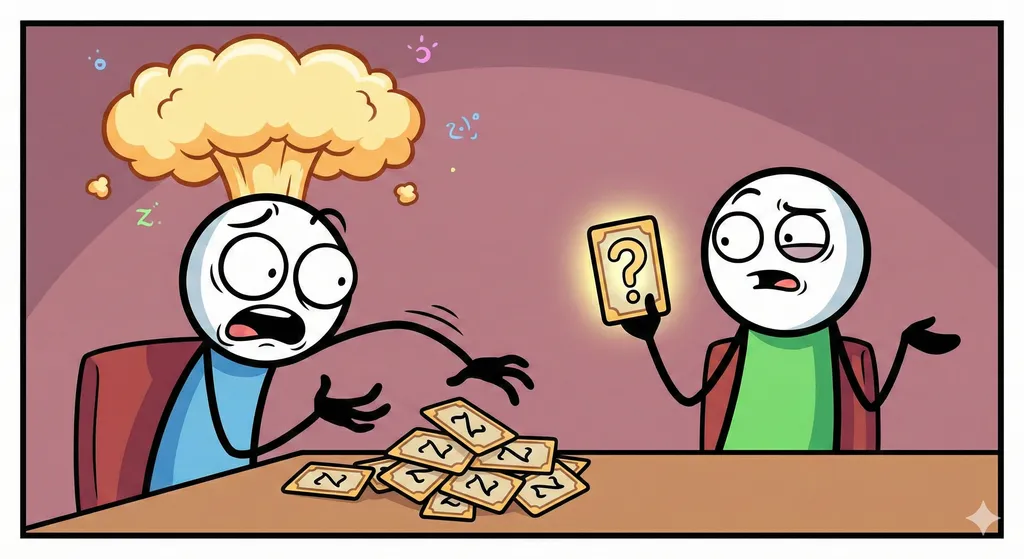
The singleton ethos of Magic: The Gathering’s Commander format is its bedrock, a design principle that pushes players toward creative deckbuilding and diverse card choices. Yet, within this framework, a potent strategy emerges that seemingly defies the very spirit of uniqueness: the cloning of your commander. This isn't just a quirky interaction; it’s a profound mechanical subversion that offers unparalleled strategic depth and demands a mastery of the game’s most intricate rules.
At its core, a ‘Clone’ effect, named after the iconic Alpha card, allows a creature to enter the battlefield as a copy of another creature. Historically a blue staple, these effects range from simple reproductions to sophisticated shapeshifters that gain additional abilities or circumvent fundamental game rules. The most basic clones, like Phantasmal Image, often come with a mana discount or a drawback, while more advanced versions, such as Sakashima of a Thousand Faces, offer significant upsides.
The real crunch, however, lies in how these effects interact with legendary creatures, specifically your commander. The ‘Legend Rule’ dictates that if two or more legendary permanents with the same name are on the battlefield under the same player’s control, that player chooses one and puts the rest into their graveyard. This rule is the primary barrier to simply having multiple copies of your commander. This is where cards like Sakashima of a Thousand Faces become format-defining. Sakashima specifically states, “You may have Sakashima of a Thousand Faces enter the battlefield as a copy of any creature you control, except it’s legendary in addition to its other types and its name is Sakashima of a Thousand Faces.” The crucial part? “You may have it enter the battlefield as a copy of any creature you control, except it’s legendary in addition to its other types *and its name is Sakashima of a Thousand Faces*.” This distinction means that while it copies your commander's abilities, it *doesn't* share its name, allowing both to coexist under your control. Other clones, like Spark Double, achieve a similar effect by entering as a non-legendary copy.
It's vital to remember that while a clone copies your commander, the clone itself is *not* your commander. It won't return to the command zone upon death or exile, nor does it count toward the 'commander tax' for recasting your original commander. However, it *does* inherit all the printed abilities, power, and toughness of the copied creature. This means if your commander has a powerful 'enters the battlefield' effect (ETB), a potent activated ability, or a game-warping static ability, cloning it allows you to leverage that power repeatedly, often at a reduced cost compared to recasting the original commander from the command zone. Consider the implications of copying an Elesh Norn, Grand Cenobite, or a Kalamax, the Stormsire – the board presence and value generation escalate exponentially.
The lore behind these effects, predominantly in blue’s wheelhouse, speaks to the color’s mastery over illusion, replication, and intellectual pursuit. It’s the mage who seeks to perfect a design, or the artificer who can replicate the impossible. Philosophically, it raises questions about identity and originality, but mechanically, it’s pure, unadulterated value.
For the table, this mechanic is a double-edged sword, albeit one that overwhelmingly benefits the strategic health of the format. On one hand, it rewards intricate rules knowledge and clever deck construction, fostering unique archetypes that truly feel like a player’s own invention. It creates memorable game states where players must grapple with multiple copies of a powerful threat. On the other hand, a commander that is too efficient when cloned can lead to oppressive board states and protracted games. However, the inherent fragility of most clones (often 0/0 creatures that rely on another creature for their stats) and the strategic investment required to set up these plays generally balance the power. It forces opponents to adapt and prioritize specific threats, leading to dynamic gameplay. This isn't corporate fluff; it's a testament to robust game design that allows for such intricate interactions to not only exist but thrive, encouraging a community of creative problem-solvers.
Sakashima of a Thousand Faces is a prime example of a card that elevates the cloning strategy from a niche trick to a legitimate cornerstone of many powerful Commander decks.
Top Pick: Commander Legends: Battle for Baldur's Gate
A set that embraced legendary creatures and their unique interactions, making it an excellent source for understanding high-impact commanders and the strategies around them.
Check Price on Amazon →Related Stories
Black's First Turn: Beyond the Basics in Commander
The Crit Sheet dives deep into the true meaning of a 'one-drop' for black decks in Magic: The Gathering's Commander format. We dissect why common inclusions are
Erode: Commander's Calculated Gift and Political Power Play
Erode from Secrets of Strixhaven redefines one-mana white removal in Commander. This instant offers not just creature exile but a unique opportunity for strateg
Big Score: Strixhaven's Instant Treasure Trove for Commander
The 'Secrets of Strixhaven' previews unveil 'Big Score,' an instant-speed red spell from the Mystical Archive. This reprint offers two cards, two Treasure token