
The 'New-ish' Paradigm: Sustaining TTRPG Worlds Beyond Hype
Justin Bell's 'Cult of the New-ish' paradigm offers a compelling lens for TTRPGs, emphasizing the value of robust, recently established games over fleeting, brand-new releases. This shift promises deeper engagement and more stable ecosystems for both mechanics and lore.
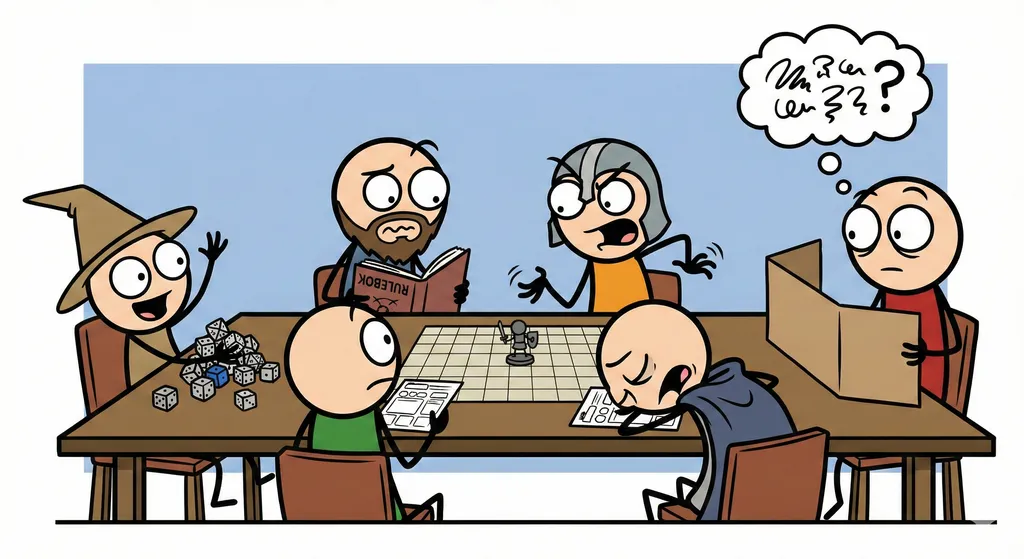
The relentless drumbeat of new releases often feels like a core rhythm of our hobby. Yet, a recent observation by Justin Bell, dubbed “The Cult of the New-ish” on BoardGameGeek, offers a crucial counter-narrative that resonates deeply with the TTRPG and wargaming landscape. It champions not just the bleeding edge, but the robust, well-regarded titles released in the last two to three years—games that have had time to breathe, to be played, and to truly find their footing.
From a purely mechanical standpoint, embracing the ‘new-ish’ provides a much-needed antidote to the day-one errata scramble. How often have we seen a highly anticipated rulebook hit tables only to be followed by FAQs, designer clarifications, and revised PDFs within weeks? Focusing on games that have weathered their initial release cycle means interacting with more mature, stable rulesets. This allows GMs to invest in mastery rather than constant adaptation. For a system like Dungeons & Dragons 5th Edition, for example, the 'new-ish' isn't about the core books, but the wealth of well-tested, community-vetted supplements and adventures that have emerged, refining play and offering fresh experiences without demanding a system overhaul. It means less time deciphering ambiguous rules and more time actually *playing* them, allowing the emergent narratives to truly shine. This approach also encourages publishers to focus on quality-of-life updates, expansions, and curated content rather than rushing the next big thing out the door purely for novelty.
The implications for lore are equally profound. The 'new-ish' model fosters deeper engagement with established settings. Instead of a new world being introduced and then quickly abandoned for the next IP, players and GMs have the opportunity to truly inhabit a setting, to understand its nuances, and to contribute to its ongoing narrative through their own campaigns. Consider a game like Cyberpunk RED; while not brand new, its 'new-ish' status allows for the slow burn of Night City's ongoing stories to unfold, for players to truly feel the weight of its history and its future. This stands in stark contrast to the frantic pace where a campaign might barely scratch the surface of a setting before the publisher moves on. It encourages worldbuilding that is expansive and consistent, giving supplements like a mature campaign setting the chance to truly enrich an existing universe rather than just adding more disparate pieces.
So, is this 'Cult of the New-ish' good for the game? Absolutely. For GMs, it means more reliable rules, less prep spent on house-ruling broken mechanics, and a greater pool of tried-and-true adventures and community resources. For players, it translates to a more stable meta, allowing for deeper character development and longer-running campaigns without the fear of their chosen system being made obsolete overnight. It reduces the pressure of FOMO (Fear Of Missing Out) on the latest release, allowing players to make more informed purchasing decisions based on sustained community reception and proven table performance, rather than pre-release hype. Publishers, too, benefit by fostering loyalty to their existing IPs and investing in quality expansions and refinements, rather than chasing an endless cycle of entirely new products. This isn't about stagnation; it's about cultivation. It's about letting the good games become great, and giving the overlooked gems their moment in the sun, enriching our collective tabletop economy.
Top Pick: Shadowdark RPG
A robust, OSR-inspired system that, while not ancient, has garnered significant community support and a growing library of quality third-party content, proving the enduring value of a well-crafted 'new-ish' game.
Check Price on Amazon →Related Stories
Shadowrun 4E: A Deep Dive into the Sixth World's Digital Heart
The Shadowrun 4th Edition Humble Bundle offers a colossal archive for the Sixth World. We examine its mechanics, lore, and enduring appeal for GMs and players a
Bell's BGG Move: A Win for Tabletop Community
Veteran contributor Justin Bell brings his community-first philosophy to BoardGameGeek. We analyze what this shift means for the future of tabletop media and co
BGG Previews Go Self-Service: Good for Gamers or Wild West?
BoardGameGeek's new self-service preview system for events like FIJ and GAMA Expo promises direct publisher input. We dissect how this shift in information flow