
The Privilege of Play: A Protocol for Shared GMing
The Kind GM's #RPGaDAY musings on the privilege of playing and running games inspired Threshold Games' 'Session Zero Protocol.' This meta-framework aims to democratize the GM burden and foster sustainable TTRPG communities.
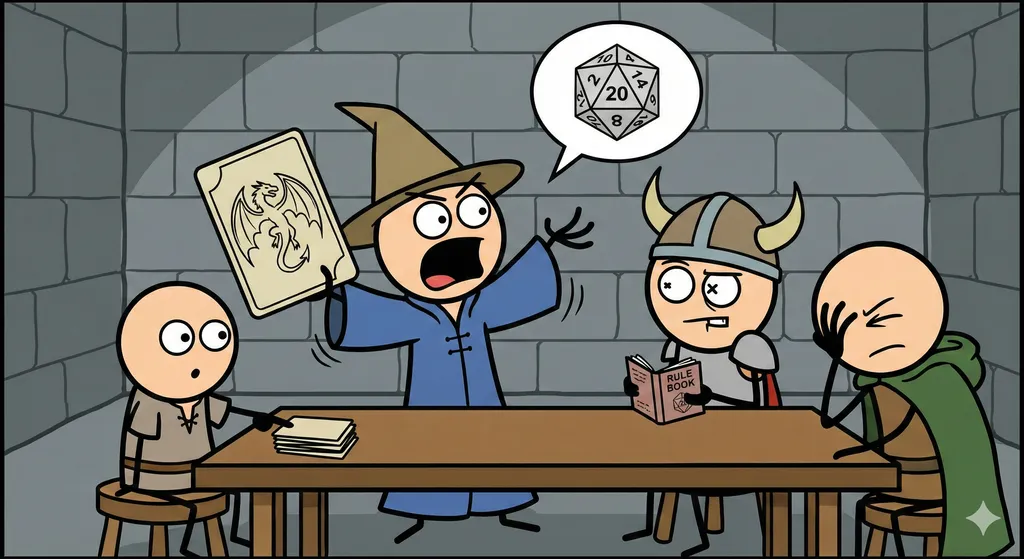
The recent #RPGaDAY2026 musings from The Kind GM spotlighted a truth many of us veteran players and Game Masters often overlook: the profound privilege of simply getting to play. This observation, while seemingly simple, underpins the philosophy of Threshold Games’ innovative approach to community-driven play, colloquially known as the "Session Zero Protocol." It's not a new system in the traditional sense, but a meta-framework, a set of guidelines and shared understandings designed to democratize the creative burden and ensure everyone gets a turn at the table – whether wielding the GM screen or rolling dice as a player.
The "Session Zero Protocol" isn't about complex stat blocks or intricate combat maneuvers; its crunch lies in its social mechanics. At its heart is a structured approach to GM rotation and shared narrative stewardship. Before a single character sheet is touched, the group collectively establishes a "GM Baton" – a commitment from each player to run at least a one-shot or a short arc within a campaign's lifespan. This isn't optional; it's a core tenet. The Protocol offers flexible templates for these player-run segments, ranging from a single dungeon crawl to a character-centric side quest.
Furthermore, the Protocol encourages a "Shared Lore Ledger" – a collaborative document where players contribute world details, NPCs, and plot hooks, easing the worldbuilding burden on the primary GM. This isn't just brainstorming; specific entries are "locked in" by group consensus, becoming canon. The real innovation lies in its "Commitment Calibration" during Session Zero: an explicit discussion of each player's availability and energy levels, leading to a mutually agreed-upon session cadence and GM schedule. It’s a formalized social contract, explicitly stating, for instance, that "Player A will GM the next three-session arc, then Player B will run a one-shot, and the main campaign GM will return after." This isn't about forcing creativity; it's about structuring the shared responsibility that makes long-term campaigns viable. It’s a meta-game of resource management – managing the most precious resource of all: the GM's time and creative energy. This is where tools like collaborative worldbuilding apps or even a shared Google Doc become invaluable.
The "lore" of the Session Zero Protocol isn't found in ancient prophecies or cosmic horrors, but in the collective history of our hobby. It's the story of the "forever GM" – the unsung hero who tirelessly crafts worlds, adjudicates rules, and shepherds narratives, often yearning for the chance to simply be a player. The Protocol’s ethos springs from a deep understanding of this societal dynamic within TTRPGs. It recognizes that the greatest threat to a campaign isn't a Tarrasque or a lich, but GM burnout and scheduling fatigue.
Threshold Games posits that every player carries a spark of the storyteller. The Protocol’s "lore" is that of empowerment: transforming passive participants into active co-creators. It builds a meta-narrative where the community itself is the hero, overcoming the logistical and creative challenges that often lead to campaigns sputtering out. It’s about fostering a culture where asking "Who's GMing next?" isn't a burden, but an exciting opportunity for a new perspective to shape the shared story. This is the living, breathing lore of the TTRPG community, codified into a sustainable practice.
So, does this conceptual framework actually work at the table? Absolutely. The immediate "table feel" shift is palpable. The pressure on a single GM dissipates, replaced by a shared sense of ownership. Players, knowing their turn to run a segment is coming, become more invested in the world and its characters, actively seeking plot hooks and contributing ideas. This isn't just about giving the GM a break; it's about enriching the player experience by making them more integral to the narrative's evolution.
The "GM Baton" mechanic, in particular, fosters a fresh perspective. A player who has never GMed before often brings an uninhibited creativity, unburdened by years of established tropes. Even a short one-shot run by a new GM can inject surprising energy and new ideas into an ongoing campaign. It’s a potent antidote to stagnation and burnout, transforming a potential source of frustration – scheduling and GM availability – into a mechanism for growth and innovation. This shared responsibility isn't just good for the game; it's essential for the long-term health and vibrancy of our TTRPG communities. It ensures that the privilege of playing and running is distributed, not hoarded. For groups struggling with consistency, or GMs feeling the weight of the world on their shoulders, embracing this kind of structured sharing can be transformative.
Top Pick: The Return of the Lazy Dungeon Master
For practical advice on efficient GM prep and sustaining campaigns.
Check Price on Amazon →Related Stories
The Unyielding Spirit: 'Resolve' as a Core Mechanic
We delve into 'Resolve', the compelling new mechanic from Mythic Forge Games' 'A Shadowed Path: Tales of Enduring Will'. Discover how this system models player
Echoes of Aethelgard's Mercy: A Compassion Die Deep Dive
Mythos Forge Studios' upcoming Echoes of Aethelgard introduces a revolutionary 'Compassion Die' mechanic. We delve into how acts of mercy can profoundly impact
Stature: Beyond XP, The True Measure of a Hero's Influence
The #RPGaDAY2026 prompt 'Stature' ignited a discussion on elevating character reputation into a robust TTRPG mechanic. We explore how a dedicated Stature system