
The Social Contract: Managing Integrity and Asymmetry at the Table
We analyze the fallout of cheating in tabletop gaming and review the complex political maneuvers found in Robotech Reconstruction and Castle Raisers.
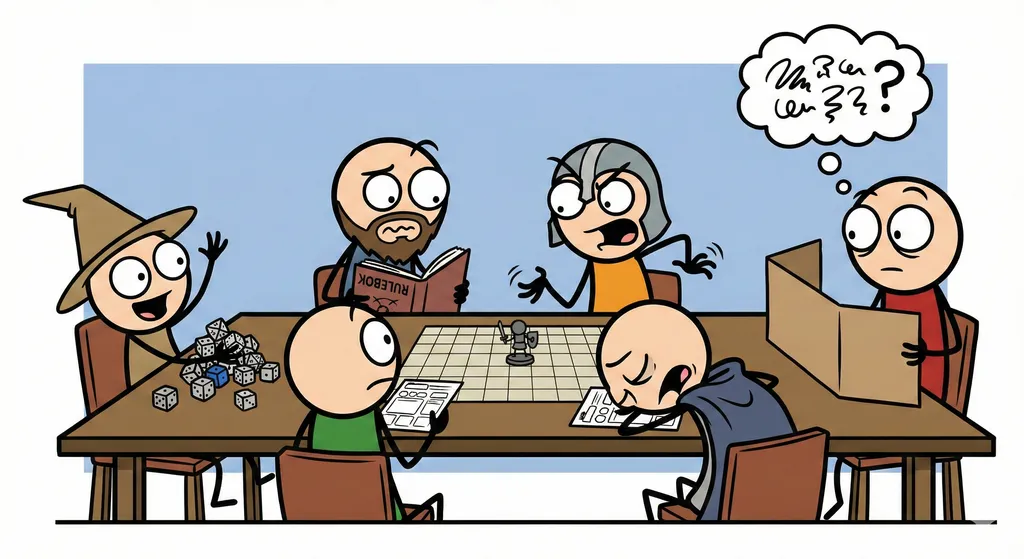
In the latest dispatch from the Tabletop Bellhop Podcast, the perennial specter of cheating takes center stage alongside a mechanical breakdown of Robotech Reconstruction by Strange Machine Games. As veteran GMs, we know that the integrity of the game engine is the only thing standing between a memorable session and a total collapse of the social contract. Whether you are navigating the post-war ruins of a mecha-ravaged Earth or simply trying to keep your dice on the table, the rules represent a shared reality. When a player bypasses those rules, they are not just winning unfairly; they are desynchronizing the simulation for everyone else at the table.
The mechanics of cheating often stem from a misunderstanding of friction. In a high-complexity title like Robotech Reconstruction, the asymmetry is the entire point. You have four distinct factions—the United Earth Government, the Zentraedi Rebellion, the Robotech Expeditionary Force, and the Malcontent Zentraedi—each operating on different victory conditions and resource pools. When a game is this crunchy, the line between a tactical error and a deliberate rule-break blurs. If a player forgets that their faction requires specific Influence points to seize a territory, the mechanical balance of the entire region shifts. It is not just a personal gain; it is a systemic failure that negates the strategic planning of the other three players. This is where the Tabletop Bellhop crew correctly identifies that the table captain must be more than a referee; they must be a steward of the game's internal logic.
Contrast this with the lighter fare like Cats Knocking Things off Ledges from The Op. Here, the physics-based chaos is the intended experience. Cheating in a dexterity game is often more visible but arguably less damaging to the long-term meta than in a heavy strategy game. However, the intent behind the action is what defines the table feel. In a game of Castle Raisers from Wonderful, where card management and resource building are paramount, a miscounted gold hoard can end the game three rounds early, robbing the table of the narrative climax. The mechanics of Castle Raisers rely on a tight economy; when that economy is compromised, the entire infrastructure of the game collapses.
The lore of Robotech Reconstruction provides a perfect backdrop for this discussion of ethics. The setting is one of desperate survival and shifting alliances in the wake of the Invid invasion. The game forces players to make hard choices that often feel unfair because the world itself is unfair. When players feel backed into a corner by the narrative and the mechanics, the temptation to nudge a roll or misinterpret a card effect increases. This is where the veteran player must distinguish between the character’s struggle and the player’s responsibility. The lore demands struggle; bypassing that struggle through cheating cheapens the eventual victory or defeat. The narrative weight of rebuilding a planet is lost if the resources used to do so were conjured out of thin air.
From a table-feel perspective, dealing with a cheater requires the same finesse as adjudicating a complex line-of-sight ruling in a skirmish game. You cannot simply ignore it, or the game’s internal logic evaporates. The Bellhop discussion highlights that the best approach is often mechanical: clarifying the rule for the whole table to provide a graceful exit for the offender. If the behavior persists, it becomes a meta-game problem that no amount of errata can fix. We have all sat with the player who treats the rulebook as a list of suggestions rather than a framework. In a Commander Format game or a high-stakes Kill Team 2024 match, that player is a poison to the community.
Ultimately, the health of our hobby relies on the shared belief that the rules matter. Whether you are managing the complex political landscape of a reconstruction effort or building the tallest castle in the realm, the friction of the rules is what creates the heat of the experience. Without that friction, we are just moving plastic and cardboard in a vacuum. We must protect the engine to protect the fun. If you want a game that tests your ability to manage resources without the temptation to cut corners, look toward the tighter economies of modern euro-hybrids.
Related Stories
Gnome Stew's 'Prep is Aspirational': A GM's Guiding Star
Gnome Stew's recent discourse on 'Prep is Aspirational' redefines how Game Masters approach their sessions. This isn't just theory; it's a vital framework for d
Neon Odyssey: Can Legends of Avantris Launch 5E to the Stars?
Legends of Avantris unveils 'Neon Odyssey,' a bold 5E space opera project. This editorial dives deep into how 5th Edition's mechanics and lore could adapt to th
Aetherbound Chronicles: Resonating with Narrative Power
Veridian Games' Aetherbound Chronicles: Echoes of the Sundered Star promises a fresh take on TTRPG narrative, focusing on player agency and the cost of power. T