
The Ten-Player Table: A Design Challenge Worth Dominating
The Tabletop Bellhop podcast recently tackled the daunting task of finding games for a crowd. We analyze the design brilliance required to keep ten players engaged and the profound impact on our game nights.
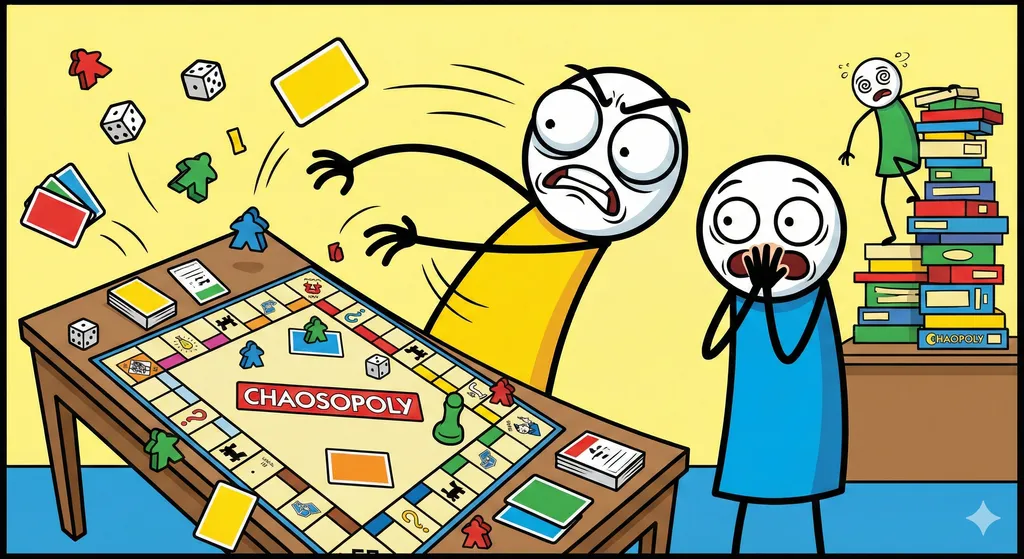
The perennial challenge of the large game group, the 'Table for Ten,' received a well-deserved spotlight recently on the Tabletop Bellhop Gaming Podcast, Episode 314. It's a conversation every Game Master and seasoned player has had: how do you keep ten or more friends engaged without resorting to charades or splitting into multiple tables? This isn't just about finding a game; it's about understanding the fundamental design principles that allow a cohesive, enjoyable experience for such a sprawling assembly.
Mechanically, games that genuinely sing at high player counts are a fascinating beast. They often eschew the deep, turn-based strategic depth of a Eurogame for efficiency and simultaneous action. Consider the likes of social deduction titles, where player turns are less about complex decisions and more about vocal accusations and secret votes, keeping everyone active even when it's not 'their turn.' Games like The Resistance achieve this by having concurrent phases of discussion and hidden role assignments, collapsing downtime into shared, high-tension moments. Other designs leverage simultaneous play, such as the drafting phases in 7 Wonders, where everyone chooses and passes cards at once, dramatically reducing the wait time that would cripple a 10-player game of, say, a traditional worker placement. The critical crunch here is managing information flow and interaction without bogging down the table. Designers must either simplify individual player actions to lightning speed or decentralize the 'action' so it's happening across the table simultaneously. The best examples often involve a blend, ensuring that even when one player is making a key decision, others are observing, reacting, or planning their own concurrent moves. It's an art of elegant streamlining, making sure every player feels like a crucial cog in the machine, not just an observer waiting for their moment.
The 'lore' of high player count games isn't found in a sprawling campaign setting, but rather in the emergent narrative of the social dynamic itself. The 'setting' is your game night, and the 'story' is the unfolding drama between players. In a game like Codenames, the narrative isn't about spies and assassins; it's about the brilliant, or hilariously misguided, mental leaps your teammates make based on your one-word clue. For social deduction, the lore is the intricate web of trust and betrayal woven between friends, where the 'big bad' isn't a monster, but the person across the table who just lied about their allegiance. These games excel when they provide just enough framework for players to create their own immediate, personal 'fluff' through their interactions, their bluffs, and their collective triumphs or failures. The context is the palpable energy of a large group, the shared laughter, the gasps of surprise, and the collective groan when a plan goes awry. It's about building a shared experience, often fleeting and unique to that particular gathering, which forms the true 'story' of the session.
So, is this good for the game? Absolutely. While the deep strategy of a two-player skirmish or a four-player economic engine certainly has its place, the ability to bring a larger group together around a single table is invaluable. These games serve a vital social function, transforming a disparate group into a cohesive unit, even if only for an hour or two. They democratize the tabletop experience, making it accessible to more people without demanding an intimidating investment in rules mastery or tactical prowess. The table feel is one of shared experience, often boisterous and energetic, prioritizing interaction over individual optimization. It shifts the focus from 'winning' in a purely competitive sense to 'participating' in a memorable group activity. For the veteran GM, understanding the mechanics of these games can even inform how we manage larger TTRPG tables, emphasizing concurrent actions, clear communication, and the power of emergent narrative. They remind us that the 'game' is often just the framework for the real magic: people connecting around a table.
Top Pick: The Resistance: Avalon
The definitive social deduction game for large groups, balancing bluffing, deduction, and minimal downtime.
Check Price on Amazon →Related Stories
Mind Up!: The Elegant Dance of Numbers and Colors
Tabletop Bellhop's review of Mind Up! reveals a card game blending drafting and tableau building with clever set collection. It promises a satisfying experience
Springwood Resort: The Ultimate Tabletop Retreat Examined
Tabletop Bellhop’s review of Springwood Resort has sparked a conversation: are dedicated gaming vacations the future? We dissect the mechanics and lore of these
Fadenfroh: Pfister & Adan Weave a New Strategic Tapestry
Julian Steindorfer teases 'Fadenfroh,' a new Eurogame from Alexander Pfister and Jordy Adan. We dive into how this tile-laying, pattern-matching title could red