
The Tiers of Publishing: How Industry Structure Shapes Your Table
EN World's '5 Tiers' framework offers a crucial lens into TTRPG publishing. We dissect how each tier impacts game design, lore, and your play experience.
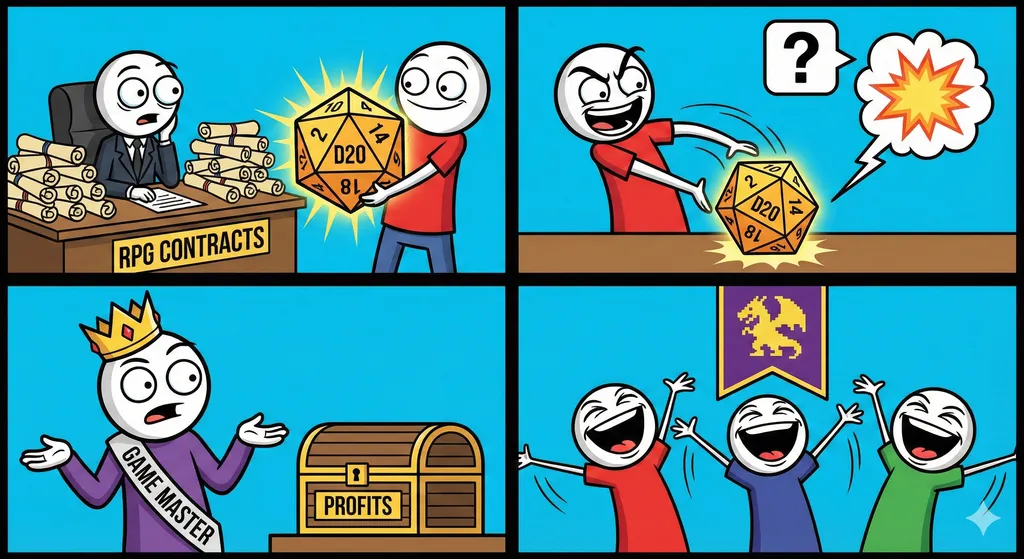
The recent discourse surrounding EN World's proposed '5 Tiers of TTRPG Publishing' framework isn't just industry chatter; it’s a vital analytical tool for understanding the very games that land on our tables. As veteran Game Masters and discerning players, we often intuit these differences, but a structured model like this provides the language to articulate how a game's genesis impacts its mechanics, its lore, and ultimately, our enjoyment.
At its core, the framework categorizes TTRPG publishers based on their scale, resources, and operational models. While EN World’s specific definitions will likely evolve, we can broadly interpret these tiers as a spectrum from the singular artisan to the corporate behemoth. Imagine Tier 1 as the 'Zine-smith & Solo Dev' – the lone creator pouring their heart into a minimalist system or a bespoke adventure, often distributed digitally via platforms like itch.io or a personal Patreon. Their 'mechanics' are frequently experimental, driven by personal vision rather than market trends, unburdened by extensive playtesting budgets but rich with raw creativity. Think of the tight, elegant design of many OSR titles or a focused journaling RPG. The 'crunch' here is often direct, idiosyncratic, and deeply personal.
Moving up, Tier 2 might be the 'Kickstarter Collective' – small teams leveraging crowdfunding. Their 'mechanics' are often more polished, benefiting from community feedback and a modest budget for art and layout. They can tackle more ambitious projects, like a full campaign setting or a bespoke system, without the overhead of traditional publishing. Then we hit Tier 3, the 'Boutique Studio,' an established independent publisher with consistent releases and a growing professional team. Their 'crunch' is typically robust, with dedicated designers, editors, and broader playtest groups. They balance innovation with accessibility, aiming for a wider but still discerning audience. Think of the consistent quality from companies like Free League Publishing or Evil Hat Productions.
Tier 4, the 'Legacy Publisher,' encompasses companies with decades of history, often managing major IPs and a stable of product lines. Their 'mechanics' are often refined through years of iterations, catering to established fanbases while still seeking growth. These are the Paizos, the Chaosiums, the Cubicle 7s – companies that have built worlds and systems that define entire genres. The 'lore' here is often deep, sprawling, and meticulously curated, benefiting from long-term vision and dedicated world-builders. Finally, Tier 5, the 'Corporate Juggernaut,' represents the multi-billion dollar conglomerates – the Hasbros (Wizards of the Coast), the Games Workshops, the Asmodee groups. Their 'mechanics' are designed for mass market appeal, often streamlined for broader accessibility, and backed by immense marketing budgets. The 'lore' might be dictated by expansive media franchises or designed to support multiple product lines, sometimes prioritizing brand consistency over creative risk.
For us at the table, this framework isn't just academic; it’s profoundly practical. A Tier 1 game might offer unparalleled narrative freedom and a unique mechanical hook, but require more GM heavy-lifting. A Tier 5 game, conversely, might arrive with impeccable production values and extensive support, but potentially feel more prescriptive or less adaptable to house rules. The 'table feel' of a Tier 2 game funded through Kickstarter, like many of the successful Mörk Borg third-party supplements, often carries the excitement of a shared journey with its creators, fostering a strong community around the product. Understanding these tiers helps GMs set expectations, choose appropriate material, and even identify where to find the specific kind of game experience they're looking for.
Is this good for the game? Absolutely. By categorizing the landscape, we gain clarity. We can celebrate the nimble innovation of the indies, appreciate the refined craftsmanship of the boutique studios, and understand the reach of the corporate giants. This framework empowers us to critically evaluate not just *what* we play, but *who* makes it and *how* it gets to us, fostering a more informed and appreciative community. It's a lens that helps us navigate the ever-expanding universe of TTRPGs with purpose, ensuring we find the right adventure for our table, no matter its publishing lineage.
Top Pick: The Crit Sheet's Indie Spotlight Archive
For discovering hidden gems across all publishing tiers
Check Price on Amazon →Related Stories
Trudvang For Dragonbane: Free League Forges a Grim New Path
Free League Publishing brings its streamlined Dragonbane system to the dark, mythic world of Trudvang via crowdfunding. This deep dive explores how this mechani
Neon Odyssey: Can Legends of Avantris Launch 5E to the Stars?
Legends of Avantris unveils 'Neon Odyssey,' a bold 5E space opera project. This editorial dives deep into how 5th Edition's mechanics and lore could adapt to th
Aethelgard Chronicles: One World, Three Ways to Play
Veridian Games' 'Aethelgard Chronicles' redefines TTRPG engagement by offering three distinct rule sets within a single, rich world. This innovative approach pr