
Warhammer's Economic Imperium: Pricing the Grimdark Future
Games Workshop's recurring price adjustments are a fixture of the Warhammer hobby. We dissect the likely 2026 increases, examining their true impact on players and the game's future.
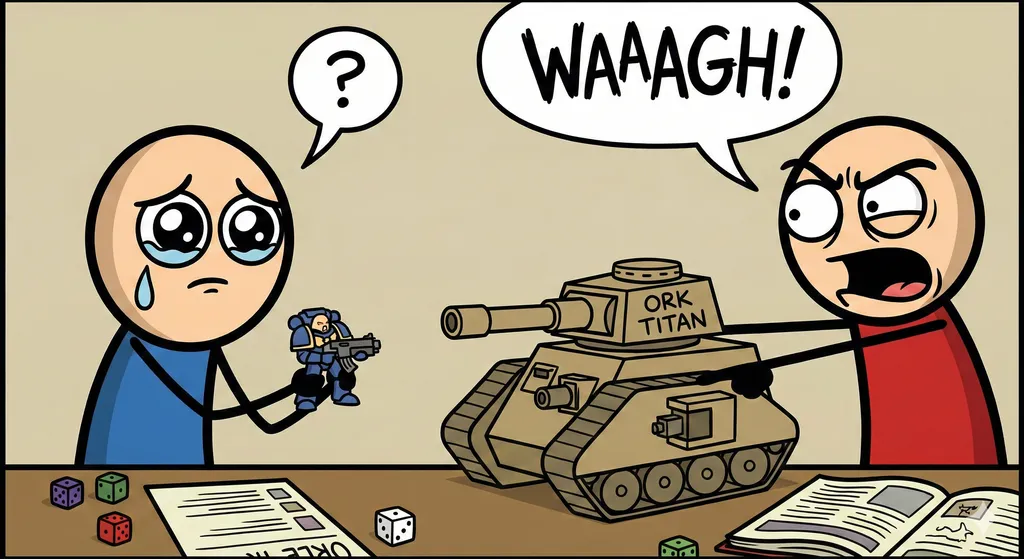
Games Workshop's recurring price adjustments are as much a part of the Warhammer hobby as dice rolls and unpainted sprues. The recent murmurs, amplified by outlets like Spikey Bits, suggesting a likely 2026 Warhammer price increase, are hardly surprising. Yet, simply acknowledging inflation misses the deeper implications for our tables, our collections, and the very health of the game systems we dedicate countless hours to.
The Economic Mechanics of Collection
When we discuss price increases in Warhammer 40,000 or Age of Sigmar, we're not just talking about a simple percentage hike. We're dissecting the economic mechanics that govern player engagement. For veterans, these increases often prompt strategic shifts: prioritizing core units, delaying new faction starts, or leaning heavily into the secondary market. The 'buy now before it goes up' mentality creates an artificial rush, often leading to impulsive purchases that might not align with long-term hobby goals. This impacts everything from army composition – fewer experimental units, more meta-chasing to justify the investment – to the viability of larger, more ambitious projects.
New player recruitment is where the crunch truly hits. A higher entry barrier means fewer fresh faces discovering the joy of the grimdark future or the Mortal Realms. Starter sets, traditionally designed as accessible on-ramps, feel the pressure to offer more perceived value, often at the expense of choice or customization. This can funnel new players into pre-packaged experiences, potentially stifling the organic growth of diverse collections. Alternative skirmish games, like Kill Team, often become more appealing due to their lower model count and thus, lower initial investment, allowing players to experience the setting without committing to a full-scale army immediately. The escalating cost of individual kits also fuels the robust — and often necessary — third-party market for bits, proxies, and 3D prints, areas Games Workshop has historically viewed with suspicion but which are, in many ways, a direct consequence of their own pricing strategy.
Lore: The Cost of Empire
It’s almost poetic how the grim reality of our hobby’s economics mirrors the lore itself. The Imperium of Man, perpetually at war, demands endless tithes and sacrifices. Its war effort is sustained by the ceaseless labor and resources of countless worlds, each offering up its bounty to fuel the endless conflict. Our own tabletop empires, our lovingly crafted armies, demand a similar, if less bloody, tribute. The escalating cost of maintaining your Space Marine Chapter, much like the logistical nightmares faced by the Astra Militarum in their galaxy-spanning crusades, continues to escalate.
This isn't just about paying for plastic; it's about the perceived value of the narrative, the depth of the lore, and the investment in a sprawling, intricate universe. Do these price increases test our devotion, akin to the trials faced by heroes and villains within the setting? Perhaps. The enduring appeal of Warhammer isn't just its ruleset, but the rich tapestry of stories it allows us to tell. The question becomes: at what point does the cost of admission begin to overshadow the epic tales we seek to forge?
The Verdict: Tabletop Tensions
Is a 2026 Warhammer price increase good for the game? In the short term, from a pure revenue perspective for Games Workshop, it likely is. For the player base, however, the answer is far more nuanced. It undeniably strains the budgets of many, making it harder to expand collections, try new factions, or even just replace lost models. This can lead to player frustration, slower community growth, and an increased reliance on secondary markets or even less official alternatives.
However, it also fosters ingenuity. More players are embracing kitbashing, learning to paint more efficiently, and exploring creative ways to stretch their hobby budgets. It reinforces the value of careful planning and strategic collecting. While the immediate ‘table feel’ might be one of apprehension, the long-term impact could be a more discerning, resourceful, and perhaps even more dedicated player base, albeit one that is potentially smaller or more segmented. The challenge for Games Workshop is to ensure that these increases are perceived as justifiable, reflecting genuine improvements in product quality, innovation, or service, rather than simply bolstering profit margins. Without that perceived value, the grimdark future might feel less epic and more economically oppressive.
Top Pick: Combat Patrol: Space Marines
Excellent entry point with high model count and versatile units
Check Price on Amazon →Related Stories
Custodes Pricing Anomaly: A Golden Opportunity or GW Miscalculation?
The recent price adjustment for Adeptus Custodes models has Warhammer 40,000 players buzzing. We dissect the implications for list building, lore, and the overa
The $69 Mystery Box: Value or Vaporware for Your Miniatures?
The return of the $69 Mystery Miniatures Box from various vendors promises up to $135 in value. We dissect if this gamble genuinely benefits the discerning warg
Golden Host Ascendant: Legio Custodes' 10th Edition Refinement
Games Workshop recently unveiled a closer look at the revamped Legio Custodes for Warhammer 40,000, alongside pre-order details. This article dissects the poten