
11th Edition 40k: The Inevitable Tide of Change
The whispers of Warhammer 40,000's 11th Edition grow louder, signaling an impending shift in the grimdark galaxy. We dissect Games Workshop's patterns and what a new ruleset means for your armies and the tabletop.
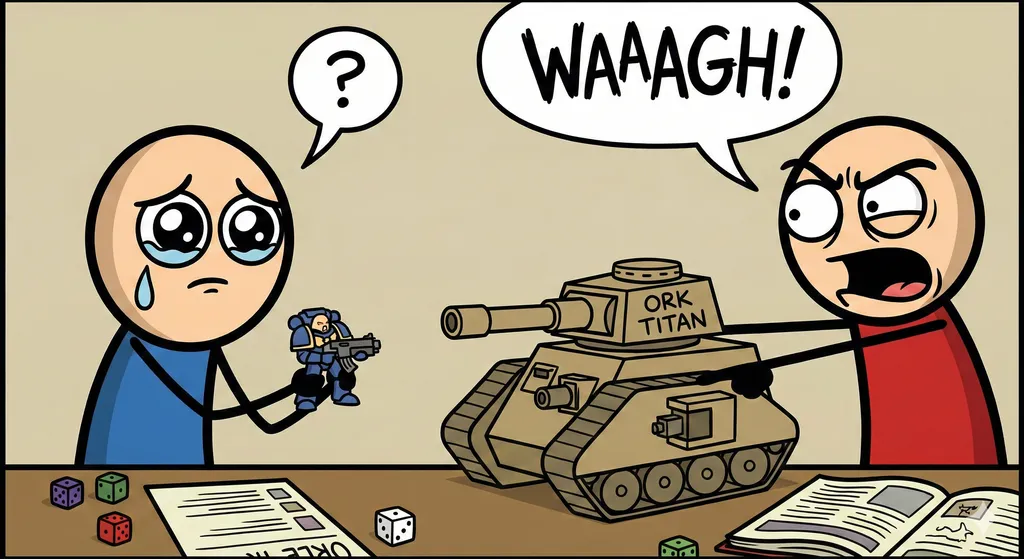
The rumble has begun, a familiar tremor in the grimdark bedrock. While no official confirmation has dropped, the tea leaves are clear: Warhammer 40,000’s 11th Edition from Games Workshop is on the horizon. For veterans of the 41st millennium, this isn't a shock; it's a predictable, cyclical event that reshapes our battlefields and redefines our strategies. The real question isn't *if* it's coming, but *what* it will bring, and more importantly, how it will impact the fundamental experience at the table.
Let’s cut to the crunch. New editions of Warhammer 40,000 are not merely errata; they are often comprehensive overhauls. Historically, Games Workshop uses these opportunities to streamline core mechanics, rebalance army power levels, and introduce new rules paradigms. Consider the shift from 7th to 8th Edition, which largely jettisoned complex templates and granular modifiers for a more accessible, universal ruleset. Then 9th, which refined and added depth, particularly to the Command Phase and secondary objectives, pushing competitive play to new heights. 10th Edition, in turn, stripped back much of that complexity, combining datasheets and stratagems into a more unified, albeit initially sparse, system. For 11th, we might anticipate a re-evaluation of this simplification. Will we see a return of certain tactical nuances, perhaps a more robust vehicle damage system, or a recalibration of how army-wide special rules interact? The trend has been towards making the game easier to learn, yet the community often hungers for depth. A potential middle ground could involve a more modular approach, with core rules remaining lean but advanced options or sub-faction specific mechanics layered on top. This could manifest as more dynamic mission structures or a return of specific unit interactions that reward skillful positioning and resource management beyond simple stat-checks. We might even see a fundamental change to how psychic powers or combat phases resolve, aiming for a cleaner, faster flow.
Beyond the dice rolls, a new edition of Warhammer 40,000 always heralds a significant narrative leap. The lore, the very soul of the setting, often dictates the new edition's focus, and vice-versa. 10th Edition launched with the titanic struggle against the Tyranids of Hive Fleet Leviathan, pushing the narrative of the Indomitus Crusade to its breaking point. For 11th Edition, the stage is set for a dramatic escalation. Will the Imperium finally succumb to the Tyranid threat, forcing new alliances or desperate measures? Could we see the resurgence of an ancient Xenos empire, or a civil war within the Imperium reaching a catastrophic climax? Each edition often focuses on a specific conflict or region of the galaxy, introducing new characters, units, and even entire factions to bolster the story. This isn't just fluff; it's the contextual framework that makes our battles meaningful. The models that accompany a new edition are always tied into this narrative, giving players tangible pieces of the evolving story. The implications for hobbyists are clear: new models mean new opportunities for painting and kitbashing, pushing creativity in ways previous editions hadn't imagined.
So, what’s the verdict for the table? A new edition is always a double-edged sword. On one hand, it’s a massive injection of excitement: new models, fresh rules, a re-energized meta, and a chance for neglected factions to shine. It can attract new players, simplifying the entry point and offering a clean slate. On the other, it can be a frustrating experience for veterans. The constant churn of rules can invalidate carefully crafted army lists, render beloved codexes obsolete, and force players to re-learn core mechanics they've mastered over years. The investment in time, money, and emotional energy in an army can feel diminished. However, a well-executed edition balances these factors. If 11th Edition manages to retain the streamlined accessibility of 10th while reintroducing tactical depth and unique faction identities, it could be a monumental success. It needs to reward player skill and strategic foresight without becoming overly burdensome. The optimal outcome is an edition that feels both fresh and familiar, honoring the legacy of the game while propelling it forward. The community’s creativity thrives on these shifts, adapting and innovating with each new iteration. We stand ready, dice in hand, to see what the next chapter brings to the grimdark battlefield.
Top Pick: Warhammer 40,000: Core Book
Essential for understanding the fundamental rules of the universe, regardless of edition.
Check Price on Amazon →Related Stories
40K Terrain Mastery: Unpacking New Rules & Footprints
Games Workshop is refining Warhammer 40,000 terrain interaction, introducing explicit footprints and clarifying previously 'hidden' rules. This deep dive examin
40k's New Primarch & 11th Rules: A Grimdark Future, Sigmar's Fade
Games Workshop unveils a new 40k Primarch and hints at 11th Edition rules, setting the stage for major shifts. Meanwhile, Age of Sigmar faces existential questi
AdeptiCon 2026: Mechanicus' Data-Sync Protocol Elevates the Cog
Games Workshop's AdeptiCon 2026 preview unveiled a potent new detachment for Warhammer 40,000's Adeptus Mechanicus. The 'Omnissian Conclave' introduces intricat