
40K Terrain Mastery: Unpacking New Rules & Footprints
Games Workshop is refining Warhammer 40,000 terrain interaction, introducing explicit footprints and clarifying previously 'hidden' rules. This deep dive examines the impact of standardized layouts and crucial -1 hit penalties on competitive play.
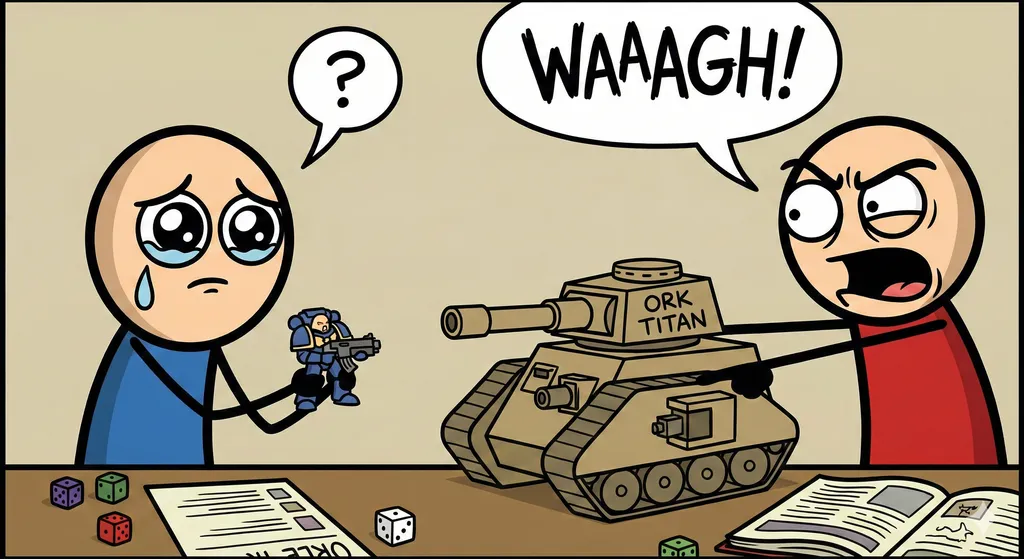
The battlefield is a cruel mistress, and in Warhammer 40,000, nowhere is this more apparent than in the ever-shifting, often-debated realm of terrain interaction. Games Workshop, the venerable publisher of the grimdark future, is reportedly making significant strides in formalizing these interactions with new terrain footprints and explicit rulings on what were once considered ‘hidden’ mechanics, signaling a potential paradigm shift for competitive play, even if the source's mention of '11th Ed.' is a peek into the distant future or a descriptor for a profound evolution within 10th Edition's design philosophy.
For years, the phrase “terrain rules” has often been met with a collective groan at the table. Too often, the nuances of Line of Sight (LoS), cover, and unit placement around bespoke terrain pieces have been left to house rules, pre-game agreements, or the dreaded mid-game rules lawyer. The intelligence out of Spikey Bits, detailing standardized layouts and the codification of effects like the -1 hit penalty, suggests a deliberate move to inject clarity and consistency into this chaotic aspect of the game. This isn't just about placing a ruin; it's about understanding its exact tactical dimensions and implications before the first dice rolls.
At the heart of this reported update are the twin pillars of 'terrain footprints' and the clarification of 'hidden rules' — particularly the -1 hit penalty. A 'terrain footprint' implies a predefined area or base size for specific terrain pieces, dictating not just where a model stands, but the precise boundaries for LoS blocking, cover saves, and even movement restrictions. Imagine every wall, every ruin, every scorched crater having an explicit, measurable zone of influence, eliminating the guesswork of “is my dude behind enough cover?” or “can I see that model's elbow through the gap?” This standardization is a boon for tournament organizers and players alike, ensuring that a ruin on Table 1 provides the exact same tactical advantage as its counterpart on Table 5.
The -1 hit penalty, often colloquially applied in various contexts, appears to be getting a more formal definition tied directly to these terrain footprints. This isn't a new concept in 40K; being harder to hit due to cover is fundamental. However, explicitly linking it to standardized terrain means players will know, unequivocally, when and where their units benefit from this crucial defensive buff. Is it when a unit is wholly within the footprint? Partially obscured by it? These are the questions that will now have definitive answers. This move elevates the game from abstract interpretation to precise tactical execution, rewarding meticulous positioning over subjective judgment. It’s a designer’s touch, clarifying the intent behind the interaction, much like a well-defined keyword in a TCG. For those looking to optimize their battlefields, consider investing in Games Workshop's official terrain packs which often come with clear guidelines or can be adapted to new footprint standards.
From a lore perspective, this formalization lends a gritty realism to the already brutal setting. In the 41st Millennium, where every inch of ground is contested with untold savagery, knowing the exact tactical value of a crumbling wall or a derelict manufactorum isn't just a luxury; it's a matter of survival. Imperial Guard regiments don't just 'take cover'; they meticulously exploit every piece of hard-won terrain. A Space Marine's tactical doctrine isn't just about charging; it’s about understanding the battlefield's geometry to maximize their devastating efficacy. These rules make the environment a tangible, predictable character in the narrative of war, rather than a mere backdrop. The terrain isn't just scenery; it's a strategic asset or a deadly trap, its properties understood and exploited by veteran commanders and green recruits alike.
So, what does this mean for the table? The verdict is, overwhelmingly, positive. While some narrative players might lament a perceived loss of organic, 'rulings-on-the-fly' freedom, the competitive scene will undoubtedly embrace this move. It reduces ambiguity, minimizes arguments, and elevates the skill ceiling by emphasizing precise tactical play over subjective interpretation. Players will be forced to master board control and unit placement with a new level of rigor, turning every piece of terrain into a calculated decision point rather than a potential point of contention. This isn't about dumbing down the game; it's about refining its edges, making it sharper, fairer, and ultimately, more satisfyingly tactical. The inherent complexity of Warhammer 40,000 demands clarity, and these changes appear to deliver just that. The future of 40K, whether in its current iteration or a future '11th Ed.', promises a battlefield where mastery isn't just about your army list, but about your understanding of the ground beneath your feet.
Top Pick: Warhammer 40,000 Core Rules Book
Essential for mastering these new tactical considerations
Check Price on Amazon →Related Stories
40k's New Primarch & 11th Rules: A Grimdark Future, Sigmar's Fade
Games Workshop unveils a new 40k Primarch and hints at 11th Edition rules, setting the stage for major shifts. Meanwhile, Age of Sigmar faces existential questi
AdeptiCon 2026: Mechanicus' Data-Sync Protocol Elevates the Cog
Games Workshop's AdeptiCon 2026 preview unveiled a potent new detachment for Warhammer 40,000's Adeptus Mechanicus. The 'Omnissian Conclave' introduces intricat
The 'Cheap Warhammer' Paradox: A New Era for the 40K Economy
Reports of new, cheaper distribution channels for Games Workshop products signal a major shift. This deep-dive explores the market mechanics and community impac