
11th Edition 40K: Unpacking the Grimdark's Next Evolution
The next iteration of Warhammer 40,000 from Games Workshop is on the horizon, promising significant shifts. Our deep dive analyzes the revealed mechanical and lore changes, assessing their impact on gameplay.
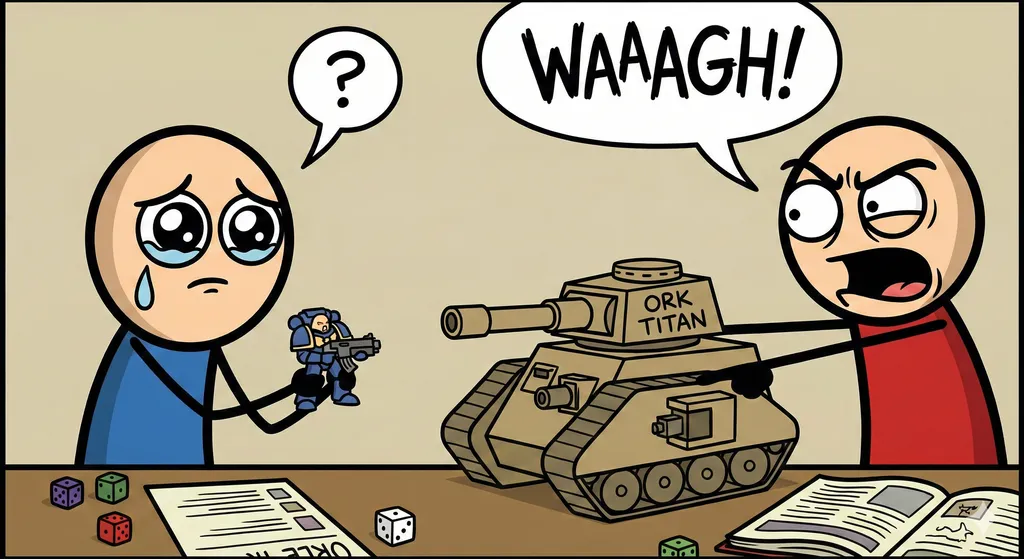
The rumbling on the horizon isn't just the tread of a Warhound Titan; it's the unmistakable approach of 11th Edition Warhammer 40,000 from Games Workshop. While the full scope remains shrouded in the grimdark, early reveals through May 15th, as collated by Goonhammer, paint a picture of deliberate evolution rather than outright revolution. The focus appears to be on streamlining core interactions while deepening strategic choices, a delicate balance that could either elevate the game or bog down its famously brutal pace.
Let's get straight to the crunch. The most impactful mechanical shift hinted at involves the Command Phase and how players interact with their armies on a strategic level. Gone, it seems, is the flat, per-turn Command Point generation. Instead, 11th Edition introduces a 'Strategic Nexus' system. Control of specific, pre-designated objectives now directly impacts your CP economy. Lose a key objective, and your ability to issue crucial orders, activate powerful stratagems, or even re-roll critical dice diminishes. This isn't just a tweak; it’s a fundamental re-evaluation of battlefield control, elevating the importance of objective play beyond mere victory points to directly fuel your army's operational capacity. Furthermore, we're seeing an intriguing 'Adaptive Doctrine' mechanic. Instead of static army-wide rules, players will choose from a limited pool of doctrines each battle round, each offering potent, thematic buffs but often with a corresponding drawback or specific activation condition. Imagine a 'Rapid Advance' doctrine granting extra movement but penalizing shooting, or a 'Fortified Line' doctrine boosting resilience at the cost of mobility. This introduces a fascinating layer of tactical decision-making, forcing players to anticipate their opponent's moves and adapt their entire force's strategy turn by turn. It's less about building an unstoppable list and more about dynamically piloting a flexible fighting force. Warhammer 40,000 Core Rulebook
From a lore perspective, these mechanical shifts resonate deeply with the relentless, attritional warfare of the 41st Millennium. The Strategic Nexus system perfectly embodies the desperate struggle for vital assets—relics, strategic strongpoints, warp conduits—that define countless campaigns. Every battle in the grimdark is a fight for more than just territory; it’s a fight for resources, for a foothold, for the very means to continue the war. Losing a Nexus isn't just a setback; it's a critical blow to your war effort. The Adaptive Doctrine system, too, fits the narrative. Armies in 40K rarely operate with static, pre-ordained plans. They react to unforeseen threats, adapt to new environments, and pivot their strategies mid-conflict. A Space Marine Chapter might shift from a surgical strike to a desperate defensive action, or a Tyranid swarm might suddenly adapt its bio-forms to counter a specific threat. This system allows players to embody that dynamic, desperate adaptability, adding a layer of narrative immersion that goes beyond the stat lines.
The verdict on the table feel? This could be huge. The Strategic Nexus system promises to inject constant tension into objective play, making every contested point a potential inflection for your entire strategy. It rewards proactive play and punishes passivity. No longer can you simply sit on objectives with a durable unit; you need to actively defend your CP generation. The Adaptive Doctrine system, while potentially adding a touch of complexity to initial turns, promises to make games far less predictable and more dynamic. List building will likely shift from pure stat-checking to considering how units synergize with various doctrines. Will this slow down games? Potentially, as players deliberate their doctrine choice each turn. However, the payoff could be a vastly more engaging, strategically rich experience that rewards genuine generalship over rote memorization of optimal unit interactions. It feels like Games Workshop is pushing players to think more like actual commanders, making tough choices with tangible consequences, rather than simply executing a pre-planned sequence of actions. For the veteran player yearning for more strategic depth, these changes are a breath of fresh, albeit still grimdark, air.
Top Pick: Combat Patrol: Space Marines
A fantastic entry point for new and returning players looking to dive into the tactical depth of 11th Edition with a versatile force.
Check Price on Amazon →Related Stories
11th Edition 40K: Unpacking the New Strategic Calculus
The first whispers of Warhammer 40,000's 11th Edition are upon us, sparking fervent discussion among the competitive elite. We dissect the early insights from b
11th Edition 40k: The Imperium's Next Strategic Evolution
Games Workshop prepares to launch 11th Edition Warhammer 40,000, promising a significant redefinition of tabletop warfare. Initial reveals suggest a focus on st
Chaos Unleashed: 10th Edition's Unpredictable Competitive Edge
The latest Warhammer 40,000 10th Edition meta analysis reveals a fascinating surge in chaotic configurations, defying traditional list-building logic. These unp