
Aetherbound Chronicles: Obsidian Gate's New Systems Break the Mold
Arcane Forge Games just unveiled two ambitious systems for 'Aetherbound Chronicles: The Obsidian Gate': the Aspect System and Dynamic Threat Tracker. We dissect how these mechanics aim to redefine character progression and GM preparation for a more fluid tabletop experience.
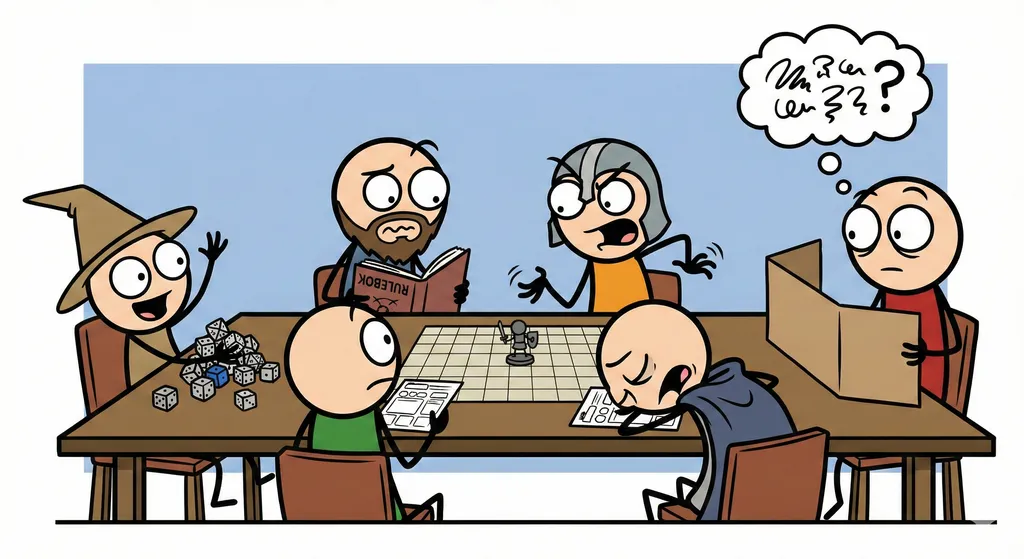
The latest EN World digest, dated September 26, 2026, dropped a bombshell for fans of 'Aetherbound Chronicles: The Obsidian Gate' from Arcane Forge Games. Hidden within the usual flurry of industry updates were two distinct, yet interconnected, system reveals: the 'Aspect System' for character progression and the 'Dynamic Threat Tracker' for Game Masters. This isn't just another supplement; it’s a deliberate pivot, signaling Arcane Forge’s intent to push beyond the conventional. As veteran GMs, we at The Crit Sheet immediately saw the implications for the table, and frankly, we’re intrigued.
Let's get straight to the crunch. The 'Aspect System' is a bold departure from traditional class-based advancement. Instead of selecting a pre-defined archetype, players choose 'Aspects' – modular, narrative-driven specializations that grant unique abilities, skill proficiencies, and often, compelling narrative hooks. Think less 'Fighter' or 'Wizard,' and more 'Whisperwind Scout' (granting enhanced perception, swift movement, and a knack for reading terrain) or 'Stoneheart Defender' (providing damage reduction, tactical positioning abilities, and a stubborn resistance to mental effects). Characters can combine these Aspects, creating genuinely unique builds that are both mechanically distinct and narratively resonant. A character might be a 'Whisperwind Scout' who later develops the 'Shadow Weaver' Aspect, blending stealth with arcane manipulation. This system encourages deep character investment, where progression feels less like climbing a linear tree and more like forging a unique destiny. Each Aspect provides specific triggers for advantage on certain checks or opens new combat maneuvers, making player choice directly impact the dice roll and tactical options. It’s a beautifully elegant solution to player agency, avoiding the restrictive feeling some find in traditional class structures.
Complementing this is the 'Dynamic Threat Tracker,' a GM tool designed to move beyond static Challenge Ratings. This system introduces two core metrics: 'Party Stress' and 'Engagement Level.' Party Stress is a meta-resource that accumulates from narrative setbacks, resource depletion, or failed critical rolls, representing the cumulative strain on the heroes. Engagement Level, conversely, measures how deeply invested the players are in the current narrative, influenced by their choices, successes, and the stakes presented. The Threat Tracker then scales encounters dynamically, introducing new complications, reinforcing existing adversaries, or even triggering environmental hazards based on these metrics. Imagine a tense dungeon crawl: as Party Stress rises, the ancient mechanisms might falter, or more desperate monsters emerge. If Engagement Level is high, a seemingly minor antagonist might suddenly reveal a deeper connection to the party's backstory. This isn't about arbitrary difficulty spikes; it's about the world reacting organically to the heroes' actions, preventing the 'math problem' of encounter balancing that often plagues GMs trying to improvise. It’s a living difficulty curve, designed to keep the narrative taut and unpredictable, a stark contrast to the often predictable pacing of many Aetherbound Chronicles Core Rulebook adventure modules if left un-modified.
From a lore perspective, the 'Aspect System' is deeply embedded in the cosmology of 'Aetherbound Chronicles.' Aspects aren't merely skill trees; they are reflections of the world's inherent magical energies, ancient pacts forged in forgotten eras, or even the lingering influence of the Void beyond the Obsidian Gate itself. Choosing an Aspect isn't just a mechanical choice; it's a spiritual or philosophical declaration for the character, often coming with subtle narrative burdens or boons. The 'Stoneheart Defender' might find themselves subtly influenced by the earth's stubborn will, while a 'Shadow Weaver' grapples with the whispers of the unseen. The 'Dynamic Threat Tracker' isn't just a mechanic either; it reflects the world's reactive nature. The more the heroes tamper with the world's ley lines, challenge its ancient guardians, or draw attention from the entities beyond the Obsidian Gate, the more the world pushes back. The Gate itself, a nexus of dimensional instability, could be the primary source of escalating threats, its influence waxing and waning with the party's actions.
So, what does this mean for the table? The verdict is largely positive, with some caveats. The 'Aspect System' promises unparalleled player agency and unique character builds, moving away from the 'cookie-cutter' feel that can sometimes creep into even the most robust class systems like those found in 5th Edition D&D. For GMs, the 'Dynamic Threat Tracker' has the potential to dramatically reduce prep time for encounter balancing, allowing for more improvisation and emergent storytelling. Encounters will feel less like carefully calibrated puzzles and more like organic challenges. The downside? The 'Aspect System' could lead to mechanical bloat if not managed carefully, and GMs accustomed to simpler CR systems will face a learning curve with the Threat Tracker. There's also the potential for 'min-maxing' new Aspect combinations, but Arcane Forge Games has historically been adept at fostering robust community creativity without breaking the game's internal logic. Overall, this is a bold, ambitious move, pushing the boundaries of what TTRPGs can achieve beyond well-trodden paths. It rewards creative GMs and players alike, offering a truly dynamic and responsive play experience.
Top Pick: Aetherbound Chronicles: GM's Compendium
Essential for mastering the Dynamic Threat Tracker and expanding Aspect options.
Check Price on Amazon →Related Stories
Glyphbound's Shifting Labyrinth: A Dungeon Crawl Reinvented
Labyrinthine Press unveils Glyphbound: Labyrinth of Echoes, introducing a unique species and a groundbreaking rotating dungeon mechanic. This innovative system
The Indie Ascent: Forge Your Own RPG Legacy
EN World's 'RPG Evolution' isn't just a headline; it's a call to arms for creators, democratizing game design and publishing. This deep dive explores how launch
The Old World Meets 5E: A Fan-Made WFRP Conversion Analysis
The community-driven Warhammer Fantasy Roleplay 5th Edition PDF is now circulating, bringing the grim Old World to D&D's popular ruleset. We dissect its mechani