
Arcane Arms Race: Testing Cross-System Wizard Supremacy
A deep analysis of the recent multi-system Wizard War that pitted D&D 5e against its rivals to determine which mechanics produce the most formidable spellcaster.
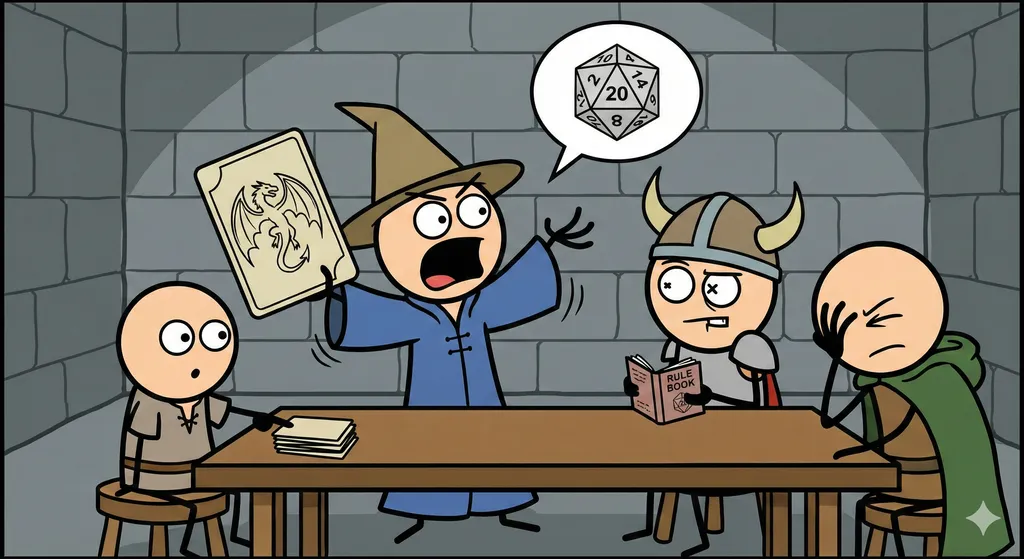
The Wizard War is not just a hypothetical exercise for the forum-dwellers of the internet; it has become a practical experiment in the mechanical friction of the hobby. When a group of prominent community creators decided to pit the wizards of Dungeons & Dragons by Wizards of the Coast against their counterparts from three other systems, they were not just looking for a winner—they were interrogating the very soul of the Vancian tradition. This experiment provides a rare window into how different design philosophies handle the most iconic archetype in fantasy gaming.
To understand the stakes, we must look at the crunch. D&D 5th Edition operates on a philosophy of bounded accuracy and the long rest resource economy. Its wizards are masters of utility, protected by a system that ensures their spells almost always land or at least force a significant saving throw. Contrast this with the tactical rigor of Pathfinder 2e, where the three-action economy turns every turn into a complex puzzle of positioning and incremental bonuses. Then, throw in the high-lethality, roll-to-cast mechanics of Shadowdark. In that OSR-adjacent space, magic is not a guaranteed resource; it is a dangerous gamble where a natural one can end your career faster than an enemy's blade. Mixing these systems requires a Dungeon Master to act as a living Rosetta Stone, translating disparate power scales into a single combat encounter.
The experiment highlighted a fundamental divide in modern TTRPG design. In the 5th Edition framework, the wizard is a reliable engine of destruction. In the more traditional or OSR-inspired systems, the wizard is a glass cannon that must be protected at all costs. Seeing these philosophies clash in a single arena reveals the math-gap. A high-level Pathfinder wizard might have bonuses that would break a 5e encounter, while a Shadowdark wizard brings a level of unpredictability that modern Player's Handbook players might find terrifying. This friction is where the real learning happens for a Lead Designer or a veteran GM. It forces us to ask: what do we lose when we make magic safe?
From a lore perspective, the wizard has always been the ultimate scholar-warrior, but the flavor of that scholarship changes with the rules. The 5e wizard feels like a superhero whose powers are innate and reliable. The Pathfinder wizard feels like a scientist, calculating the exact trajectory of a fireball to maximize a specific debuff. The OSR wizard feels like a desperate occultist, reaching into a void that hates them. This Wizard War experiment proves that the setting is often a byproduct of the mechanics, not the other way around. The world feels dangerous because the spells can fail, not because the flavor text says so.
As a veteran GM, the table feel of this experiment is what fascinates me most. Arbitrating four systems at once is a nightmare for any referee, but it serves as a masterclass in why we choose our specific flavors of fantasy. We do not just play for the story; we play for how the rules make us feel. If you want to feel powerful and safe, you stay with the modern D&D 5e paradigm. If you want to feel like every spell is a hard-won victory in a hostile world, you look toward the grittier indie darlings. The ultimate spellslinger is not the one with the highest damage output, but the one whose mechanics best reinforce the narrative tension of the table.
Ultimately, this crossover event was a demonstration that the TTRPG landscape is more diverse and mechanically interesting than it has been in decades. Whether you prefer the crunch of a tactical grid or the tension of a d20 roll that could blow up in your face, the wizard remains the most evocative class in the game. It is the yardstick by which we measure the power level of every new system that hits the shelves.
Top Pick: Shadowdark RPG
For those who want their magic to feel dangerous again.
Check Price on Amazon →Related Stories
D&D Finally Embraces Its 5.5e Identity, Ending Branding Chaos
Wizards of the Coast's long-awaited D&D iteration finally receives a sensible name: 5.5e. This move promises mechanical refinement and lore continuity, benefiti
D&D 5e Boss Fights: The Tyrant's Tome Elevates Encounter Design
Arcane Foundry Press's The Tyrant's Tome promises to revolutionize D&D 5e boss encounters, moving beyond simple HP sponges. This bestiary equips GMs with sophis
Plastic Gold: The High-Stakes Economy of Elite Lego Sets
We analyze the skyrocketing value of the most expensive LEGO sets and how these luxury builds are transforming from simple toys into high-end tabletop gaming as