
Beyond Bare Plastic: Elevating Your Warhammer 40k Visual Story
Spikey Bits' latest guide offers a deep dive into painting Warhammer 40,000 miniatures, moving beyond basic techniques to embrace glazes and airbrushing. This article examines how mastering these skills profoundly enhances both tabletop presence and narrative immersion.
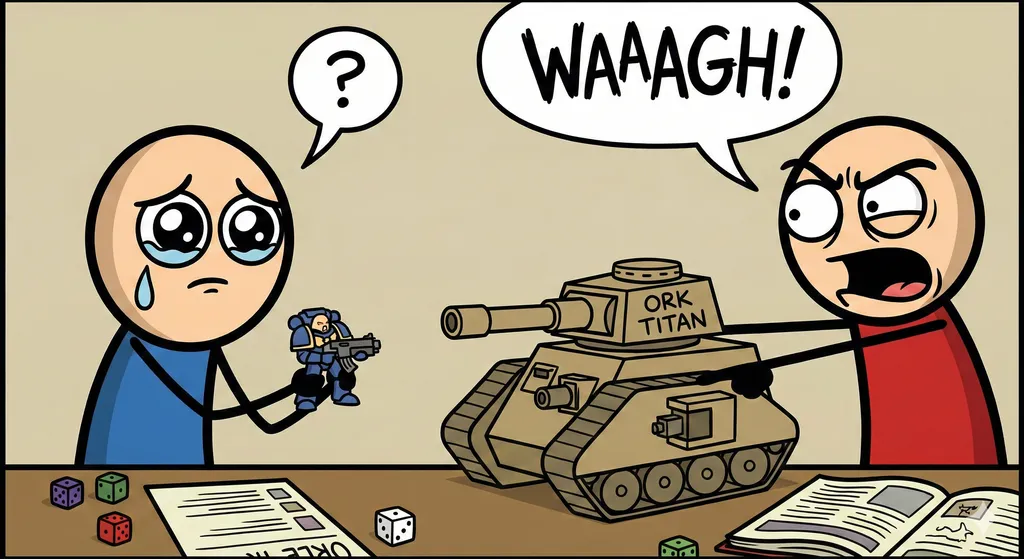
The realm of Warhammer 40,000 is one of grim darkness, epic conflict, and boundless creative expression. While Games Workshop provides the canvas, it's the hobbyist who brings the universe to life. Spikey Bits’ recent “How to Paint 40k Miniatures Guide: Paints, Glazes & Airbrushing” isn't just another introductory text; it's a foundational masterclass for anyone serious about elevating their army from tabletop-ready to truly iconic.
At its core, miniature painting is a craft, and like any craft, it has its 'mechanics.' This guide doesn't merely list paint types; it delves into the *application* and *purpose* of each. The discussion around paints moves beyond the simple base-layer-and-wash paradigm, exploring the nuances of opacity, pigment density, and how different brands interact. Critically, the guide's emphasis on glazes is where the true 'crunch' of advanced painting begins. Glazing isn't just a thinner wash; it’s a technique for building up subtle color transitions, adding depth, and achieving vibrant saturation without obscuring underlying details. Think of it as painting with light and shadow, meticulously layering translucent color to create smooth gradients that simply aren't possible with opaque paints alone. For the airbrushing segment, the guide tackles everything from equipment selection and maintenance to advanced techniques like pre-shading, zenithal highlighting, and feathering. These methods accelerate base coating and achieve incredibly smooth blends, but more importantly, they offer unparalleled control for creating volumetric lighting and atmospheric effects that hand-brushing struggles to replicate. Understanding *when* to use an airbrush versus a traditional brush for specific effects is a strategic decision, much like choosing the right unit for a tactical objective on the battlefield.
But what do these techniques mean for the lore? A well-painted miniature isn't just a game piece; it's a tangible piece of the 40k narrative. The grimdark aesthetic isn't achieved by accident; it's built through careful application of color, texture, and weathering. Imagine the chipped, ceramite armor of a veteran Space Marine, each scratch telling a tale of countless battles against xenos hordes. Or the verdigris on a Nighthaunt's ethereal blade, hinting at the ancient, corrupted magic that binds it. Glazing can bring out the sickly pallor of a Death Guard's corrupted flesh or the ethereal glow of a Tzeentchian daemon's flame, directly enhancing the visual storytelling of their origins and powers. Airbrushing allows for seamless transitions on large models, making a towering Imperial Knight feel truly monolithic and imposing, its armor reflecting the vastness of its purpose. The guide empowers hobbyists to translate the rich, often brutal, lore of the Imperium, Chaos, Xenos, and Aeldari directly onto their models, making each unit a character with a history. It's the difference between reading a battle report and *seeing* the battle unfold in vivid detail on your table. Pro Acryl Paints are particularly adept at this, offering vibrant pigments that glaze beautifully.
The verdict from the table is clear: good painting elevates the entire gaming experience. While “three-color minimum” is a common baseline, a truly well-painted army fundamentally changes the 'table feel.' It transforms a tactical wargame into a living diorama, where every charge, every blast, and every heroic stand is visually amplified. Opponents appreciate the effort, often leading to more engaging and memorable games. For the painter, there's immense satisfaction in fielding an army that is not only effective but also a work of art. This Spikey Bits guide isn't just about making your models look good; it's about providing the tools and understanding to make them *tell a story*. It's an investment in the immersive quality of your games, fostering pride in your collection and deepening your connection to the Warhammer 40,000 universe. For new painters, it provides a structured path to mastery; for veterans, it offers new perspectives and techniques to refine their craft.
Related Stories
Baneblade Versatility: Magnetize All 8 Variants, Dominate the Field
Unlock unparalleled strategic flexibility on the battlefield by magnetizing your Warhammer 40,000 Baneblade kit. This deep-dive explores the crunch, fluff, and
Combi-Weapons & Shotguns: Heresy's Tactical Granularity Explored
Games Workshop's latest Horus Heresy upgrade sets for combi-weapons and shotguns aren't just plastic; they're an injection of crucial tactical depth. We dissect
Ork Boyz & Da Jump: The 11th Ed Combo Reshaping Mob Tactics
The latest Warhammer 40,000 Ork Boyz datasheet for 11th Edition reveals an unexpected Da Jump teleport synergy. This potent Weirdboy combo promises to fundament