
Beyond Generic: Crafting Culturally Rich Names On The Fly
Campaign Mastery's 'Names On The Fly' offers GMs a sophisticated method for instant, culturally relevant naming. This technique elevates improvisation, deepening world immersion and narrative consistency at the table.
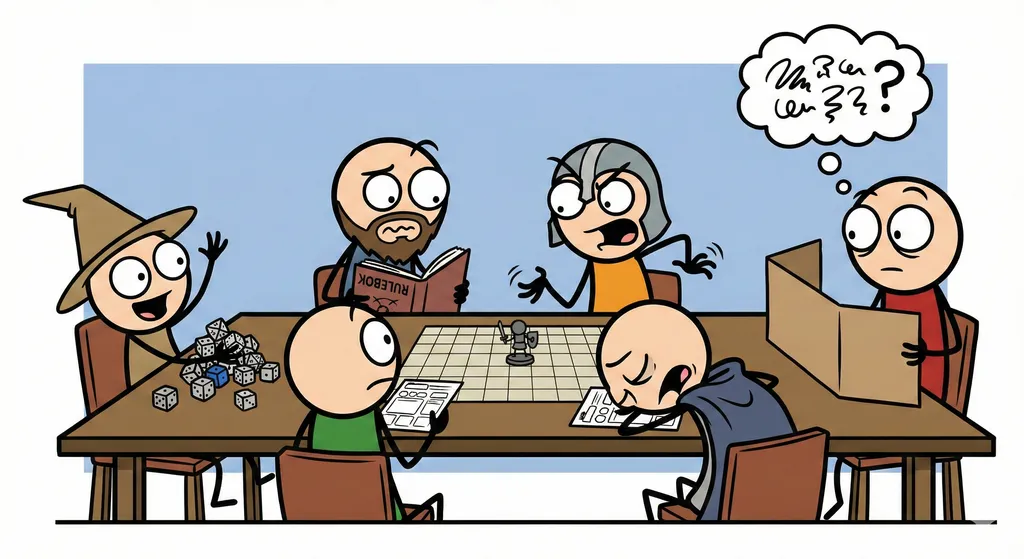
Campaign Mastery's recent piece, 'Unique Cultural Markers: Names On The Fly', isn't a new D&D 5th Edition module or a Pathfinder 2E bestiary, but a potent *methodology* for GMs, offering a sophisticated approach to an age-old challenge: naming characters, places, and factions on the fly without breaking immersion. This isn't about rolling on a generic fantasy name table; it's about weaving cultural specificity into the very fabric of your improvised world, a subtle yet profound enhancement for any tabletop.
The core 'crunch' of this method, as distilled from Campaign Mastery's insight, lies in its structured approach to cultural phonetics and thematic markers. Rather than a brute-force randomizer, it proposes building a mental (or physical, for the diligent GM) lexicon of cultural 'DNA' for your game world's various peoples. Imagine, for instance, a dwarven culture characterized by guttural consonants, hard 'k' sounds, and suffixes denoting lineage or craft. An elven culture might favor sibilant 's' sounds, melodic vowels, and prefixes that evoke nature or ancient lineage. The mechanic isn't prescriptive in terms of *what* sounds, but *how* you apply them consistently. When a player asks, 'What's the name of this innkeeper?', you don't panic. Instead, you access the 'human (coastal merchant)' cultural marker you've pre-defined – perhaps leaning into short, practical names with a hint of seafaring slang – and construct 'Barnaby 'Barnacle' Croft' or 'Elara Shorewind'. It's about having a set of internal 'rules' for each cultural group, allowing for improvisation within a pre-established framework. This approach sidesteps the common pitfall of names feeling interchangeable or, worse, comically out of place. It’s a GM tool that transforms a moment of potential stumble into an opportunity for deep worldbuilding. For those seeking to deepen their understanding of linguistic worldbuilding, I highly recommend The Language of the Elder Scrolls, which meticulously details how names and language reinforce lore.
From a lore perspective, 'Names On The Fly' is nothing short of transformative. Every name, even one conjured in the heat of the moment, becomes a miniature lore artifact. A character's name might subtly hint at their clan's ancestral lands, their family's historical profession, or even a past conflict. Consider a region where a historically oppressed minority's names still bear markers of a dominant culture's language, perhaps with subtle phonetic twists that denote resistance or adaptation. This method allows GMs to create a rich tapestry of linguistic history without needing to invent entire languages. It reinforces the idea that cultures are distinct, not just in their customs and architecture, but in the very sounds and structures of their speech. This consistency builds a sense of verisimilitude that generic name generators simply cannot replicate. The world doesn't just *feel* lived-in; its very nomenclature *tells* a story, adding layers of depth that players subconsciously absorb, making their engagement with the setting far richer.
For the actual table experience, the impact is immediate and profound. GMs gain a newfound confidence in improvisation. No longer do you need to pause the narrative flow to consult a random table or invent a name that feels generic. Instead, you can swiftly produce a name that feels authentic to the moment and the culture. This seamless integration keeps players immersed, reinforcing the illusion of a living, breathing world. It elevates the quality of spontaneous interactions, making those unexpected detours feel just as meticulously crafted as your pre-written encounters. Players will notice the difference, even if they can't articulate why. The world feels more consistent, more 'real,' and that translates directly into deeper engagement and a more satisfying role-playing experience.
Top Pick: The Tome of Adventure Design
Its structured approach to worldbuilding and encounter generation pairs perfectly with culturally specific naming, providing a comprehensive toolkit for GMs.
Check Price on Amazon →Related Stories
The Player Aid Imperative: Clarity at the Table's Core
Unclear rules can shatter game night. This deep dive explores how robust player aids are critical for smooth gameplay and deeper immersion. We analyze the 'brea
Sundered Veil's Echoes: Failure Redefined at the Table
Aetherforge Games' Chronicles of the Sundered Veil introduces the 'Echoes of Failure' system, transforming setbacks into potent narrative engines. This deep div
Ancestry Reforged: Grimstone Chronicles' Bold New System
Black Iron Games' Grimstone Chronicles introduces a revolutionary Heritage & Calling system, decoupling biology from culture for deeper character generation. Th