
Beyond the Atlas: Crafting Worlds One Encounter at a Time
Forget front-loaded encyclopedias; a recent insight from Campaign Mastery advocates building your TTRPG world dynamically within each encounter. This method not only reduces GM prep but fosters a richer, more player-driven narrative at the table.
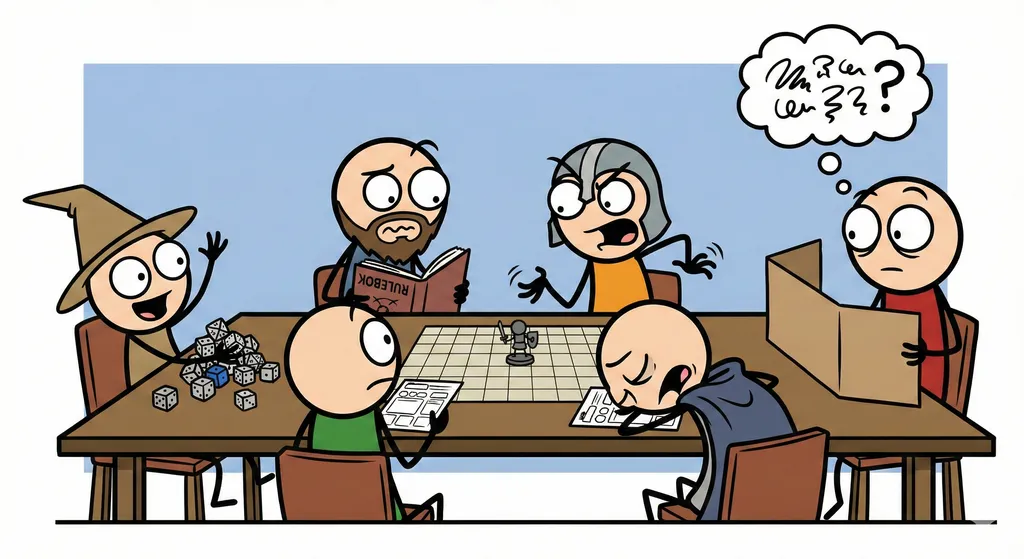
Campaign Mastery recently dropped a concept that resonates deeply with veteran Game Masters: the power of 'Worldbuilding Through Encounters.' It’s not just a clever turn of phrase; it's a fundamental shift in how we approach setting creation, moving from exhaustive pre-planning to emergent discovery, one dice roll at a time.
How does this manifest at the table? Imagine your party delves into a forgotten ruin. Instead of a verbose exposition on the ancient civilization that built it, they encounter a unique construct—its chassis etched with symbols unlike any known script, powered by a crystal pulsating with an unfamiliar energy signature. This isn't just a monster; it's a question mark, a hook. Or perhaps a merchant in a bustling market sells exotic spices and textiles, not from the nearby port, but from 'the Sunken Isles, far to the west.' Suddenly, a new land is hinted at, its existence confirmed by tangible goods, without a single word of lore dump. The players might ignore it, or they might latch onto it, spawning an entire new arc.
It's about the *implication*, not the explanation. A peculiar type of moss growing only in certain caverns, hinting at unique geological conditions or a lingering magical blight. A specific style of weaponry wielded by a bandit gang, suggesting a regional cultural identity or a forgotten smithing tradition. These are granular details that, when strung together, form a cohesive, living world. This isn't just for D&D 5th Edition; it applies equally to the gritty streets of Cyberpunk RED or the cosmic horror of Call of Cthulhu. The principle remains: seed the world with questions, not answers.
The beauty of this method lies in its organic nature. Lore isn't a static document; it's a dynamic tapestry woven by player interaction. When player characters actively investigate the strange construct, research the Sunken Isles, or question the origins of the unique moss, the world isn't merely revealed; it's *discovered*. This makes the lore inherently more impactful. Instead of a GM reciting historical facts, the players become archaeologists, detectives, and explorers within the setting. The details they uncover are directly tied to their actions, their successes, and their failures. This creates a powerful feedback loop: the world informs the encounters, and the encounters enrich the world. It sidesteps the dreaded lore dump, ensuring that every piece of information is relevant to the immediate narrative thrust. It fosters a sense of wonder and curiosity, as the players piece together the fragmented clues, constructing their own understanding of the setting's grand narrative.
For the Game Master, this approach is liberating. It drastically cuts down on the pressure to pre-plan every historical event, every political faction, and every minor deity before the campaign even begins. Instead, you focus on crafting compelling, immediate encounters, allowing the world to expand and define itself as the story unfolds. It demands a certain level of improvisation and a willingness to say 'yes, and...' to player theories. But the reward is immense: a world that feels genuinely responsive, alive, and uniquely tailored to the players' journey. It transforms the GM from a mere storyteller into a facilitator of emergent narrative.
The players, in turn, feel a deeper sense of ownership. Their choices directly influence which aspects of the world come into focus, making the setting feel less like a stage and more like a character in its own right. It's the difference between being told about a world and actively participating in its creation. This dynamic interaction is, in my professional opinion, the hallmark of truly exceptional TTRPG experiences, whether you're running a tightly plotted Adventure Path or a freeform sandbox. For GMs looking to streamline their prep and embrace this emergent style, I highly recommend Return of the Lazy Dungeon Master, which champions similar principles of efficient, player-focused design.
Top Pick: Return of the Lazy Dungeon Master
An essential guide for GMs seeking to maximize impact with minimal prep, perfectly complementing emergent worldbuilding.
Check Price on Amazon →Related Stories
Astral Forge Unleashes Aetherbound Chronicles' July Generosity
Astral Forge Games is launching a new wave of freebies, sales, and charity bundles for Aetherbound Chronicles. This initiative aims to expand the game's reach w
Shifting Scales: Chronicle of Aeons Redefines Faction Play
Arcane Drift Studios' Chronicle of Aeons: Shifting Scales introduces a groundbreaking Political Momentum system, empowering players to directly influence the wo
Aetherbound's Core: Skill, Talent, and Table Impact
Veridian Games' Aetherbound Chronicles introduces a nuanced distinction between learned skill and innate talent. We dissect how this mechanical separation impac