
Beyond the Dice: The Unseen Mechanics of Social Play
Wargamer's recent list of drinking games raises an interesting question for tabletop enthusiasts. We explore the subtle mechanics and social lore of integrating external activities into our core gaming sessions.
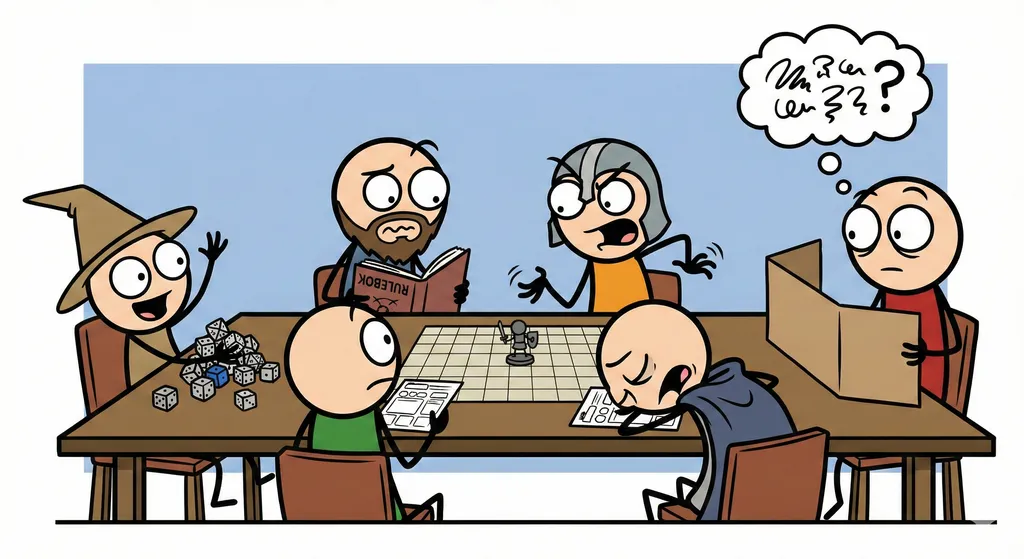
The recent Wargamer feature, 'Best drinking games,' presents a curious pivot from their usual battle reports and kit reviews. For us at The Crit Sheet, this isn't merely about the merits of beer pong; it's a prompt to examine the fascinating, often unacknowledged meta-games that subtly shape our core tabletop experiences and the very fabric of our gaming tables.
As veteran Game Masters, we understand that the tabletop is a complex ecosystem. It's not just the rulebook that dictates play, but the unspoken social contracts, the shared rituals, and yes, sometimes, the casual side activities that weave into the main event. When a publication like Wargamer ventures into territory traditionally outside the bounds of miniatures and lore, it demands a critical look at how these 'external' systems interact with the structured crunch we so meticulously craft and enjoy.
Let’s get into the mechanics, or rather, the *meta-mechanics*. Introducing a set of 'drinking game' rules alongside, say, a tense dungeon crawl in D&D 5th Edition or a strategic skirmish in Kill Team 2024, creates an entirely new layer of player engagement. Consider the resource management aspect: players are now managing not just their character's hit points or command points, but also their own state of mind, their 'alcohol resource pool,' if you will. A critical fumble might demand a 'penalty sip,' transforming a simple dice roll into a consequence that affects the player's real-world dexterity and decision-making for subsequent turns. Conversely, a triumphant critical hit could grant a 'pass' to a teammate, introducing a layer of strategic self-sacrifice or communal benefit not found in the core rules. These are emergent mechanics, often house-ruled on the fly, that directly influence player agency and risk assessment within the primary game. The 'skill checks' of a drinking game – the ability to flip a cup, to accurately toss a ping-pong ball – become secondary mini-games that, depending on success or failure, can trigger effects within the main narrative or combat encounter. It's a fascinating, if chaotic, example of system integration, where the 'rules' are less about game balance and more about social cohesion and shared experience.
The lore of these social meta-games is equally compelling. It’s not the grand narratives of the Forgotten Realms or the grimdark tales of Warhammer 40,000, but the intimate, evolving 'lore' of your gaming group. The in-jokes that arise from a particularly memorable 'penalty,' the shared history of legendary critical failures, or the traditions of celebratory toasts for epic victories – these form the unwritten canon of your table. This is worldbuilding not of fantastical lands, but of social spaces. These rituals, whether spontaneous or planned, contribute to the unique identity of each gaming session and group. They tell the story of *how* you play, not just *what* you play, building camaraderie and a sense of shared experience that transcends the game world itself. It speaks to the community creativity that thrives when players find ways to personalize their gaming experience, bending the edges of the rulebook to fit their collective personality.
So, is this good for the game? The verdict on table feel is nuanced. When managed thoughtfully, these social meta-games can elevate a session, fostering a unique blend of camaraderie and lighthearted tension. They can lower inhibitions, encouraging bolder roleplaying or more daring tactical maneuvers. The shared laughter and unique memories they generate are invaluable. However, there's a fine line. Excessive integration can detract from immersion, slow down narrative pacing, or even create an uncomfortable atmosphere if not all players are equally enthusiastic or capable. The Game Master's role here is paramount: setting clear expectations, ensuring universal consent, and maintaining focus on the primary game's narrative and strategic depth. Like any powerful tool, it requires a deft hand. Understanding your players and the social contract of your table is crucial for leveraging these dynamics positively, transforming a simple list of drinking games into a conversation about player experience and engagement. For GMs looking to cultivate a robust and adaptable social contract at their tables, we often recommend resources like TTRPG Social Contract Toolkit.
Top Pick: The Crit Sheet's Guide to Running Immersive Sessions
For GMs seeking to balance core rules with emergent social dynamics.
Check Price on Amazon →Related Stories
D&D Finally Embraces Its 5.5e Identity, Ending Branding Chaos
Wizards of the Coast's long-awaited D&D iteration finally receives a sensible name: 5.5e. This move promises mechanical refinement and lore continuity, benefiti
Ghost in the Shell TTRPG: Can a New System Capture the Cyber-Soul?
Another Ghost in the Shell TTRPG is on the horizon for 2026, promising unparalleled faithfulness. We dissect what this means for mechanics, lore, and the table
The Planeswalker's Lost Path: A Deep Dive into WotC's MTG RPG
A previously unknown Magic: The Gathering TTRPG project by Wizards of the Coast has surfaced, with its design draft available for charity. This revelation promp