
Beyond the Static: Wargaming's War on Boring Battlefields
The competitive wargaming scene grapples with the monotony of static tabletops. We delve into how Warhammer 40,000 and Warmachine could evolve mission design and terrain interaction to inject vital tactical depth.
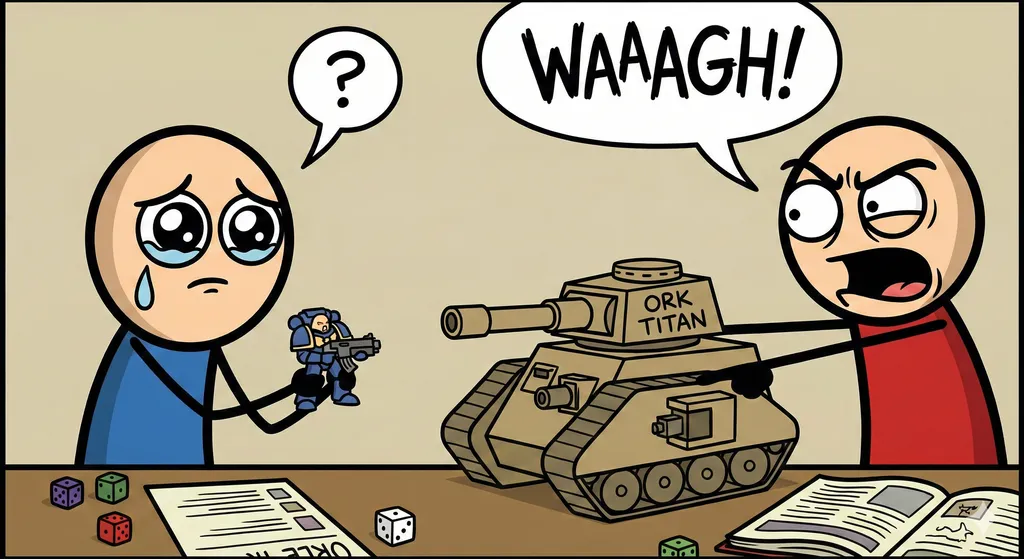
The whispers of Warhammer 40,000 11th Edition are just that—whispers—but they, alongside the ongoing evolution of Privateer Press’s Warmachine, ignite a crucial conversation within our competitive wargaming community: how do we banish the specter of the 'tepid tabletop'? The Wargamer recently posed the question of whether competitive wargames can escape this curse, and it's a query that veteran players and event organizers have been wrestling with for cycles. For too long, the competitive scene has defaulted to predictable terrain layouts and static objective markers, turning what should be dynamic, narrative conflicts into sterile exercises in list optimization. It’s time for a revolution in battlefield design, not just in aesthetics, but in core mechanics.
At the heart of the problem lies the inherent predictability of many competitive setups. Players often know exactly where objectives will be, what kind of terrain will be present, and how it will interact with their units long before the first dice roll. This isn't strategy; it's a solved equation. To truly elevate the experience of Warhammer 40,000 or Warmachine, we need to introduce genuine tactical variance at the battlefield level. Consider systems that embrace dynamic objectives—points that move, change value based on turn, or activate secondary effects. Imagine a Warhammer 40k mission where a 'Strategic Data-Conduit' objective shifts between three pre-defined locations each round, forcing players to adapt their battle lines rather than simply digging in. Or Warmachine control points that become 'Overloaded' after being held for a turn, dealing damage to units within a radius, demanding a tactical withdrawal and re-engagement.
Interactive terrain is another crucial, yet often underutilized, mechanic. Instead of merely being Line of Sight blockers or providing cover, terrain should be an active participant in the conflict. What if certain pieces of cover in Warhammer 40k could be destroyed, changing the tactical landscape mid-game? Or 'Arcane Generators' in Warmachine that, if activated, provide a temporary buff to friendly models but risk an explosion if overcharged? Games Workshop has explored this concept in smaller scales, with Kill Team 2024 providing specific terrain setups and unique interactions per scenario, and it’s a design principle that could scale beautifully. This isn't about making games more random; it's about introducing controlled chaos and strategic decision-making around an evolving environment.
From a lore perspective, the concept of a static battlefield is anathema to the settings these games inhabit. The grim darkness of the 41st Millennium is defined by brutal, unpredictable warfare across countless shattered worlds. Battlefields should reflect the cataclysmic energies of the galaxy, the desperate ingenuity of its factions, and the sheer environmental hostility of alien planets or war-torn Imperial cities. Similarly, the Iron Kingdoms of Warmachine are a nexus of arcane power and steam-driven industry, where mechanika, colossal warjacks, and powerful spellcasters reshape the very ground they fight on. A truly dynamic battlefield isn't just a mechanical improvement; it's a profound enhancement to the narrative immersion, allowing players to feel the desperate struggle for survival and dominance that defines these universes.
So, is this good for the game? Unquestionably. Introducing dynamic mission parameters and interactive terrain elevates competitive play from a test of list-building prowess to a genuine crucible of tactical adaptability. It rewards quick thinking, forces players to react to unforeseen circumstances, and drastically increases replayability. No two games will ever truly feel the same, even with identical army lists. While implementation demands careful design to avoid undue complexity or 'gotcha' moments, the payoff is a richer, more engaging, and ultimately more *satisfying* tabletop experience. For Warhammer 40,000 11th Edition and the continuing evolution of Warmachine, embracing the war against boring battlefields isn't just an opportunity; it's an imperative for the health and vitality of the competitive scene.
Top Pick: Warhammer 40,000 Kill Team: Critical Operations Mission Pack
For its innovative approach to structured, dynamic terrain and objective play
Check Price on Amazon →Related Stories
Starcraft Wargame Storms Adepticon: A 40K Challenger Emerges
Blizzard Entertainment's new Starcraft Miniatures Game made a significant splash at Adepticon, garnering praise from veteran wargamers. This unexpected success
40K 11th Ed: Armageddon Unleashes Core Rule Overhaul
Games Workshop has unveiled Warhammer 40,000 11th Edition, launching with the 'Armageddon' box set featuring Orks and Blood Angels. This new edition promises a
Mechanicus 2: Ad-Mech's Digital Crusade Gets Deeper
The first glimpse of Warhammer 40,000: Mechanicus 2 reveals a mid-game experience steeped in intricate unit customization. This hands-off preview promises to de