
Campaign Critical: Fixing Plot Holes Before They Break Your Game
Every Game Master eventually faces the dreaded 'Elephant In The Gray Room'—a plot hole threatening campaign viability. Learn how to perform critical repairs that save your story and deepen player immersion.
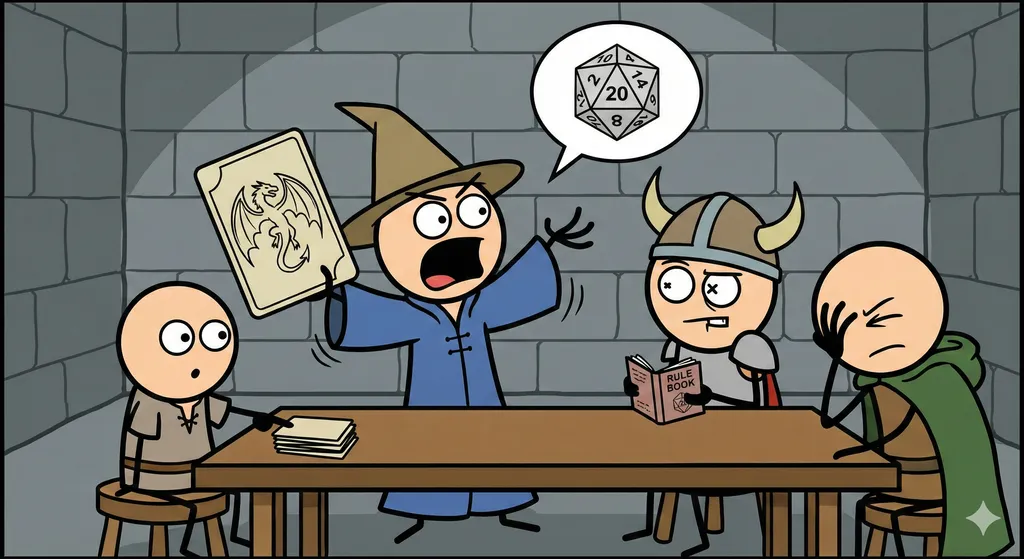
The existential dread of a campaign-threatening plot hole can chill even the most seasoned Game Master. We've all been there: that moment of dawning horror when a seemingly innocuous detail blossoms into an 'Elephant In The Gray Room'—a narrative inconsistency so gargantuan it threatens the very fabric of your TTRPG campaign. But despair not, for the craft of Game Mastering isn't just about constructing worlds; it's about the art of Critical Repairs, ensuring the story's integrity and the players' immersion remain sacrosanct.
At its core, a critical repair is a mechanical intervention designed to resolve a plot hole without shattering player trust or narrative cohesion. This isn't about arbitrary GM fiat, but a calculated application of narrative tools. Consider the **Surgical Retcon**: not a full campaign reboot, but a precise re-interpretation of past events. Perhaps a character's forgotten motivation wasn't forgotten, but *hidden* by an illusionist, or a crucial artifact's unique property was simply dormant until a specific trigger. The key here is subtlety and, where appropriate, player buy-in. Framing it as a 'new revelation' rather than a 'correction' is paramount. Then there's the **Narrative Patch**, introducing new lore elements, NPCs, or forgotten ancient powers *now* to retroactively explain past inconsistencies. A mysterious benefactor who always watched from the shadows, a forgotten prophecy that suddenly makes sense, or a hidden faction whose machinations explain a series of odd events—these aren't deus ex machina if properly seeded. Often, the players themselves will provide the solution, offering interpretations or actions that, with a GM's deft touch, can be woven directly into the campaign's truth. Recognizing and integrating these emergent solutions is a hallmark of skilled Game Mastering. For the most egregious issues, a meta-conversation with the table, explaining the narrative challenge and inviting collaborative solutions, can be a powerful, if risky, tool for mature groups invested in the story's health.
Integrating these mechanical repairs into the campaign's lore is where the magic truly happens. A successful repair shouldn't feel like a clumsy patch, but rather a natural unfolding of the world's deeper truths. If you introduce a hidden ancient order to explain away a plot hole, imbue them with history, motivations, and consequences that resonate with existing lore. This isn't just about filling a gap; it's about enriching the setting. The 'Elephant In The Gray Room' becomes less a mistake and more an obscured truth, a mystery waiting to be unveiled. This is where **Foreshadowing in Reverse** shines. After implementing a repair, subtly introduce clues—a cryptic journal entry, a forgotten map, a legend whispered by an NPC—that, upon reflection, make the 'fix' seem inevitable. It reinforces the idea that the world is vast and complex, full of secrets the players (and even the GM) are still discovering. The world feels alive, dynamic, capable of holding deeper truths than initially perceived. For GMs looking to deepen their understanding narrative structures can offer invaluable insights into how to make these narrative twists feel earned.
Ultimately, the verdict on critical repairs comes down to table feel: do they enhance or detract from the game experience? Handled poorly, constant retcons or jarring interventions can erode player trust, making them feel their choices are meaningless. Handled with care, however, critical repairs are a testament to the Game Master's skill and dedication. They preserve the integrity of the long-form story, turning potential campaign derailments into opportunities for deeper narrative exploration. A well-executed repair can transform a narrative weakness into a compelling new mystery, a fresh adversary, or a surprising revelation that strengthens the players' bond to the world and its characters. It's about being a resilient storyteller, adapting to the emergent narrative, and ensuring the campaign's long-term viability. The goal is always to maintain player immersion and their belief in the internal logic of the world, no matter how wild the journey becomes.
Top Pick: The Lazy Dungeon Master's Guide
Practical, adaptable GM advice for emergent storytelling
Check Price on Amazon →Related Stories
Beyond the Atlas: Crafting Worlds One Encounter at a Time
Forget front-loaded encyclopedias; a recent insight from Campaign Mastery advocates building your TTRPG world dynamically within each encounter. This method not
Sundered Veil: Tactical TTRPG Redefines Tabletop Combat
Grim Forge Games launches Chronicles of the Sundered Veil, a tactical TTRPG blending dynamic environmental manipulation with a grimdark narrative. This deep div
The Rise of the Lazy GM: Streamlined Prep for Better Tables
Sly Flourish's latest Kickstarter, The Rise of the Lazy Gamemaster, signals a pivotal shift in TTRPG campaign preparation. This deep dive explores how its princ