
Cocks' Crossover Push: D&D's Identity Crisis or New Horizon?
Chris Cocks confirms an intensified focus on Dungeons & Dragons crossover products, sparking debate among veteran players. We dissect the mechanical and lore implications for 5th Edition, analyzing how this strategy impacts your table.
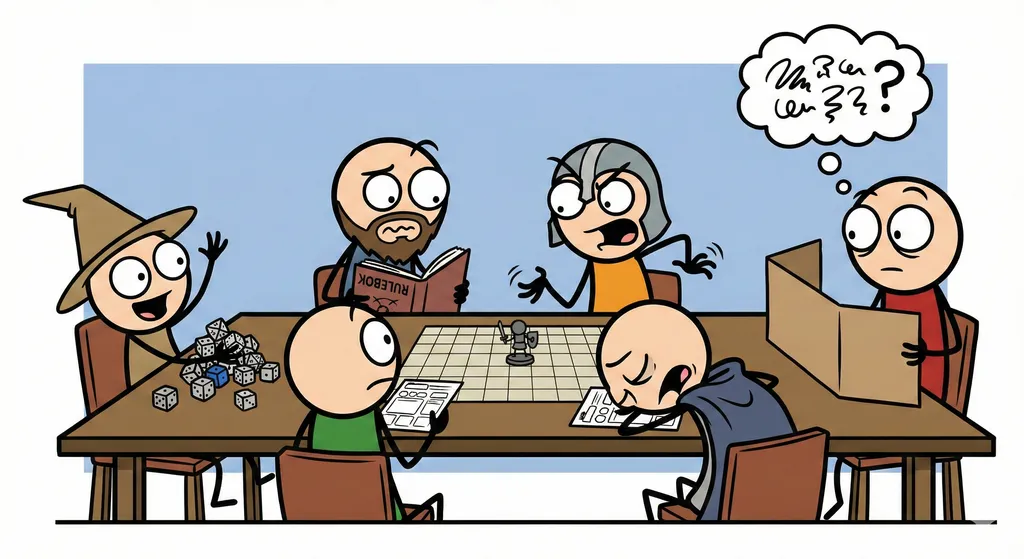
Chris Cocks’ recent statements, reported by EN World, confirm an intensified strategic focus on Dungeons & Dragons crossover products from Wizards of the Coast and parent company Hasbro. This isn't merely about licensing more miniatures or reskinning existing content; it signals a profound shift in how 5th Edition content is conceived and delivered. As veteran GMs and players, our concern isn't the existence of new content, but its quality, its mechanical integrity, and its narrative fit within the grander D&D multiverse.
The crunch of integrating external intellectual property into D&D 5th Edition presents a nuanced design challenge. Historically, D&D has absorbed disparate fantasy elements, but these were typically archetypes or broad inspirations. Direct crossovers, however, demand a different approach. Mechanically, this often manifests as new subclasses, character races, monster stat blocks, magic items, or even full setting guides. Consider the Guildmasters' Guide to Ravnica, an early foray into WotC’s internal IP crossover. Its subclasses, like the Circle of Spores Druid or the College of Lore Bard (re-themed as College of Valor for Ravnica), largely adhered to existing D&D design principles, fitting well within the established power curve and thematic expectations. The challenge grows exponentially when adapting, say, a sci-fi cybernetic augmentation or a modern-day superpower into a system built for swords and sorcery.
The risk lies in 'IP creep,' where the source material dictates mechanics over sound game design. Will we see abilities so unique to a crossover that they feel alien and unbalanced when placed alongside core D&D options? The modularity of 5th Edition is a strength, but there's a breaking point. Does a new race from a popular video game franchise, with its bespoke suite of abilities, genuinely enrich the player's choice, or does it simply serve as a marketing vehicle, potentially introducing power imbalances or niche mechanics that are difficult for GMs to adjudicate consistently across diverse campaign settings?
From a lore perspective, the implications are equally significant. D&D’s multiverse has always been a tapestry of infinite possibilities, but these direct IP integrations can strain the fabric. While a GM can always curate their table's lore, the official introduction of characters, factions, or entire cosmological concepts from external properties into D&D’s canon can dilute its core fantasy identity. Does a Jedi Knight or a Fallout Ghoul truly belong in the Forgotten Realms, even as a 'planar traveler'? The narrative burden on the Dungeon Master to seamlessly integrate these disparate elements without creating jarring tonal shifts is immense.
Some players revel in the novelty, relishing the opportunity to blend their favorite franchises. Others, often those deeply invested in D&D's unique lore, view it as a corporate play, sacrificing narrative cohesion for market share. The 'Universes Beyond' strategy in Magic: The Gathering offers a parallel: while successful in attracting new players, it has undeniably sparked vigorous debate among lore purists regarding the integrity of Magic's own established mythology. The question for D&D isn't *if* these crossovers can be made to work, but *how well* and at *what cost* to the game's long-term identity.
Ultimately, the verdict on these expanded D&D crossover products will rest entirely on execution. If Wizards of the Coast delivers mechanically sound, narratively compelling content that genuinely expands the toolkit for GMs and players, then the multiverse truly becomes richer. If it's a deluge of hastily adapted, unbalanced, or thematically dissonant material, then 5th Edition risks losing its unique voice amidst a cacophony of borrowed identities. For the discerning GM, the challenge will be to judiciously select what enhances their table and what simply serves as a distraction.
Top Pick: Tasha's Cauldron of Everything
Excellent modular tools for integrating diverse character concepts and managing new mechanical options
Check Price on Amazon →Related Stories
D&D's Gen Con Citadel: A Deep Dive into WotC's Bold Play
Dungeons & Dragons is set to dominate Gen Con with an unprecedented six-story building takeover, a clear signal of Wizards of the Coast's commitment. This immer
Tyrants of the Underdark: A Drow Masterclass in Deck-Building Power Plays
Gale Force Nine's Tyrants of the Underdark masterfully blends deck-building with cutthroat area control, immersing players in the D&D Underdark. Despite initial
Hasbro's AI Studio: Crunching Worlds, Not Just Numbers
Hasbro's new AI studio promises to open its vast IP catalog for third-party development, but the implications for D&D, Magic, and other beloved settings are com