
Commander's 'Game Changer' List: A Flawed Social Contract?
Wizards of the Coast's latest attempt to balance Magic: The Gathering's Commander format introduces a 'Game Changer' list. This initiative seeks to empower players to self-regulate deck power, but does it truly address the format's inherent tension between casual fun and competitive optimization?
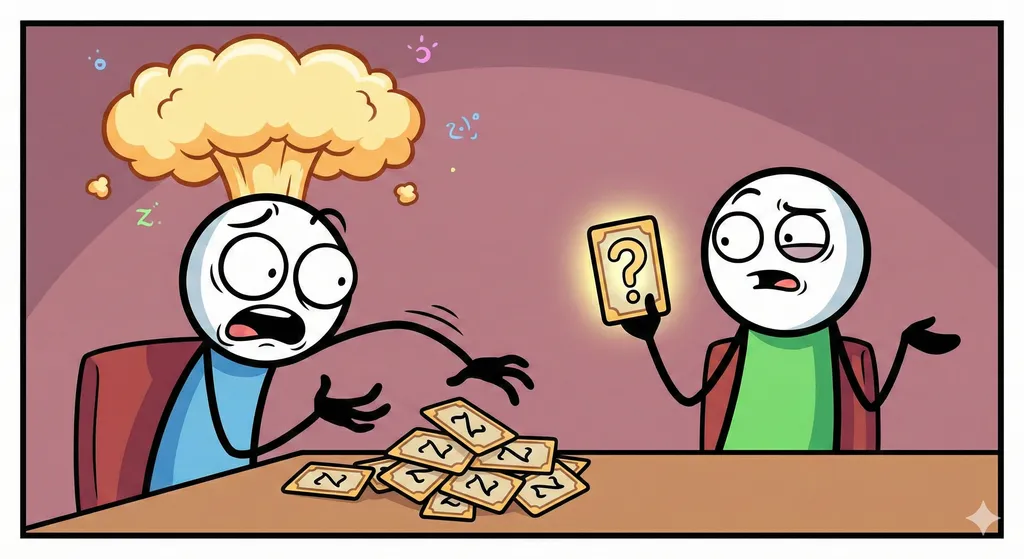
The ongoing struggle to preserve the casual ethos of Commander, Magic: The Gathering's most popular format, continues to challenge its publisher, Wizards of the Coast. While the spirit of Commander promises self-expression and inclusive fun, the reality of an ever-expanding card pool and increasing power creep often leads to pre-game friction. The latest proposed solution: an official list of “Game Changer” cards, intended to guide players in power-ranking their decks and foster more balanced play experiences.
At its core, the “Game Changer” list isn't a ban list; it's a suggestion, a framework for a social contract. Mechanically, the idea is deceptively simple: players are encouraged to assess their deck's power level based on the inclusion of these identified 'superweapons.' Imagine arriving at a table and, instead of vague power level discussions, you can state, "My deck runs two Game Changers, so I'm looking for a pod around that tier." This system attempts to formalize the unspoken agreement that Commander players have long navigated, providing a common vocabulary for deck strength. It’s an elegant sidestep of outright bans, which, as the source points out, would have seen staples like Sol Ring exiled decades ago, fundamentally altering the format's identity. The onus is shifted from a centralized authority dictating legality to the players themselves, empowering them to curate their own play environment. It’s a bold experiment in community-driven balance, aiming to prevent the casual player base from being steamrolled by the most egregious design errors of Magic's extensive history.
However, the lore, or rather, the foundational philosophy of Commander, is where this approach finds both its greatest strength and its most significant vulnerability. Commander was born from kitchen table variants, a format shaped by player ingenuity and a desire for epic, multifarious games, not cutthroat efficiency. Its identity is deeply intertwined with the freedom to play *any* legendary creature and build *around* it. The format thrives on the idea that every card has a home, and that even quirky, underpowered strategies can find their moment. A rigid ban list, while effective for competitive play, feels anathema to this spirit, forcing players to abandon beloved cards. The “Game Changer” list attempts to honor this by not removing cards but by classifying them, allowing their continued play within a self-selected power bracket. It’s an acknowledgment that the problem isn't the cards themselves, but the context in which they're played. It's an interesting evolution of the format's unwritten rules, attempting to provide structure without stifling creativity.
So, is this good for the game? The verdict at the table is, predictably, mixed. On one hand, it’s a refreshing acknowledgment of player agency. It fosters pre-game communication, which is always a boon for a format so reliant on social contract. It allows players to continue using powerful, exciting cards without forcing them into a competitive-only mindset, provided the pod agrees on a power level. For many, this will be a welcome alternative to the arbitrary feeling of a ban list that doesn't quite fit Commander's unique rhythm. On the other hand, it's a solution that relies heavily on voluntary compliance and a shared understanding of what constitutes a 'Game Changer' tier. Without strict enforcement, the casual player base could still find themselves at the mercy of those who either disregard the list or interpret it loosely. It’s a system that assumes good faith and consistent community standards, neither of which are guaranteed across the vast and varied landscape of Commander players. It asks players to do the heavy lifting of balancing, which some might view as a cop-out from the designers. Ultimately, while an interesting and well-intentioned compromise, the ‘Game Changer’ list feels more like a sophisticated bandage than a permanent cure for Commander's endemic power disparities. It's a tool, but one whose effectiveness is entirely dependent on the players wielding it.
Explore the latest Commander precons
Top Pick: The Command Zone Podcast
Excellent discussions on Commander mechanics and meta shifts
Check Price on Amazon →Related Stories
Secrets of Strixhaven: Unveiling Commander's Arcane Archives
The highly anticipated 'Secrets of Strixhaven' set from Wizards of the Coast promises to reshape the Commander landscape. We dive deep into how its new legendar
Strixhaven's Improvised Encounter: A Standard Powerhouse?
Much Abrew: Improvised Random Encounter is poised to disrupt Standard, bringing back a familiar mechanic with a powerful new twist. This card promises to cheat
Strixhaven's Commanders: A Masterclass in EDH Design
Secrets of Strixhaven introduces a suite of legendary creatures, each poised to redefine existing archetypes and spark fresh strategies in the Commander format.