
Strixhaven "Clunkers": Unpacking Magic's Design Intent
The first wave of Magic: The Gathering's Secrets of Strixhaven spoilers has landed, unveiling some cards that have been quickly dubbed "unplayable" by the community. We delve into the design philosophy behind these perceived duds and their crucial, often overlooked, role in the game's ecosystem.
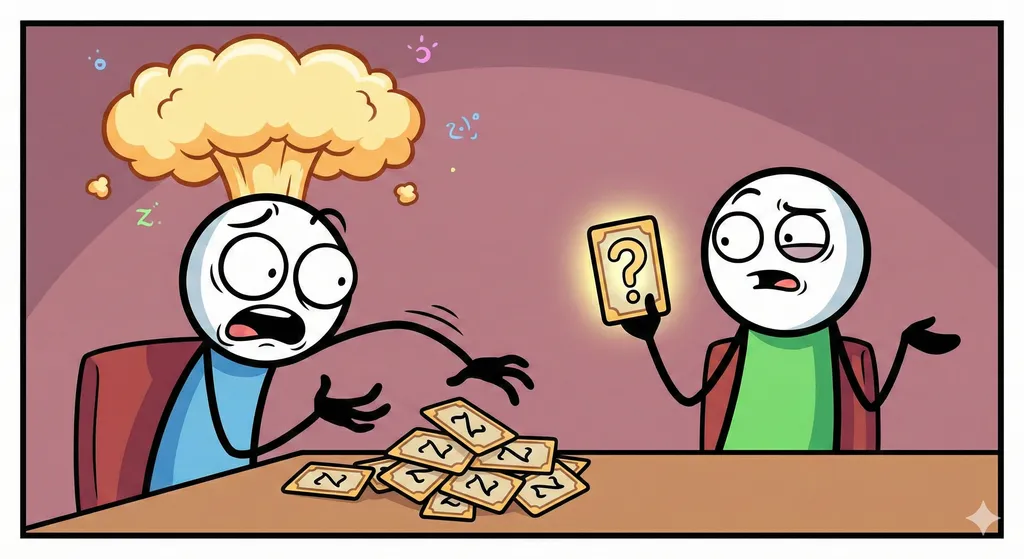
The latest spoilers for Magic: The Gathering's *Secrets of Strixhaven*, courtesy of Wizards of the Coast, have dropped, and as is tradition, the internet is abuzz. However, unlike the usual fanfare for powerful new mythics and format-warping rares, a significant portion of the initial chatter has centered on cards described, rather bluntly, as "clunkers." It's easy to dismiss these as simple design misses, but as any seasoned planeswalker knows, the truth in Magic is rarely so straightforward.
Let's cut to the crunch. When a card is labeled "unplayable," it generally falls into a few categories: it's overcosted for its effect, its ability is too situational to matter, or it's a "build-around" that demands an impractical level of commitment for a meager payoff. Consider the hypothetical 'Gravel-Bound Initiate': a 2/2 for five mana with 'When Gravel-Bound Initiate enters the battlefield, scry 1.' In a vacuum, or against the efficiency of modern Standard, this is indeed a joke. It lacks evasion, a significant body, or an impactful ability for its cost. Another example might be 'Arcane Detainment Sphere,' an artifact for four mana that taps to put a 'detainment counter' on target nonland permanent; permanents with three or more detainment counters can't untap. Slow, expensive, and easily removed, it screams inefficiency.
But here's where the veteran's eye comes in: these cards are not designed for the Pro Tour. They are often critical components of a balanced Limited environment. 'Gravel-Bound Initiate,' while weak, might be a common that provides a necessary body in a color, helping to fill out a mana curve in a draft, or providing a speed bump against aggressive strategies. 'Arcane Detainment Sphere,' in a slower Limited format, could be a legitimate answer to a bomb rare if you can protect it. They exist to create variance in packs, to give players choices – even if those choices are between 'bad' and 'less bad.' They teach new players about card evaluation and the importance of synergy, rather than just raw power. Furthermore, they serve as budget options for casual Commander decks or provide fodder for jank brews looking for obscure interactions that might one day break the format. The perceived "unplayability" can often mask a specific, narrow design intent that isn't immediately obvious outside of that context.
From a lore perspective, *Secrets of Strixhaven* is set in a magical university. Not every student is a prodigy, and not every spell is a masterwork. These "clunkers" perfectly embody the learning process. 'Gravel-Bound Initiate' could be a first-year summoning basic elementals, not yet capable of conjuring something truly formidable. 'Arcane Detainment Sphere' might be a complex, experimental piece of warding magic, brilliant in theory but cumbersome in practice, designed by a student still grappling with practical applications. They represent the academic journey, the successes and the many, many failures that lead to true mastery. This grounding in the setting lends thematic consistency, reminding us that not every card needs to be a world-shaker to contribute to the rich tapestry of the plane's narrative.
Ultimately, are these "unplayable" cards good for Magic: The Gathering? Absolutely. They are the scaffolding upon which the game's structure is built. They ensure that Limited formats remain dynamic and skill-testing, rather than simply a race to open the most powerful rares. They provide a crucial power floor, preventing runaway power creep and allowing future design space to be explored. Moreover, they foster community discussion, theorycrafting, and the glorious pursuit of turning perceived trash into treasure in niche formats like Commander. While frustrating for those solely focused on competitive Standard or Modern, these cards are vital for the health of the game's broader ecosystem, offering entry points and diverse play experiences. The discussion around their perceived weakness, paradoxically, strengthens the community's understanding of design. For those looking to dive deeper into the mechanics of Magic's broader economy, understanding card value across all rarities is key. Check out TCGPlayer to see how even bulk cards find their place.
Top Pick: Strixhaven Commander Decks
Excellent entry point to the format's diverse strategies and unique lore interactions
Check Price on Amazon →Related Stories
Strixhaven's Commanders: A Masterclass in EDH Design
Secrets of Strixhaven introduces a suite of legendary creatures, each poised to redefine existing archetypes and spark fresh strategies in the Commander format.
Sedgemoor Witch: Arcavios's Spell-Slinging Engine Awakens
The unassuming Sedgemoor Witch has seen a dramatic price surge, fueled by a renewed focus on Strixhaven's spellcasting prowess. This 2-mana warlock is proving t
Secrets of Strixhaven: Unveiling Commander's Arcane Archives
The highly anticipated 'Secrets of Strixhaven' set from Wizards of the Coast promises to reshape the Commander landscape. We dive deep into how its new legendar