
Commander's Land Destruction: Salt, Strategy, or Sabotage?
This week, we're dissecting the contentious strategy of Mass Land Destruction in Magic: The Gathering's Commander format. Is it a legitimate tactical choice or a universally reviled playstyle that poisons the table?
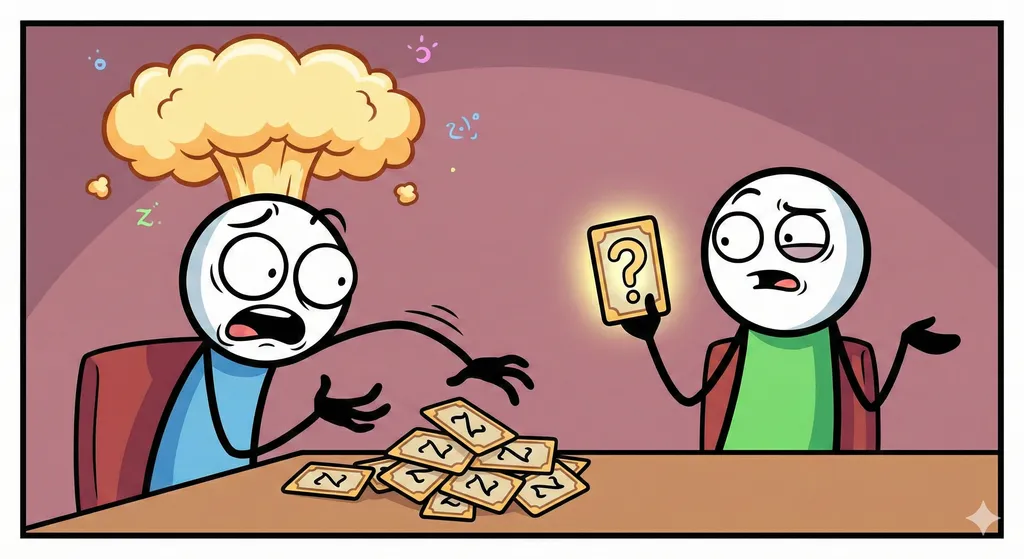
The recent episode of MTGGoldfish's Commander Clash, "Destroy ALL Lands?! (Salt Week)," has once again ignited the eternal debate surrounding Mass Land Destruction (MLD) in Magic: The Gathering's Commander format. Published by Wizards of the Coast, this casual-yet-competitive format often brings out the best – and sometimes the most contentious – interactions the game has to offer, and few strategies are as polarizing as sweeping away every player's mana base. As veteran Game Masters, we've seen countless tables descend into chaos or ascend to tactical brilliance, and MLD sits squarely at that volatile intersection. It’s a strategy that fundamentally challenges the very premise of resource accumulation, forcing players to re-evaluate what "fair play" truly means in a multiplayer setting.
At its core, Mass Land Destruction is exactly what it sounds like: spells designed to remove multiple lands from the battlefield, often all lands. Iconic examples include Armageddon, Catastrophe, Jokulhaups, Sunder, and Ruination. The raw power of these effects is undeniable; they reset the game's tempo by denying opponents their primary resource. However, simply casting an MLD spell is rarely a winning play in itself. The true art lies in breaking parity. A skilled MLD pilot will ensure they have a way to rebuild faster or operate without lands entirely. This could involve an abundance of artifact mana (Sol Ring, Mana Crypt, Grim Monolith), mana dorks (Birds of Paradise, Llanowar Elves), or a commander that generates value without needing a robust mana base. Some strategies leverage lands that become creatures, making them immune to *sorcery* speed land destruction, or lands that provide multiple mana. The critical element is the *follow-up*. An MLD spell without a decisive game-ending threat immediately afterward often devolves into a prolonged, frustrating grind where no one can advance their board state. This isn't strategy; it's stagnation. Conversely, an MLD followed by a lethal attacker or a combo piece that can be cast with minimal resources transforms the play from disruptive to decisive. Consider a board wipe followed by an Armageddon and then a swift win. That's not salt; that's a checkmate.
From a lore perspective, Mass Land Destruction spells often evoke images of cataclysmic events, world-shattering magic, and the raw, untamed power of planeswalkers. Cards like Obliterate depict landscapes being utterly annihilated, reflecting the immense magical forces at play. Jokulhaups conjures a glacial apocalypse, burying civilizations under ice. This isn't just about destroying lands; it's about altering the very fabric of a plane, leaving behind a scarred, barren wasteland. The flavor text often speaks to the desperation or the overwhelming power wielded by mages capable of such feats. It paints a picture of ultimate control, where even the earth itself bends to the caster's will. In a world where powerful spells routinely reshape reality, the idea of a mage wiping out entire landmasses isn't just plausible; it's an ultimate expression of their dominion. It reminds us that while we may be playing with cardboard, the narrative stakes within the Multiverse are often cosmic.
Now, for the crux of the matter: how does MLD *feel* at the table? The "salt" from the Commander Clash title isn't an exaggeration. Many players find MLD to be a deeply unsatisfying experience, perceiving it as a "fun killer" that extends games unnecessarily or unfairly punishes players who are simply trying to play Magic. This sentiment is often rooted in the lack of a decisive follow-up, as discussed earlier. No one wants to spend thirty minutes top-decking lands after a reset. However, to dismiss MLD entirely is to overlook a legitimate, powerful strategic axis in the game. Commander, as a format, thrives on diverse strategies and interactions. MLD punishes greedy mana bases, encourages artifact ramp, and forces players to consider alternative win conditions that are less reliant on a perfect curve. It's a tool, much like a potent board wipe or a devastating combo, that can be wielded for good or ill. The key differentiator is intent and execution. Is the MLD designed to close out the game? Is it preventing an opponent from winning on their next turn? Or is it simply a knee-jerk reaction to a perceived threat, resulting in a prolonged, miserable state for everyone involved? The unwritten "social contract" of Commander often dictates a certain level of mutual enjoyment. When MLD is played correctly – as a strategic maneuver to secure a win or prevent an imminent loss, with a clear path to victory for the caster – it can be a thrilling, high-stakes moment. When it's played poorly, it's a frustrating, drawn-out affair that leaves everyone feeling like they've wasted their time. As GMs, we understand that sometimes the most potent tools are also the most controversial. MLD is not inherently bad; it's a powerful lever that demands respect and a clear understanding of its implications. It adds a layer of depth and interaction that, while sometimes painful, can elevate the strategic ceiling of a Commander game.
Top Pick: Commander Masters
Exceptional reprints and new cards for powering up existing Commander decks
Check Price on Amazon →Related Stories
Thane Ironhide: Dwarven Hordes Rise Against Dragon Tyranny
Wizards of the Coast's latest spoiler, Thane Ironhide, Dragon's Bane, promises to reshape Magic: The Gathering's meta. This legendary Dwarf commander generates
Wizards' Ban Hammer Reshapes the Magic Meta: A Deep Dive
Wizards of the Coast dropped a seismic ban list update, shaking multiple Magic: The Gathering formats. We dissect the mechanical implications and the community'
Mystery Booster Commanders: Unpacking New Brews for the Table
Mystery Booster Commander Edition is set to shake up the format, introducing a fresh wave of unique legendary creatures. We deep-dive into three intriguing new