
Commander's New Calculus: When Damage Becomes Deck Depletion
A recent Commander Clash episode introduced a house rule transforming damage into mill, fundamentally altering Magic: The Gathering's win conditions. This deep dive explores how this variant redefines strategy, card evaluation, and table dynamics in the popular multiplayer format.
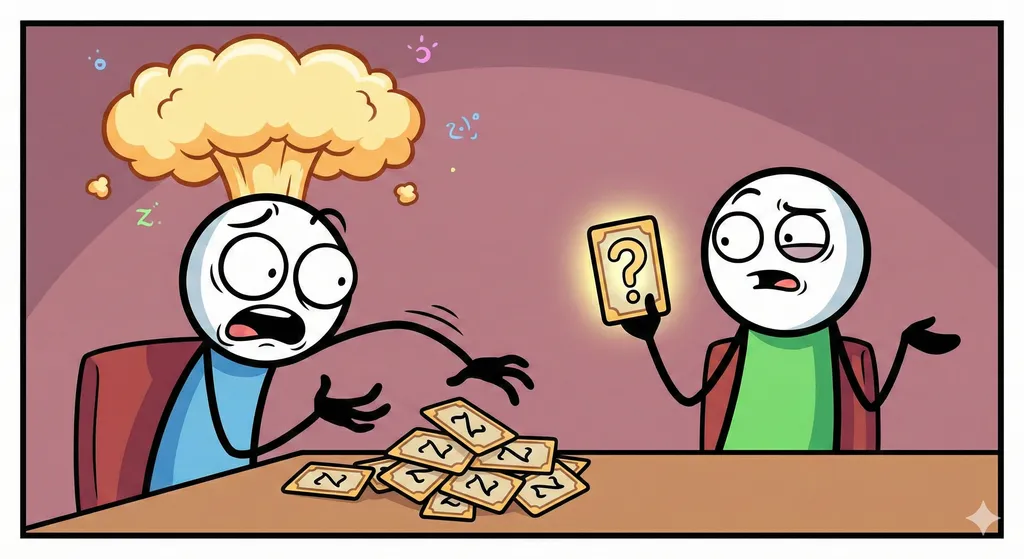
The latest Commander Clash from MTGGoldfish, featuring a house rule where damage translates directly to mill, offers a fascinating lens through which to examine the core tenets of Magic: The Gathering's most popular format. Wizards of the Coast's flagship multiplayer experience is no stranger to custom rules, but this particular variant fundamentally redefines the game's primary win condition, forcing veteran players to re-evaluate every card in their arsenal and every strategic decision.
At its core, the mechanic is elegantly simple: "Whenever we take damage, we mill that many cards instead!" This seemingly minor tweak has seismic implications for the Commander format. Firstly, life totals become an arbitrary tracker for damage dealt, rather than a direct resource for survival. The game’s clock shifts entirely from a race to zero life to a race to zero library. This immediately elevates traditional mill strategies from niche, often underpowered archetypes, to potential format dominators. Commanders like Phenax, God of Deception, or cards like Mesmeric Orb and Mindcrank, which previously relied on specific setups or struggled to keep pace, now become exponentially more potent. Every combat step, every direct damage spell, every triggered ability that deals damage now contributes directly to an opponent’s deck depletion.
The crunch goes deeper. Cards that prevent damage, such as Fog effects, protection abilities, or indestructible permanents like Darksteel Plate, gain immense value as they effectively protect one's library. Conversely, traditional lifegain becomes largely irrelevant for survival, though it might still trigger other abilities. A critical distinction arises between "damage" and "life loss." Effects that cause life loss (e.g., Bolas's Citadel, Ad Nauseam, or the cost of K'rrik, Son of Yawgmoth) still function as intended, reducing your life total but *not* causing you to mill. This nuance creates a fascinating sub-layer of strategy, where players might choose to take life loss to avoid milling crucial cards. Damage doublers, like Dictate of the Twin Gods or Fiery Emancipation, suddenly become mill doublers, capable of emptying entire libraries in a single, explosive turn. This shifts the meta dramatically, rewarding players who can leverage these effects or find ways to shuffle their graveyard back into their library, like with Gaea's Blessing or an Eldrazi titan.
In the sprawling multiverse of Magic: The Gathering, where planeswalkers clash with spell and sword, this variant introduces a cerebral conflict. Instead of merely whittling down a physical manifestation of life force, players are engaged in a battle of mental fortitude, of knowledge erosion. Each blow isn't a wound, but a forgotten spell, a lost memory, a piece of one's magical identity stripped away. It's less about the brute force of an Eldrazi titan and more about the insidious corruption of a Phyrexian mind-flayer or the psychic assault of a powerful telepath. The lore of specific cards, like the insidious whispers of a Mind Funeral or the overwhelming psychic assault of a Traumatize, aligns perfectly with this altered win condition, breathing new thematic life into them.
For the table, this custom rule presents a thrilling, albeit potentially polarizing, experience. It demands a complete recalibration of threat assessment and deck construction. Players accustomed to the standard Commander format will find their usual strategies upended, forcing them to adapt or perish. The game pace could accelerate dramatically, as mill can often resolve faster than chipping away at 40 life points. This variant is a boon for players who relish breaking the established meta, exploring fringe strategies, and enjoy a deep puzzle. It's a testament to the community's creativity and the robust design of a fresh perspective on the Commander format that such a simple rule change can generate so much strategic depth. While it might not appeal to every playgroup seeking a traditional experience, it undeniably offers a vibrant, thought-provoking alternative that challenges fundamental assumptions about how Magic is played.
Top Pick: Commander Legends: Battle for Baldur's Gate
Provides excellent cards for both traditional and novel Commander strategies
Check Price on Amazon →Related Stories
Candelabra's Legacy Farewell: A Deep Dive into MTG's Latest Bans
Wizards of the Coast has dramatically altered the competitive Magic landscape with a significant ban. We'll explore the implications of Candelabra of Tawnos's d
Connive's Cunning: MTG's Villainous Mechanic Masterpiece
The Connive mechanic, introduced in Magic: The Gathering, stands as a testament to elegant design, perfectly embodying villainous scheming and strategic depth.
Beyond the Reserved List: Commander's Wheel of Fortune
Wheel of Fortune remains a potent, format-defining red draw spell in Magic: The Gathering's Commander. This article dissects how budget-conscious alternatives d