
D&D's 2027 Keynote: Adaptive Rules & Athasian Sands
Wizards of the Coast unveiled its vision for Dungeons & Dragons at Gen Con 2027, promising significant shifts in encounter design and setting integration. We break down the implications of dynamic challenge ratings and a revitalized Dark Sun for your campaign.
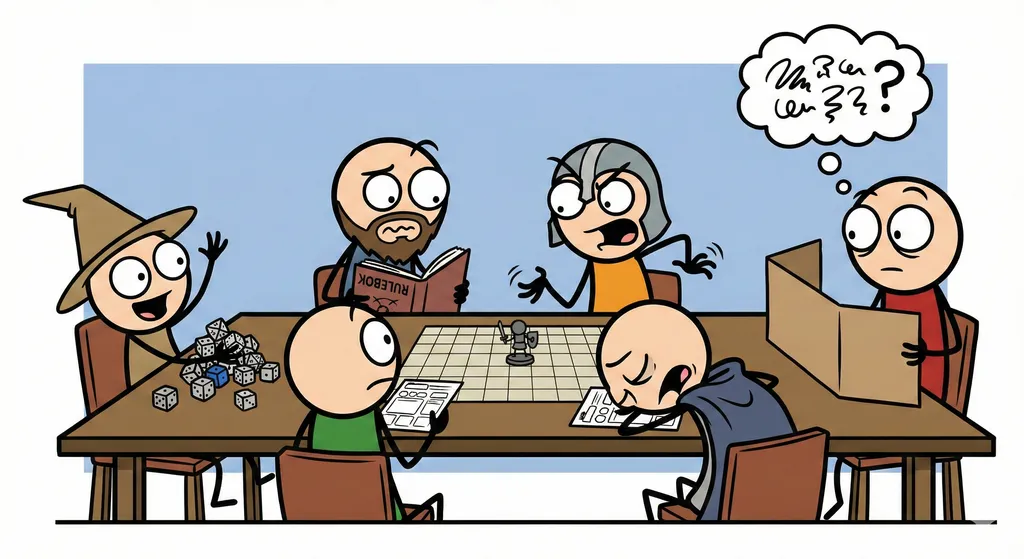
The annual Gen Con Vision Keynote, usually a predictable parade of product reveals, delivered a genuinely intriguing glimpse into the future of Dungeons & Dragons from Wizards of the Coast this year. While the presentation from Hasbro’s flagship RPG often feels like a corporate obligation, 2027’s announcements hinted at a design philosophy that could fundamentally reshape how Dungeon Masters prepare and run their games, and how players engage with the world.
The most significant mechanical revelation was the introduction of what WotC is calling the 'Adaptive Encounter Framework,' a direct assault on the long-criticized static nature of the Challenge Rating system. Instead of a fixed numerical value, creatures and encounters will now possess a suite of scaling modifiers that react to party composition, player performance, and even environmental factors. Imagine a Shadow Dragon whose legendary resistances regenerate faster if the party fails their Wisdom saves consecutively, or a goblin ambush that gains additional reinforcements if the players bypass their initial traps too easily. This isn’t merely adjusting hit points on the fly; it's a systemic approach to making every encounter feel bespoke and challenging without the DM having to meticulously rebalance on the fly. This could alleviate the 'math problem' that has plagued D&D 5th Edition for years, allowing DMs to focus on narrative flow rather than constant spreadsheet adjustments. Furthermore, the new 'Resonance Feats' offer a fascinating pivot from purely mechanical bonuses. These feats, gained through specific in-game achievements or narrative arcs, grant players limited narrative authority within defined parameters. For example, a 'Whisper of the Old Gods' feat might allow a player to declare a specific, minor environmental detail related to their deity once per session, or a 'Master of Coin' feat could let them retroactively establish a minor contact in a new city. It’s a formalization of player agency that moves beyond simply asking 'what do you do?' to 'what do you make happen?'
Coinciding with these mechanical shifts is the much-anticipated return of Athas, the brutal, resource-scarce world of Dark Sun. But this isn't just a reprint; it's a thematic overhaul that integrates beautifully with the Adaptive Encounter Framework. The new Dark Sun campaign setting, titled 'Cinders of Athas,' leans heavily into the environmental degradation and desperate struggle for survival that defines the setting. Resource scarcity isn't just flavor text; it's a core mechanic. Water, food, and even clean air will have explicit, trackable impacts on character abilities and encounter difficulty. The Adaptive Encounter Framework truly shines here: a sandstorm might not just impose disadvantage, but dynamically alter the AC of creatures immune to sand, or grant advantage to those adapted to the desert. The lore emphasizes a world where magic literally siphons life, and the campaign books are reportedly designed with 'deforestation mechanics' where player actions can visibly, mechanically degrade the environment, leading to tougher survival checks and more desperate encounters. This isn't just a reskin; it’s a terrifyingly immersive vision of Athas that feels more alive—and more deadly—than ever before. Understanding the underlying principles of encounter design remains crucial The Dungeon Master's Guide.
So, what does this mean for our tables? The Adaptive Encounter Framework, if implemented well, could be a genuine boon for DMs. It promises to reduce prep time for encounter balancing while elevating the dynamic tension of combat. No longer will a well-optimized party trivialize every challenge, nor will a struggling group be TPK'd by a single miscalculation. The risk, of course, lies in the system’s complexity. Will DMs find it intuitive, or will it become another layer of rules to track? Wizards of the Coast must ensure the tools provided are robust and easy to use. The return of Dark Sun, particularly with its integrated scarcity and environmental mechanics, is a masterstroke. It’s a setting that actively demands systems that react and adapt, and the proposed changes seem perfectly aligned with its grim ethos. My main concern is that the 'Resonance Feats,' while conceptually brilliant for player agency, could easily devolve into 'main character syndrome' if not carefully curated by the DM. The balance between player narrative contribution and DM world integrity will be crucial. Overall, this Gen Con Keynote signals a mature evolution for D&D 5th Edition, focusing on dynamic play and integrated world-building. It moves beyond simply adding more monsters and spells, aiming for a more responsive and immersive experience. This is the kind of design philosophy that veteran DMs have been craving.
Top Pick: Dark Sun Boxed Set (2nd Edition)
For a taste of Athas's original, brutal vision
Check Price on Amazon →Related Stories
Athas Awakens: Dark Sun's Grim Return to D&D
Dark Sun officially returns to D&D in 2027, promising a mature, survival-focused Athas. We dissect how WotC must evolve mechanics and lore to truly deliver on t
Star Wars TTRPG: Edge Studios' License Secures Narrative Dice Legacy
Edge Studios has confirmed its continued stewardship of the Star Wars TTRPG license, quashing rumors sparked by D&D's upcoming book. This news ensures the narra
The Campaign's First Promise: A Sacred Table Contract
The initial hook of a TTRPG campaign sets a crucial expectation, shaping player engagement and GM preparation. We dissect the 'promise' inherent in a simple gob