
The Campaign's First Promise: A Sacred Table Contract
The initial hook of a TTRPG campaign sets a crucial expectation, shaping player engagement and GM preparation. We dissect the 'promise' inherent in a simple goblin encounter and its profound implications for long-term narrative.
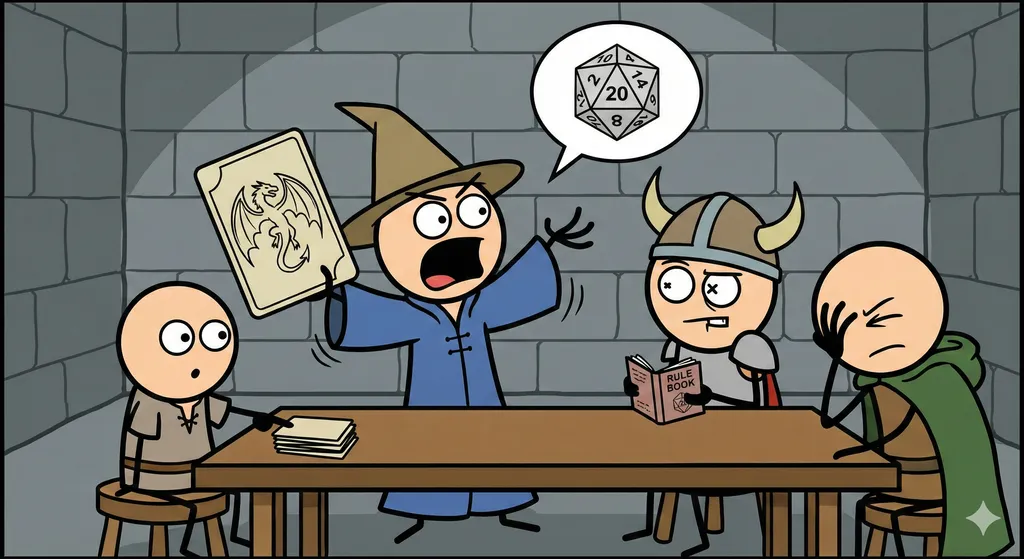
The recent #RPGaDAY2026 discussion from The Kind GM, focusing on the concept of 'promise' within a campaign, strikes at the very heart of TTRPG design. Specifically, the initial hook of a campaign in a hypothetical fantasy system, let's call it Arcane Echoes from Chronicle Forge Studios, where a party's first mission involves investigating increased goblin activity, offers a masterclass in setting player expectations and narrative trajectory.
At its core, a campaign's initial premise is a social contract, a 'promise' whispered between GM and player. When a Game Master presents the hook – "increased goblin activity around a canyon affecting travellers" – they're not just offering a quest; they're painting a narrative canvas. The 'crunch' here isn't about a specific die roll but the meta-mechanics of expectation management and adventure design. This promise dictates the immediate engagement loop: players understand they are signing up for a game where investigating, perhaps fighting, and ultimately solving a problem related to goblins in a canyon is the primary driver. This sets the stage for character creation (is my wizard suited for wilderness exploration and monster hunting?), initial skill checks (Perception to spot tracks, Survival to navigate the terrain), and even combat encounters.
Crucially, the promise implies escalation. A good GM knows that 'increased goblin activity' is rarely just about *more* goblins. It's a symptom, a narrative breadcrumb. The actual 'mechanics' of fulfilling this promise involve the GM preparing a series of escalating reveals. What's driving the goblins? Resource scarcity? A new, charismatic leader? A darker, unseen force manipulating them? Perhaps the canyon itself holds a secret that is drawing them in. Tools like 'fronts' from *Apocalypse World* or 'clocks' from *Blades in the Dark* are excellent mechanical frameworks for GMs to track the rising tension and the underlying causes, ensuring that the initial promise of a simple investigation slowly unravels into a grander narrative. The wizard player, having invested in their character's arc, now has a vested interest in unearthing the *true* cause, not just clearing out some green-skins. This is where the GM's preparation and the players' agency truly coalesce.
From a lore perspective, the 'increased goblin activity' in a canyon is a wonderfully open-ended hook. Is this canyon a nexus of ancient magic, now stirring? Are the goblins fleeing something worse, or have they discovered a relic that empowers them? Perhaps the canyon is home to a forgotten mine, its riches – or dangers – newly exposed. This initial piece of 'fluff' invites speculation and worldbuilding. The Kind GM's mention of a wizard PC immediately conjures images of arcane investigations: deciphering ancient carvings, identifying magical residue, or perhaps even negotiating with a goblin shaman who has tapped into some primal power of the land. The lore here is not just background; it's an active ingredient, allowing the GM to weave in elements of the world's history, its magical currents, and its geopolitical landscape, all stemming from that initial, deceptively simple premise. Every successful investigation check, every discovery of a new clue, enriches the setting and deepens the players' understanding of the world they inhabit, fulfilling the implicit promise of a living, breathing environment.
The verdict on the table feel? This kind of initial promise is gold. It provides clear direction without being a railroad. Players know what they're doing, and GMs have a solid foundation for their prep. When a GM delivers on the spirit of that promise – allowing the goblin threat to evolve, reveal deeper mysteries, and integrate with character backstories – it builds immense trust and engagement. The campaign feels cohesive, purposeful. Conversely, breaking that initial promise, either by veering wildly off course for no discernible reason or by never delivering on the implied escalation, can lead to player disengagement and a sense of narrative whiplash. The wizard who prepared for goblin-related mysteries might feel sidelined if the campaign suddenly shifts to urban espionage without a narrative bridge. The beauty of a well-crafted initial promise is its flexibility: it's a launchpad, not a cage. It allows for emergent storytelling while maintaining a core identity. For GMs looking to hone their craft, I highly recommend checking out The Return of the Lazy Dungeon Master for practical advice on building compelling campaign hooks and fulfilling their promise without excessive prep.
Top Pick: Monster Manual (any edition)
Essential for fleshing out the 'goblin activity' and its potential, more terrifying sources.
Check Price on Amazon →Related Stories
Mutants of the Vast Swamp: A Cosmic Scar on Cormyr's Wilds
Travis Legge, JM Woiak, and Heather Shinn's Mutants of the Vast Swamp offers a compelling open-world 5th Edition adventure. We dissect how this starfall event w
D&D's 2027 Keynote: Adaptive Rules & Athasian Sands
Wizards of the Coast unveiled its vision for Dungeons & Dragons at Gen Con 2027, promising significant shifts in encounter design and setting integration. We br
D&D's Long Game: Unpacking the 2026/2027 Release Roadmap
Wizards of the Coast has begun to chart its course for Dungeons & Dragons through 2026 and 2027. We delve into what this extended roadmap signifies for the evol