
D&D's Seasonal Shift: Organized Play Reimagined for 2026
Wizards of the Coast unveils its 2026 D&D Seasons and a revised Organized Play structure. We break down what this means for your campaigns, character progression, and the future of sanctioned D&D play.
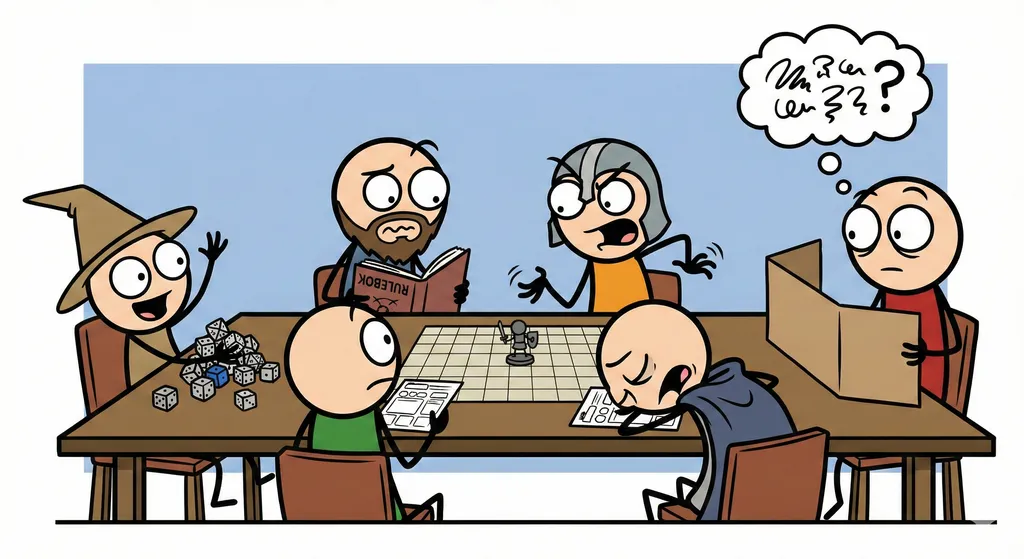
The dice have rolled, and Wizards of the Coast has unveiled its ambitious plan for Dungeons & Dragons' future, specifically targeting 2026 with a complete overhaul of its D&D Seasons and a revised Organized Play structure. This isn't just a calendar update; it's a fundamental shift in how the largest TTRPG on the planet intends to engage its community, from local game stores to global events. For veteran Dungeon Masters and players who’ve seen the game evolve from its humble beginnings to its current 5th Edition dominance, this announcement signals a pivotal moment that warrants a deep dive beyond the initial press releases.
At the core of this transformation lies the concept of "D&D Seasons." While details are still emerging, the implication is a structured, thematic approach to content releases and sanctioned play. Imagine a modular design where each Season introduces not just a narrative arc, but potentially new mechanical sub-systems, feat trees, or even variant rulesets that are sanctioned for that period. We could see a "Season of the Shadowfell" where necrotic damage gets a specific boon or bane, or a "Season of Dragonflight" that introduces universally accepted aerial combat rules, perhaps even distinct from those found in core rulebooks. This could offer a dynamic refresh to gameplay, preventing meta stagnation and encouraging experimentation with character builds and tactical approaches. The critical question for veteran players, those who've seen their characters through countless modules, is character continuity. Will characters be 'locked' into seasons, or will there be a seamless, or at least clear, migration path, allowing hard-earned levels and gear to transition? The hope is a system akin to Magic: The Gathering's set rotations, but for characters – perhaps seasonal boons that fade, or specific prestige classes only available during certain cycles. For Dungeon Masters, this could be a double-edged sword. On one hand, a steady stream of curated content and potential mechanical innovations to invigorate their campaigns. On the other, the expectation to integrate, or even master, rapidly shifting rule permutations. Keeping up with the latest official rulings and seasonal adaptations might necessitate a solid D&D Beyond subscription to navigate the crunch.
From a lore perspective, the concept of D&D Seasons offers an unprecedented opportunity for dynamic worldbuilding within official settings. Faerûn, Eberron, Ravnica – these worlds are vast, but traditionally static in their foundational rules. A seasonal approach could inject palpable narrative shifts. Imagine a "Year of the Sundering" where specific planes become more accessible, or a "Season of the Serpent" where yuan-ti rise to prominence across multiple settings, supported by new lore drops and monster stat blocks that feel truly impactful. This isn't just about new monsters or NPCs; it's about shifting the very cosmic backdrop of play, providing GMs with immediate, compelling hooks and world-altering events that feel canonically supported. Each season could be a mini-campaign setting unto itself, offering unique narrative premises that GMs can either run as-is or plunder for their homebrew sagas. It’s a chance to see the D&D multiverse truly breathe and change, rather than simply expand.
The verdict on the table feel for these 2026 D&D Seasons and revised Organized Play is, as yet, unwritten. The potential for immense benefit is clear: a vibrant, constantly evolving game that offers fresh experiences, fosters community engagement through shared seasonal narratives, and potentially lowers the barrier to entry for new players with structured, manageable content drops. However, the shadow of potential pitfalls looms large. Rule bloat, the pressure on GMs to stay abreast of every new mechanical nuance, and the risk of fragmenting the player base into "seasonal" and "evergreen" camps are genuine concerns. The specter of "FOMO" – the fear of missing out on limited-time content or unique character options – could also push players towards a treadmill of consumption rather than fostering creative freedom. The success of this revised Organized Play hinges entirely on its execution. If it provides genuinely innovative mechanics and compelling lore without fragmenting the player base or imposing an overwhelming burden on GMs to constantly re-learn the game, then it could be a masterstroke. If it leans too heavily into monetization or forces players into a rigid content cycle, it risks alienating the core, dedicated community that has built D&D for decades. The ideal scenario is a robust, modular system that allows players and GMs to opt-in to seasonal content, enriching their games with fresh experiences while still honoring the foundational ruleset. It needs to feel like an expansion, not a replacement.
Top Pick: D&D Dungeon Master's Guide
Essential for building any campaign, seasonal or otherwise, and understanding the core rules that will undoubtedly underpin these future seasons.
Check Price on Amazon →Related Stories
D&D 2024 Officially 5.5e: The Edition That Wasn't (Quite)
Wizards of the Coast has finally clarified the nature of the D&D 2024 update, confirming it as '5.5e'. This official designation signals a significant revision
D&D Finally Embraces Its 5.5e Identity, Ending Branding Chaos
Wizards of the Coast's long-awaited D&D iteration finally receives a sensible name: 5.5e. This move promises mechanical refinement and lore continuity, benefiti
Ravenloft: The Horrors Within – A Deep Dive into Dread's Future
The announcement of Ravenloft: The Horrors Within for June 2026 promises a significant expansion to 5th Edition's gothic horror. We analyze what this means for