
D&D's Shifting Sands: What Staff Changes Mean for Your Table
Recent personnel shifts at Wizards of the Coast signal a strategic pivot for Dungeons & Dragons. We dissect how these corporate movements translate into real changes for mechanics, lore, and the overall table experience.
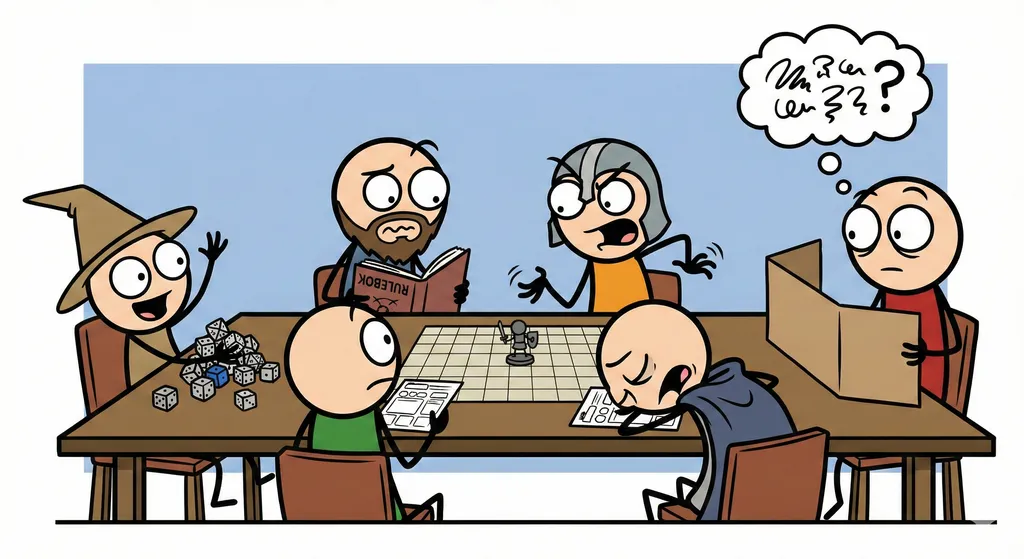
The news from EN World regarding significant hirings and firings within the Dungeons & Dragons design teams at Wizards of the Coast isn't just another corporate press release; it's a tremor that reverberates directly through the foundations of our game tables. As veteran GMs, we understand that behind every rulebook and monster stat block lies a team of designers, and when that team undergoes a changing of the guard, the very DNA of the game can evolve.
When the architects of a game shift, so too does the blueprint. We've seen a consistent push towards a more streamlined, approachable D&D 5th Edition in recent years, culminating in the upcoming 2024 Player's Handbook revisions. This isn't accidental; it's a design philosophy born from specific mandates, likely influenced by new blood in key positions. The move away from complex, granular rulesets towards broader, more flexible guidelines—think unified spell lists, simplified grappling, or the standardized bonus action usage—reflects a desire for mass appeal and easier VTT integration. Is this a reaction to market data, a pursuit of an 'evergreen' D&D, or a new team’s vision for what D&D should be? The consistent pattern of simplifying and standardizing, often at the cost of distinct mechanical identity for certain classes or subsystems, points to a clear, top-down directive. This approach, while aimed at accessibility, often prompts seasoned players to look back at books like Tasha's Cauldron of Everything, recognizing the gradual evolution of design principles that are now accelerating.
Beyond the dice rolls, the soul of D&D lies in its lore. The changing of the guard often ushers in new perspectives on beloved settings and the creation of new ones. We’ve witnessed a renewed, albeit sometimes criticized, effort to revisit classic campaign settings like Planescapes and Spelljammer. While commendable in intent, the execution often feels filtered through a modern lens that occasionally sacrifices the gritty, nuanced weirdness of the originals for broader accessibility. There's also a clear emphasis on modular, self-contained lore that can be easily dropped into any campaign, rather than sprawling, interconnected narratives. This approach, while convenient for GMs, can sometimes dilute the unique flavor and depth that long-time fans cherish. Are these shifts a reflection of new loremasters prioritizing inclusivity and ease of entry, or are they simply responding to a desire for less 'baggage' in new content, perhaps paving the way for more Universes Beyond-style integrations down the line?
So, what does this mean for us, the GMs meticulously crafting worlds and the players eagerly rolling initiative? On one hand, a consistent vision, even if corporate-driven, can lead to more polished, accessible products. New players might find the game easier to pick up, fostering growth in the community. On the other, the veteran player base, those who have spent decades with the brand, often feel a disconnect. The fear is that Dungeons & Dragons might shed its unique, sometimes quirky, identity in pursuit of mainstream appeal, becoming a product optimized for market share rather than for the specific, passionate demands of its core audience. The shift suggests a more controlled, almost 'curated' experience, which can stifle the very community creativity and homebrew spirit that has always defined D&D. The challenge for Wizards of the Coast, and by extension, for these new teams, is to innovate and grow without alienating the very heart of what makes D&D special: the freedom at the table.
Top Pick: Player's Handbook (2024)
Essential reading to understand the current trajectory of D&D 5th Edition's core mechanics and design philosophy.
Check Price on Amazon →Related Stories
Jacquise's WotC Exit: A Critical Hit to Community Trust?
The departure of LaTia Jacquise from Wizards of the Coast raises significant questions about the publisher's commitment to diversity and community engagement. V
D&D's Ayoub on OGL: Rebuilding Trust at the Table
Dan Ayoub, Head of Dungeons & Dragons, addresses the lingering OGL crisis, acknowledging the fragile nature of community trust. This editorial explores what his
EN World's PDF Bonanza: A Deep Dive into Tabletop Riches
EN World's two-week 50% off PDF sale offers an unparalleled opportunity for GMs and players alike to expand their digital libraries. This deep dive explores how