
Diplomacy's Betrayal, Now in Your Hand: The Golden Blade
Rosco Schock reimagines the classic 'friendship killer' into a card game. We dissect how 'The Golden Blade Card Game' maintains the strategic backstabbing of original Diplomacy without the week-long commitment.
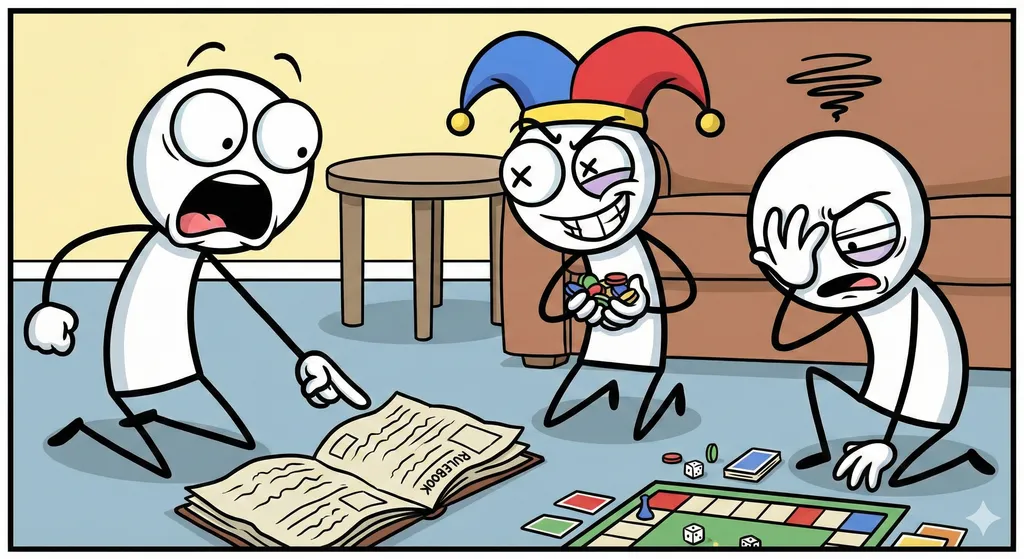
The hallowed, often cursed, halls of strategy gaming have long echoed with the name of Diplomacy. A game infamous for its ability to rend friendships asunder, a crucible of negotiation and raw, unadulterated betrayal. Now, from the mind of Rosco Schock, comes Diplomacy: The Golden Blade Card Game, an audacious attempt to distill that potent formula into a card-driven experience. As a veteran of countless tabletop skirmishes and diplomatic disasters, my first question wasn't if it could be done, but *how* it could possibly capture that unique, agonizing essence.
Schock’s journey began not with a mandate to miniaturize a titan, but rather, as he states, the card game simply “happened along the way.” This organic evolution is crucial, suggesting a design that grew into its skin rather than being forced. The original Diplomacy, first self-published in 1959, is a masterclass in player interaction, almost devoid of random elements. Players, embodying Great Powers in pre-WWI Europe, vie for control of Supply Centers through a perilous dance of non-binding negotiations and secretly written orders. The genius, and the terror, lies in the utter reliance on human decision and the chilling certainty of betrayal. So, how does The Golden Blade translate this into cards?
The crunch, as always, is where the rubber meets the road. In a card game adaptation, the fundamental challenge is replicating the deterministic, player-driven decisions of the original without introducing the very randomness it so proudly eschewed. My analysis suggests that The Golden Blade likely approaches this by assigning specific actions to cards. Instead of writing “F A StP-Mos,” players might play an “Army Move” card targeting “Moscow” from “St. Petersburg.” This streamlines the order phase, making it more immediate. Crucially, the negotiation phase — the heart of Diplomacy — must remain verbal and non-binding, but card plays could provide tactical commitments or feints. Perhaps players acquire “Influence” or “Support” cards through negotiation, only to reveal them simultaneously, creating the same tension of a double-cross. Supply Centers, the ultimate victory condition, would likely be represented by objective cards or a track, with control shifting based on successful card plays and unit movements. The “no random elements” ethos of the original classic Diplomacy is partially addressed by hand management; while card draws introduce a degree of variability, the *effects* of played cards must remain predictable, rewarding skilled planning over blind luck. The focus shifts from perfect information and written orders to strategic hand curation and knowing when to play your 'Golden Blade' card for maximum impact.
Lore-wise, the source material anchors us firmly in the geopolitical tensions of pre-WWI Europe, a setting rich with historical precedent for shifting alliances and grand betrayals. The title, “The Golden Blade,” is intriguing. Is it a specific artifact players vie for, a new objective that twists the historical narrative? Or is it a metaphor – the 'golden blade' being the perfectly timed, decisive, and often treacherous move that secures victory? Given the original’s grounded realism, I lean towards the latter. It speaks to the psychological warfare inherent in Diplomacy, where the most elegant solution is often the most brutal. The card game, then, likely retains this backdrop, perhaps focusing on a more condensed conflict or specific theater to fit the card game’s scope, allowing for thematic cards that represent historical forces, diplomatic maneuvers, or even specific agents of subterfuge. It’s about leveraging the historical flavor to enhance the feeling of high-stakes political maneuvering.
So, is this a good thing for the table? Absolutely. If The Golden Blade can successfully encapsulate the strategic depth and emotional rollercoaster of its progenitor into a more accessible format, it’s a win for everyone. The “friendship killer” reputation of Diplomacy is well-earned, but its primary barrier to entry for many is the sheer time commitment and complexity of its execution. A card game version, if executed with the elegance Schock’s long design process suggests, could offer that same delicious tension and opportunity for backstabbing in a single sitting. The Verdict: This isn't just a derivative; it's an evolution. It promises to deliver the core experience of high-stakes negotiation and strategic betrayal, but with a pace suitable for a modern game night. For players who have always admired Diplomacy from afar but balked at its demands, The Golden Blade could be their gateway drug to the glorious agony of true tabletop politics.
Top Pick: Diplomacy Board Game
For the unadulterated, classic experience of strategic backstabbing.
Check Price on Amazon →Related Stories
Race for the Galaxy: Xeno Counterstrike — A Masterclass in Modular Design
Tom Lehmann's 'Race for the Galaxy: Xeno Counterstrike' concludes the Xeno arc, offering two distinct play experiences. This second and final expansion introduc
Ticket to Ride: Europe – A Masterclass in Iterative Design
Alan R. Moon's Ticket to Ride: Europe, published by Days of Wonder, demonstrates how subtle mechanical shifts can profoundly deepen a beloved classic. It refine
President: Too Bad Games Unveils a Masterclass in Corporate Intrigue
Nicolas Cardona's President from Too Bad Games elevates game theory to new heights, challenging players to navigate a dynamic hierarchy. This deep dive explores