
Draw Steel's Summoner: More Than Just Minions, It's War! (On a Budget)
Forge Studios' Draw Steel introduces the Summoner class, shattering combat norms with tactical depth. This deep dive unpacks how it redefines battlefield control without bogging down the action.
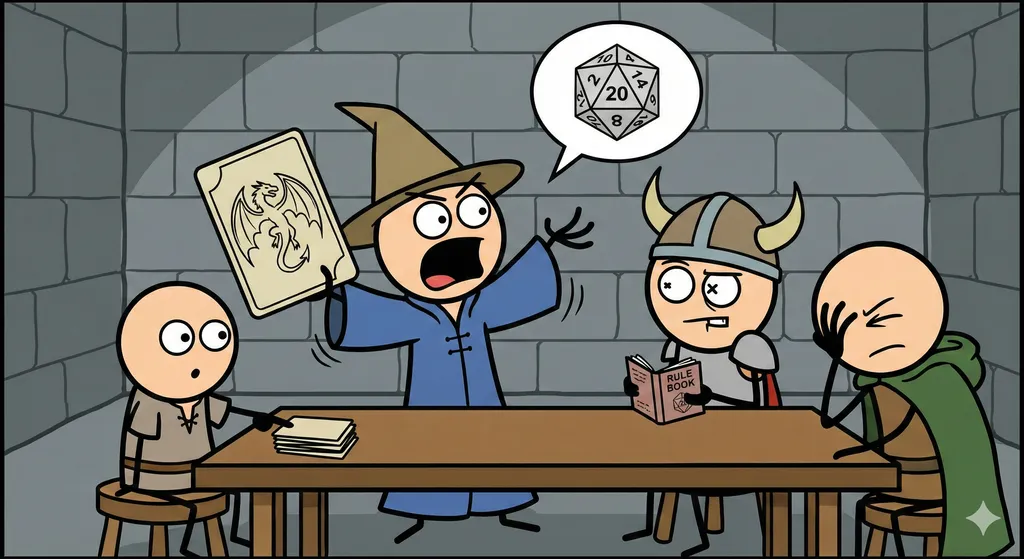
Forge Studios’ gritty TTRPG, Draw Steel, has just unveiled its latest class, the Summoner, and it’s not merely another spellcaster. This addition fundamentally re-evaluates the very core of the game’s action-packed combat loop, promising to inject a new level of tactical complexity that challenges both players and Game Masters alike.
Traditionally, Draw Steel combat thrives on direct engagement, precise positioning, and a tight action economy where every swing and dodge matters. The Summoner, however, introduces the concept of persistent, mobile allies, a stark departure from the fleeting effects of most abilities. Instead of merely conjuring a temporary shield or a burst of damage, Summoners manifest 'Constructs' – semi-autonomous entities that occupy space, draw fire, and execute specific tactical maneuvers. Their signature ability, 'Forge Spirit,' allows them to spend a minor action to bring forth a Construct with a pre-defined combat script – perhaps a 'Sentinel' Construct that automatically intercepts the first melee attack against an ally in its zone, or a 'Harrier' that imposes disadvantage on ranged attacks targeting the Summoner. These Constructs aren't just HP sponges; they have limited 'Endurance' points and specific, impactful reactions or bonus actions they can perform, making them tactical assets rather than just extra dice rolls. The true genius lies in the 'Reckoning Protocol,' a Summoner-specific mechanic where, upon a Construct's destruction, the Summoner can immediately spend a Reaction to empower another active Construct or even temporarily boost their own defenses, turning a loss into a strategic advantage. This ensures that even when their creations fall, the Summoner remains a potent force, constantly adapting to the ebb and flow of battle. It’s a beautifully designed system that avoids the usual pitfall of summoner classes — overwhelming the GM with too many turns — by making the summons highly specialized and reactive, rather than just additional, full-fledged combatants. It's a masterclass in how to introduce complexity without sacrificing flow.
Within the grim confines of Draw Steel’s industrial-fantasy setting, the Summoners are often viewed with suspicion, if not outright hostility. Their ability to bind raw elemental energy or animate scrap and discarded machinery into loyal, if crude, servitors skirts the edge of forbidden practices. Lore suggests these practitioners often hail from the desolate Outlands, where traditional magic is scarce, and ingenuity born of desperation is paramount. They are the scavengers of the arcane, twisting the laws of physics and spirit to their will, not through elegant incantations, but through sheer force of will and a deep understanding of the world’s latent energies. Some whisper of ancient pacts with forgotten machine spirits, others of a dangerous, self-taught mastery over the very fabric of reality. They represent a pragmatic, almost brutalist approach to magic, perfectly aligning with Draw Steel’s aesthetic of hard choices and harder consequences. Their Constructs are not ethereal beings, but tangible, often clanking or sparking entities, their forms reflecting the harsh environments from which their Summoner originates. This isn't your D&D necromancer raising undead; this is a battlefield engineer, leveraging every resource to gain an edge.
For the table, the Summoner is a triumph of design, offering an entirely fresh playstyle for Draw Steel. Players who enjoy strategic positioning and manipulating the battlefield will find immense satisfaction in directing their Constructs to create choke points, protect squishier allies, or simply harass high-priority targets. The 'Reckoning Protocol' ensures that even when a Construct is destroyed, the player feels a sense of agency, rather than just a loss. GMs, while needing to adjust to the added battlefield elements, will appreciate that the Constructs’ pre-defined actions minimize decision paralysis, keeping combat flowing. It’s a dynamic class that encourages creative problem-solving and offers a unique spin on battlefield control, far removed from the typical “horde of minions” archetype. This isn't a class for passive players; it demands active engagement and foresight, rewarding those who can think several steps ahead. It will undoubtedly lead to some incredibly memorable and tactically rich encounters, breathing new life into even familiar dungeon crawls.
Top Pick: Draw Steel Core Rulebook
Essential for understanding the nuanced combat system and gritty world.
Check Price on Amazon →For an expanded library of modular Construct abilities, check out 'The Ironclad Bestiary'
Related Stories
Temporal Rhythms at the Table: Nocturne Ascendant's Bold Design
Ember Forge Games introduces a groundbreaking 'Circadian Mechanics' system in their new TTRPG, Nocturne Ascendant. We deep-dive into how temporal energy affects
The Player Aid Imperative: Clarity at the Table's Core
Unclear rules can shatter game night. This deep dive explores how robust player aids are critical for smooth gameplay and deeper immersion. We analyze the 'brea
Ancestry Reforged: Grimstone Chronicles' Bold New System
Black Iron Games' Grimstone Chronicles introduces a revolutionary Heritage & Calling system, decoupling biology from culture for deeper character generation. Th