
Echoes of the Void: Deconstructing Magic's Reality Fracture
Wizards of the Coast unveils "Reality Fracture," a new set mechanic promising to warp the very fabric of Magic: The Gathering gameplay. This deep dive explores the potential impact of its innovative "Divergence" keyword and the consequential "Reality Fragment" tokens.
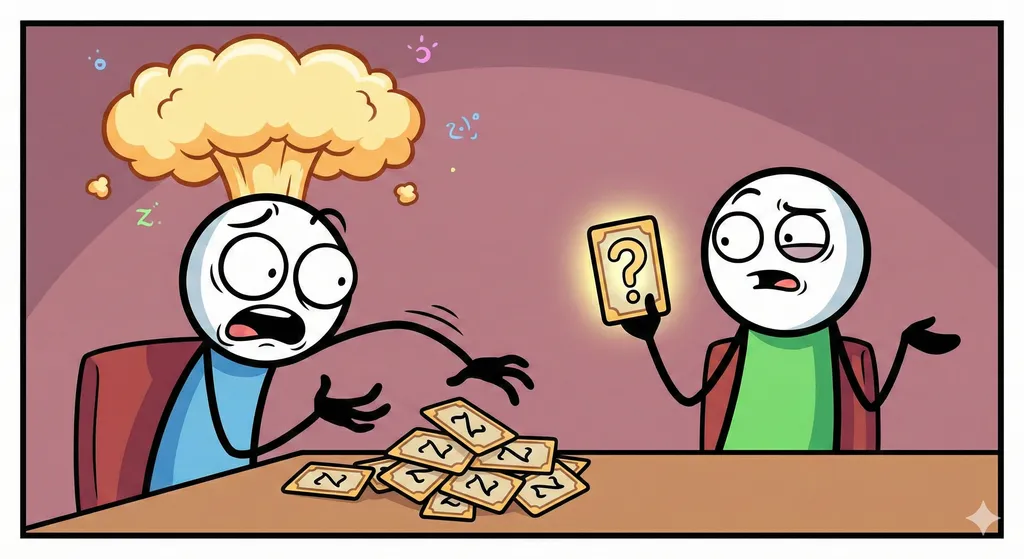
Magic: The Gathering, published by Wizards of the Coast, is no stranger to shaking up its fundamental rules, but the recent previews for 'Reality Fracture' suggest a systemic disruption unlike anything we’ve seen since the introduction of sagas or planeswalkers. This isn't just a new keyword; it’s a meta-altering philosophy, a direct assault on the predictable linearity of spell resolution. As veteran players, we’ve witnessed countless shifts, but Divergence feels less like an evolution and more like a deliberate tear in the established order.
The core of 'Reality Fracture' lies within the new 'Divergence' keyword. When a spell with Divergence resolves, its immediate effects are followed by the creation of a 'Reality Fragment' token. These colorless artifact tokens are not mere trinkets; they are lingering echoes, each possessing a unique activated ability that is a delayed, often altered, version of the original spell's primary effect, or a synergistic offshoot. Consider a card like 'Temporal Eddy,' a 1UU instant with Divergence: 'Target non-land permanent phases out until your next upkeep. Create a Reality Fragment token (a colorless artifact with 'Sacrifice this: Put target phased out permanent onto the bottom of its owner's library. Activate only if a permanent phased out this turn.').'
This single example illustrates the profound strategic implications. You don't just phase out a threat; you create a ticking clock, a choice for both players. Your opponent can let the permanent return, or you can sacrifice the Fragment to permanently remove it, but only if the initial phase-out condition was met. This isn't merely two-for-one value; it’s a temporal dilemma, a commitment to a future state. The tracking of these Fragment conditions will be paramount, demanding careful attention from all players at the table. Divergence spells will force us to think not just about the immediate turn, but about the turn after, and the choices that will inevitably arise from these fractured realities.
From a lore perspective, 'Reality Fracture' dives deep into the Multiverse’s inherent instability. For centuries, the Multiverse has been a collection of distinct planes, connected but separate. The Mending was meant to stabilize it, but these new Divergence effects suggest a deeper, more pervasive unraveling. Is this a consequence of too much planar travel? A new cosmic threat tearing at the fabric of existence? The flavor text and art we've seen hint at planes bleeding into each other, temporal paradoxes manifesting as tangible objects, and the very laws of physics becoming malleable. It speaks to a narrative of desperation, of powerful mages attempting to harness or mend these tears, only to create more complex, fragmented realities. This isn't just a backdrop; it's a living, breathing component of the mechanics, enhancing the sense of cosmic peril.
What does this mean for the table? The verdict is, as with any truly ambitious mechanic, complex. For enfranchised players, especially those who revel in the intricate dance of the stack and the long game of Commander, Divergence offers an exhilarating new layer of strategy. It introduces novel decision points, rewards foresight, and encourages creative sequencing. Building around these delayed, conditional effects will undoubtedly spawn entirely new archetypes and combo lines. Imagine a Commander deck designed to constantly generate specific Fragments, creating a persistent engine of delayed threats and interactions. The potential for truly unique play experiences is immense.
However, the complexity cannot be overstated. Tracking multiple Reality Fragments, each with its own conditional activation, will demand significant mental overhead. New players may find the learning curve steep, and even veterans might experience 'analysis paralysis' as the board state accumulates these fractured echoes. Wizards of the Coast must exercise extreme caution in balancing these cards to prevent degenerate loops or overly oppressive control elements that could lead to frustratingly long turns. But for those of us who appreciate a mechanic that pushes the boundaries of what Magic can be, Divergence represents a bold, calculated risk that could redefine strategic depth. If you're looking to explore new avenues of play, the new Commander precons often offer an accessible entry point to a set's core mechanics.
Top Pick: Commander Legends: Battle for Baldur's Gate
A masterclass in integrating D&D lore with Commander mechanics
Check Price on Amazon →Related Stories
Grólog's Decree: The Hobbit Unleashes Goblin Hordes Anew
The latest Universes Beyond release, The Hobbit, introduces a novel way to leverage Goblin tokens. We dissect the new mechanics and their potential impact on Ma
Reality Fractured: Iconic Duos and Dark Omens in MTG's New Set
Magic: The Gathering's upcoming "Reality Fracture" set introduces a groundbreaking "Conjoined Legend" mechanic, twisting beloved characters Mabel and Gallia int
Reality Fracture: Echoes, Charms, and MTG's Multiverse Schism
Thursday's Magic: The Gathering Reality Fracture previews unveil a pivotal planeswalker duo and a versatile Hexhaven Charm cycle. These additions signal a signi