
Endurance: The Unseen Resource Shaping Our Campaigns
The #RPGaDAY2026 prompt of 'Endurance' sparks a deep dive into how depletion mechanics elevate TTRPG experiences. We explore the nuanced design of scarcity and resilience, moving beyond simple HP bars.
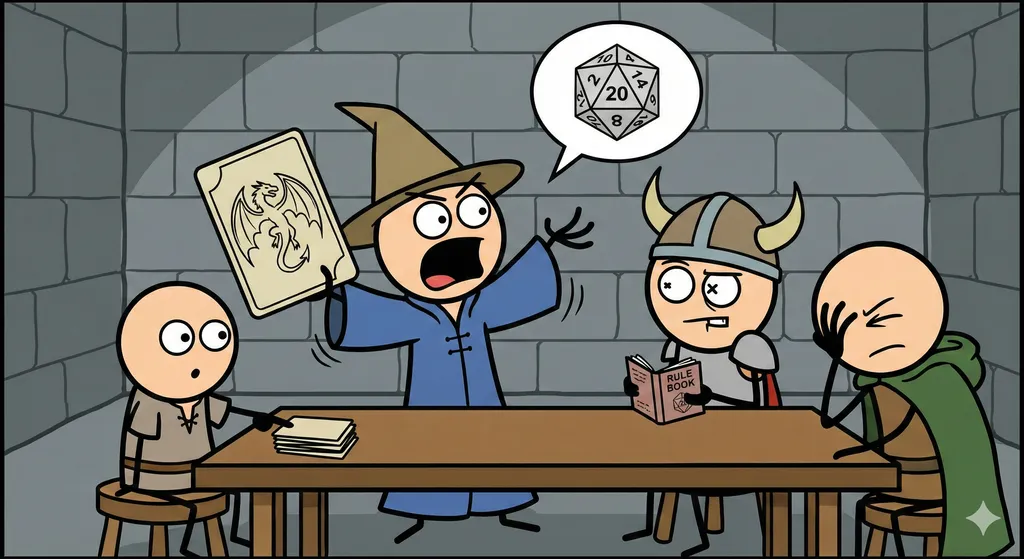
The latest #RPGaDAY2026 prompt, Day 15: Endurance, hits a nerve, reminding us that the most compelling TTRPG experiences often stem from the meticulous management of character limits—not just hit points, but their very capacity to *continue*. While no specific game like *Aethelred's Burden* from *Ironclad Games* is directly cited in the prompt, the concept of endurance, particularly through the lens of spiritual or physical fasting, resonates deeply with many systems that seek to push players beyond simple combat encounters into true survival narratives. This isn't about arbitrary difficulty; it's about crafting meaningful choices from scarcity.
Mechanically, 'endurance' manifests in myriad ways across the tabletop landscape. It's the exhaustion levels in 5th Edition D&D, penalizing characters for forced marches or lack of rest. It's the hunger and thirst mechanics in *Forbidden Lands*, where every day is a calculated risk against starvation and exposure. It's the Sanity or Stress tracks in *Call of Cthulhu* or *Alien RPG*, where psychological fortitude is a finite, precious resource. Even spell slots in a Vancian magic system are a form of endurance, representing a wizard's mental stamina and arcane wellspring. The genius of these systems lies in their ability to translate abstract concepts like 'weariness' or 'deprivation' into tangible, numerical consequences. A well-designed endurance mechanic isn't just a debuff; it's a ticking clock, forcing players to make difficult decisions: Push on, risking collapse, or rest, risking pursuit? Spend that last healing potion now, or save it for an unknown threat? These aren't just dice rolls; they're narrative catalysts, turning simple travel into epic journeys of attrition.
Lore-wise, the concept of endurance, often tied to suffering or deprivation, is a powerful tool for worldbuilding. Consider the ascetic monks of a high-fantasy setting, whose fasting grants them spiritual insight or psionic power, but leaves them physically frail. Or the desperate scavengers in a post-apocalyptic wasteland, their bodies scarred by hunger and radiation, yet hardened by sheer will. The religious fasting mentioned in the prompt, a deliberate act of self-deprivation for spiritual gain, provides a fantastic thematic hook. Imagine a paladin whose divine power grows not from prayer alone, but from periods of self-denial, making their divine smites all the more potent, yet drawing a physical toll. Or a barbarian whose rage-fueled resilience is tied to their ability to ignore their body's screams for sustenance, a primal wellspring of strength born from hardship. When mechanics align with lore, every point of exhaustion or gnawing hunger becomes a narrative beat, enriching the player's connection to their character and the world. The world feels more real, more dangerous, and consequently, more rewarding to navigate.
At the table, the inclusion of robust endurance mechanics can be a double-edged sword. Poorly implemented, they can devolve into tedious bookkeeping, slowing the game to a crawl as players track every crumb and sip. However, when handled with a GM's deft touch, they elevate the experience dramatically. They foster difficult choices, amplify tension, and demand creative problem-solving. A party that must ration their last few days of supplies to cross a hostile desert feels the weight of their decisions far more acutely than one for whom food is an afterthought. These mechanics foster true heroism, where overcoming the environment and one's own physical limits is as significant as slaying the dragon. They also provide fantastic opportunities for character development, revealing true grit or desperation when resources dwindle. The key is to make the consequences meaningful without making them punitive to the point of frustration. It's about challenge, not torment. For any GM looking to inject more grit and consequence into their game, exploring detailed survival and exhaustion rules is a powerful avenue. Consider how the *Forbidden Lands Gamemaster's Guide* The Crit Sheet masterfully integrates these elements into its core loop, making every journey an adventure in itself.
Endurance, in its many forms, is more than a stat; it's a philosophy of design that champions resourcefulness, strategic thinking, and the visceral thrill of overcoming adversity. It reminds us that our characters, however heroic, are still mortal, bound by the limits of flesh and will. And in those limits, we often find the most profound stories.
Top Pick: Shadowdark RPG
Its elegant, OSR-inspired resource management and torch-decay rules create immediate tension and meaningful choices without excessive bookkeeping.
Check Price on Amazon →Related Stories
A7 Beneath the Despairing Stone: OSR's Infernal Symphony
A7 Beneath the Despairing Stone delivers a potent dose of old-school ingenuity, challenging players with lethal traps, resource management, and a dynamic infern
Shadowdark's New Relics: Power Comes at a Price
Arcane Library's latest Shadowdark RPG supplement introduces potent artifacts with a unique Attunement Burden mechanic. This deep dive explores how these items
The Distilled Table: Why Less Rules Means More RPG
The trend of 'pocket' board games, exemplified by the Wingspan Pocket Review, signals a vital shift towards streamlined experiences. This phenomenon offers crit