
From Beige Boxes to Boundless Worlds: A Designer's Core Lesson
Kristian Amundsen Østby's origin story with Sid Meier's Civilization unveils a crucial truth for TTRPGs: deep engagement with a system's core, not just its surface, unlocks its true potential. It's a call for GMs and players to embrace the manual and discover the hidden depths of their games.
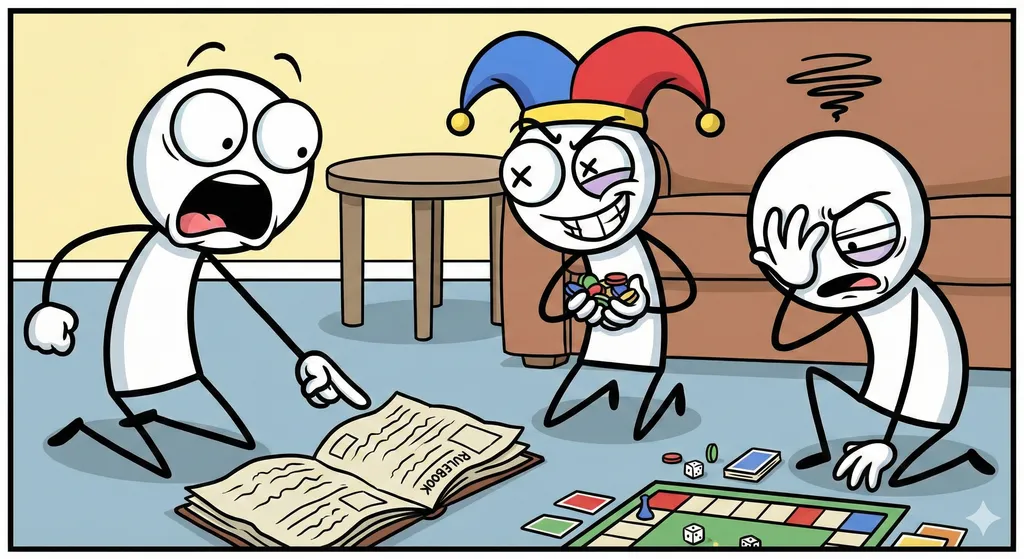
Kristian Amundsen Østby's recent piece on BoardGameGeek, "Designing Everything: From Stone Age to Space Age," offers a deceptively simple origin story for his design philosophy, rooted in the beige box of Sid Meier's Civilization from MicroProse. It’s a tale that resonates deeply with anyone who’s ever stared at a dense rulebook, wondering if the magic within is truly worth the effort.
Østby's initial disappointment with Civilization's dull presentation, followed by his eventual immersion through the manual, is a microcosm of a fundamental truth in tabletop gaming: the most profound systems often hide behind the most unassuming facades. Consider the exhaustive rulebooks we encounter. A new edition of D&D 5th Edition might simplify some aspects, but the core experience still demands engagement. Or consider the intricate dance of a Pathfinder combat encounter, where positioning, feat chains, and spell effects aren't immediately intuitive from a quick glance at the character sheet. The "settler wagon" that looked like scissors, a symbol of initial confusion, is akin to a new player grappling with the core loop of a complex TTRPG. How many times have we seen a Game Master skim a system, only to miss a crucial subsystem that unlocks entirely new tactical possibilities?
This isn't about rote memorization; it's about understanding the *design intent* – the elegant interplay of rules that, once grasped, transforms a flat experience into a vibrant, three-dimensional one. The manual, in Østby's case, became the portal to understanding the true "crunch." It’s a stark reminder for designers to make their manuals accessible, yes, but also for players and GMs to invest the time. The depth of a system, whether it’s the tactical nuances of Kill Team 2024 or the intricate deck-building of a Commander/EDH format, often only reveals itself after dedicated study. The initial barrier to entry, be it a plain cover or a dense index, often guards a treasure trove of systemic brilliance. This is where the true mastery of a game lies – not in surface-level comprehension, but in a deep appreciation for its internal logic.
Beyond the numbers, Østby's journey through Civilization—from Stone Age to Space Age—mirrors the grand narratives we craft at our TTRPG tables. It’s the slow burn of a long-running campaign, where the players’ initial "settler wagons" (their starting characters, their first hesitant steps into a new world) gradually shape entire civilizations, forge empires, or dismantle corrupt powers. The lore isn't just pre-written text; it's the emergent story. Civilization's tech tree isn't just a mechanic; it's a narrative of human progress and societal evolution. Similarly, in a well-run TTRPG, the lore evolves with the players' choices. What starts as a simple dungeon crawl can blossom into a continent-spanning political drama, complete with player-driven factions, shifting alliances, and world-altering consequences. This deep engagement with the source material, whether it's a game manual or a carefully constructed campaign setting, allows GMs to weave more intricate plots and players to feel more connected to the unfolding saga. It’s the difference between merely reading about a dragon and witnessing the slow, agonizing decline of its ancient hoard as your party meticulously plunders its lair over months of play. Understanding the foundational lore and how it interacts with the mechanics provides the bedrock for truly memorable storytelling.
So, what does Kristian Amundsen Østby’s childhood epiphany tell us about our TTRPGs? It’s a powerful validation of the value of *engagement*. For designers, it’s a plea for clarity and depth in their rulebooks, and a reminder that true innovation often lies beneath the surface, not in flashy presentation alone. For GMs, it’s an encouragement to truly master the systems they run, to dive into the core mechanics and lore to unlock their full potential, ensuring that the table experience is rich and rewarding. The "beige cover" of a new system might not immediately grab you, but the manual, the community discussions, the actual *play* – these are the true gateways to understanding. It encourages GMs to truly understand the core loop of their chosen game, not just the surface-level rules, but the subtle interactions that make the system sing. And for players, it's a call to patience and curiosity. Don't dismiss a game because its initial presentation is intimidating or unconventional. The most rewarding experiences often demand a bit of work, a willingness to read the manual, to learn the "scissors" are actually a settler wagon. The payoff is immense: a table where every rule interaction feels meaningful, every lore tidbit enriches the narrative, and every session builds towards something truly epic. This deep dive into a game's design, fueled by curiosity, transforms mere play into a profound experience.
Top Pick: The Crit Sheet's Guide to Advanced GMing
Elevates your understanding of complex systems and player engagement.
Check Price on Amazon →Related Stories
World Order: When Global Systems Become Tabletop Reality
Dive into World Order, a grand strategy game simulating global geopolitics and economics. We analyze its intricate mechanics and the profound implications for y
The Old World Meets 5E: A Fan-Made WFRP Conversion Analysis
The community-driven Warhammer Fantasy Roleplay 5th Edition PDF is now circulating, bringing the grim Old World to D&D's popular ruleset. We dissect its mechani
Honor Among Thieves Sequel: Charting D&D's Cinematic Design Future
The script for the Dungeons & Dragons: Honor Among Thieves sequel is complete, signaling a promising future for the franchise. We dissect how the first film tra