
Games Workshop Draws a Line: AI's Place in the Grimdark Future
Games Workshop's CEO has declared a ban on AI-generated content for Warhammer, a move that clarifies the publisher's stance amidst growing industry debate. This decision impacts official materials and sets a precedent for community interactions within the grimdark universe.
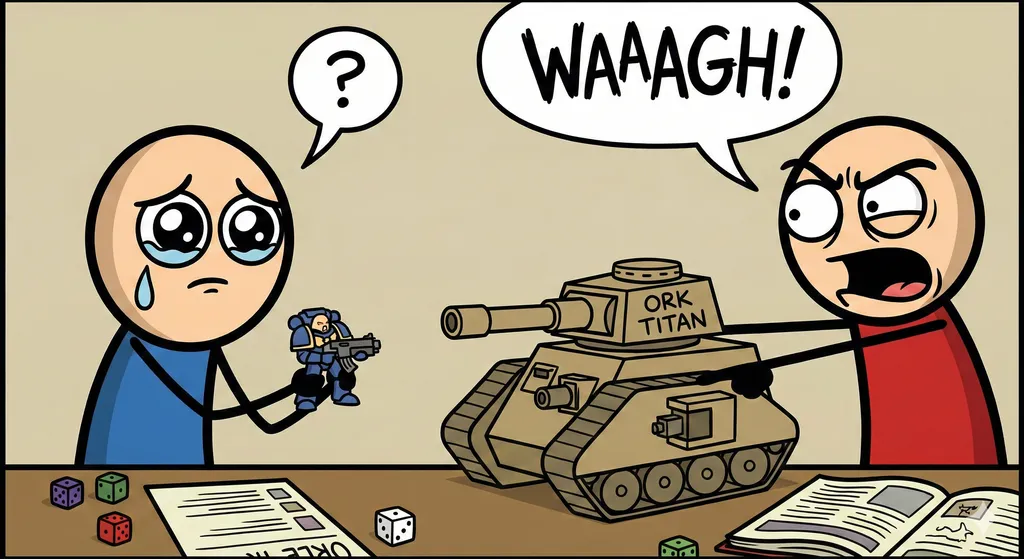
The grimdark future just got a little less artificially intelligent. Games Workshop, the venerable titans behind Warhammer 40,000 and Age of Sigmar, has officially drawn a line in the sand regarding the use of AI in their creative processes, a move confirmed by their CEO. This isn't just corporate speak; it's a significant pronouncement that ripples through every aspect of our hobby, from the hallowed halls of Black Library to the individual’s painting desk.
From a purely mechanical standpoint, this directive offers a fascinating look into the operational realities of a major tabletop publisher. The explicit ban on AI for public-facing content—art, lore, rules text—means that the creative pipeline for Warhammer will continue to rely on human artistry and authorship. This is crucial for consistency. We've all seen the uncanny valleys and thematic missteps that early AI art can produce. For a setting as meticulously detailed and aesthetically distinct as Warhammer 40,000, maintaining a cohesive visual and narrative identity is paramount. The mechanics of rules writing, for instance, benefit immensely from human logic, nuance, and an understanding of player experience, something AI currently struggles to replicate without extensive, often flawed, human oversight. A ban mitigates the risk of nonsensical rules interactions or lore contradictions that could slip past an AI-assisted editorial process. The caveat, of course, is the 'behind closed doors' allowance. This suggests AI might still serve as an internal tool—perhaps for initial concept generation, data analysis, or even proofreading—but the final, player-facing product must be human-crafted. This distinction is vital for maintaining trust and quality control, even if the transparency could be clearer. It’s a pragmatic approach to a burgeoning technology, allowing for internal exploration while protecting the integrity of the published material.
Now, let's talk about the soul of the setting, the rich, often contradictory, and endlessly inspiring lore. Warhammer's fluff is a testament to decades of human imagination. From the gothic cathedrals of humanity to the fungal ecosystems of the Orks, every detail, every character, every epic conflict carries the imprint of individual creators. The very essence of the grimdark future, its despair tempered by defiant heroism, its cosmic horror juxtaposed with absurd humor, is a uniquely human narrative achievement. Introducing AI as a primary creative force risks diluting this authenticity. The lore of the Adeptus Mechanicus, with their veneration of the Omnissiah and their complex relationship with technology, already provides a rich thematic backdrop for discussing the nature of artificial intelligence. To then have the *creation* of that lore be outsourced to algorithms would be a meta-narrative irony almost too grimdark to bear. This ban ensures that the voices telling the tales of the Imperium, the realms of Sigmar, or the endless galactic wars, remain human, passionate, and deeply invested in the worlds they build. It preserves the creative lineage that has given us countless iconic stories and characters, from Ciaphas Cain to the tragic saga of the Primarchs. If you truly want to immerse yourself in the depth of this human-crafted universe, pick up the latest Codex and feel the weight of its history.
So, is this good for the game? Absolutely. For the tabletop player, this decision is a resounding affirmation of value for human creativity. It reinforces the idea that the art on our cards, the stories in our campaign books, and the rules governing our skirmishes are the product of dedicated artists, writers, and designers. This fosters a deeper connection to the hobby, knowing that the passion we invest is mirrored by the creators. It protects the unique aesthetic and narrative voice that makes Warhammer, well, *Warhammer*. In an era where AI-generated content is becoming increasingly prevalent and often indistinguishable, Games Workshop's stance provides clarity and a promise of authenticity. While some might argue it slows down content delivery or stifles innovation, I believe it reinforces the core appeal of our hobby: human connection, shared imagination, and tangible creations. It means the 'table feel' remains grounded in genuine artistic endeavor, rather than algorithmic suggestions. It’s a win for the community, a win for the artists, and ultimately, a win for the grimdark future itself.
Top Pick: Warhammer 40,000 Lore Books
For unparalleled human-crafted narrative depth
Check Price on Amazon →Related Stories
Leman Russ: The Primarch's Enduring Shadow on Warhammer 40K
The mystery of Leman Russ, the Wolf King, continues to captivate Warhammer 40,000 players. His absence isn't just lore; it's a foundational element shaping the
AdMech's Eye of Terror Battalion: Forge Worlds Meet the Warp
Games Workshop's latest Adeptus Mechanicus Battalion box promises a unique thematic twist. We dissect its contents, strategic value, and the lore implications o
Warhammer Open Swag: From Loot Box to Portable Workbench
Games Workshop's latest Warhammer Open swag boxes are a significant step up, offering practical tools and collectibles. They transform into mobile painting stat