
Grit: The Unsung Mechanic Shaping Modern TTRPGs
Beyond hit points, 'Grit' offers depth to character resilience and narrative stakes in TTRPGs. We analyze how this vital design philosophy elevates the player experience and fuels compelling storytelling.
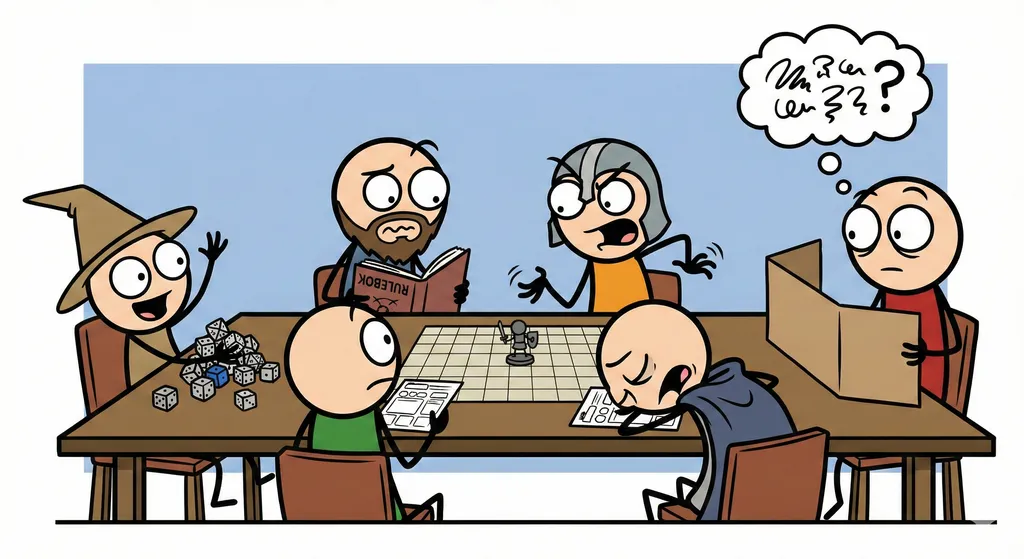
The recent #RPGaDAY2026 prompt, curated by The Kind GM, threw a spotlight on 'Grit' – a concept often understated yet profoundly impactful in the realm of modern TTRPG design. This isn't about a single system from a monolithic publisher; it's about a foundational element increasingly integrated into how we tell stories of perseverance at the table, a testament to the evolving sophistication of the TTRPG Community.
For too long, the primary metric of a character's ability to endure was a simple numerical tally: hit points. While effective for tracking physical harm, it often fell short of capturing the sheer willpower, mental fortitude, or desperate resolve that defines true heroism and gritty survival. Grit, as a design philosophy, seeks to fill this void, offering a meta-currency or a set of mechanics that represent a character's capacity to push beyond their limits, to take one more blow, or to make one last desperate stand when all hope seems lost. It's the difference between merely being injured and being *broken*.
Mechanically, Grit manifests in various forms. In some systems, it's a dedicated resource pool, distinct from health, that players can spend to mitigate damage, gain a bonus on a crucial roll, or activate a special ability. Think of the ‘Stress’ mechanics in *Blades in the Dark*, where characters push their luck and endure trauma to achieve their goals, or the ‘Resolve’ and ‘Sanity’ tracks in Call of Cthulhu, which represent psychological and mental endurance rather than just physical wounds. Even D&D 5th Edition's 'Inspiration' and 'Exhaustion' conditions, while perhaps less robust, hint at this design space. These systems acknowledge that a character can be physically sound but mentally shattered, or vice-versa. When a character runs out of Grit, the consequences are rarely immediate death; instead, they might suffer lasting conditions, psychological scars, or be forced to make narrative concessions that deepen their story.
From a lore perspective, Grit imbues the setting and its inhabitants with a palpable sense of struggle and consequence. In a grimdark fantasy world, a robust Grit system underscores the brutal reality of existence, where every victory is hard-won and every defeat leaves a mark. It allows for epic moments of last-ditch heroism, where the narrative focuses on a character's sheer will to survive or achieve their objective against impossible odds. Imagine a battered warrior, out of hit points, spending their last point of Grit to parry a killing blow, or a weary wizard, spells exhausted, invoking a burst of raw arcane power fueled by pure desperation. These are the moments that elevate a simple combat encounter into a legendary tale. Grit ensures that characters aren't just collections of stats, but resilient individuals whose inner strength can be tested and broken, making their triumphs all the more meaningful. It allows the world to feel dangerous without being unfairly lethal, fostering stories of perseverance rather than just attrition.
So, is this paradigm shift good for the game? Unequivocally, yes. For the Game Master, Grit provides a nuanced toolset for pacing and tension. Instead of a binary success/failure state or a simple HP countdown, GMs can introduce escalating consequences that force players to make difficult, meaningful choices. It encourages more descriptive and evocative narration of struggle, moving beyond the abstract to the visceral. For players, it fosters deeper engagement with their character's mental and emotional state, promoting roleplaying and strategic decision-making beyond just optimizing damage output. It transforms the feeling at the table from a sterile tactical exercise into a desperate fight for survival, where the sweat and strain of the characters are almost palpable. While poorly implemented Grit can add unnecessary complexity, when designed elegantly, it elevates the entire experience, making character arcs more compelling and victories feel truly earned. It's a significant evolution from the simpler systems of yesteryear, where a character's resilience often amounted to little more than their THAC0 and a dwindling pool of hit points.
Grit, in its various forms, represents a maturation of TTRPG design, acknowledging that the most compelling stories are often found not in invincibility, but in the struggle to overcome. It's a mechanic that truly enhances the diegetic experience, weaving character resilience directly into the narrative fabric of our games.
Top Pick: Blades in the Dark
Its elegant Stress and Harm system masterfully integrates character resilience and narrative consequence, making every desperate choice feel impactful.
Check Price on Amazon →Related Stories
Beyond the Dice: The Mechanics of Collective Pride in TTRPGs
We delve into 'Aetheria: Chronicles of the Confluence' by Mythos Forge Games, a system designed to mechanically cultivate the often-overlooked group chemistry a
Beastkin Bonds: Ironclad Forges Deeper TTRPG Companionship
Ironclad Games' new Beastkin Bonds supplement for Aethelgard Chronicles promises a robust, tactical companion system. We break down the innovative mechanics and
The Indie Ascent: Forge Your Own RPG Legacy
EN World's 'RPG Evolution' isn't just a headline; it's a call to arms for creators, democratizing game design and publishing. This deep dive explores how launch