
GW's New Paint Scheme: Deep Dive into the Brushstroke Economy
Games Workshop's new 'paint and take' initiative is replacing the beloved free mini of the month. We analyze if this structured painting experience fosters deeper engagement or misses the mark on casual recruitment.
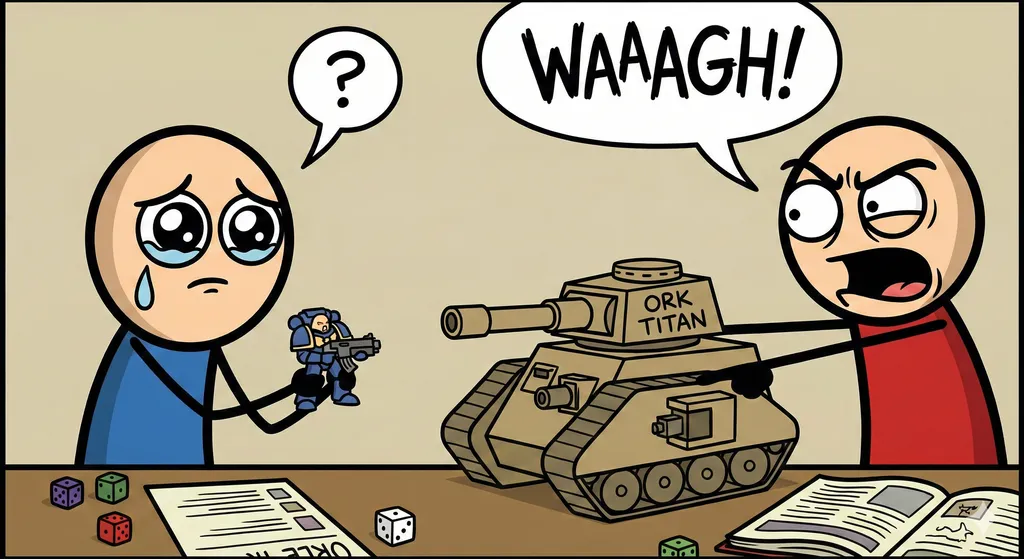
Games Workshop's recent pivot from the 'free mini of the month' to a more structured 'paint and take' scheme has sent ripples through the Warhammer community. As veteran GMs and players, we've seen countless initiatives designed to bring new blood into our hobby, and this latest move by GW deserves a close look under the magnifying glass of table-top practicality.
TheThe old 'free mini' was a simple, low-barrier entry: walk in, grab a model, walk out. It was a physical token, often unpainted, that might sit on a shelf or get lost in a bitz box. The new 'paint and take' is a fundamentally different beast. It's an *experience*. Customers are invited to sit down, often with staff guidance, and paint a model on-site, using store paints and brushes. This isn't just a demo; it's a guided tutorial, potentially spanning 30-60 minutes, focusing on basic techniques like basecoating, shading, and highlighting. The 'take' part still exists, but the 'paint' component is now the crucial gatekeeper.
From a mechanical perspective, this shifts the acquisition of a free model from a passive collection to an active, time-invested activity. It’s less about *getting* a miniature and more about *creating* one. This directly addresses the often-overlooked first hurdle for many newcomers: the intimidation of painting. By providing materials, space, and instruction, Games Workshop is attempting to solve a problem that the 'free mini' merely highlighted. It’s akin to moving from a 'free sample' to a 'free cooking class' – the investment is higher, but so is the potential for skill acquisition and ongoing engagement.
While painting might seem purely mechanical, it's an undeniable gateway to the rich lore of Warhammer. Every brushstroke on a Space Marine's pauldron or a Stormcast Eternal's shield connects the painter to the vast narratives of the 41st Millennium or the Mortal Realms. Learning to paint a specific faction's colors, understanding why a Blood Angel might have a darker red or a Death Guard a sickly green, immediately grounds a new player in the setting. The 'paint and take' scheme, by guiding this initial creative act, subtly introduces the concept of faction identity and aesthetic consistency. It’s not just painting a toy; it’s bringing a character, however minor, to life within a grand cosmic drama. This initial engagement can spark curiosity about the codices, the novels, and the expansive history that defines these universes, turning a casual visitor into a potential lore enthusiast. It transforms a generic plastic figure into 'my first Ultramarine' or 'my first Kruleboy,' imbuing it with personal significance.
So, is this a net positive for the table? Absolutely, but with caveats. The immediate benefit is clear: improved retention. A player who has invested time and effort into painting their first miniature, especially under guidance, is far more likely to feel a sense of ownership and accomplishment. This emotional connection is critical for converting a curious visitor into a committed player. They've crossed a psychological barrier, gaining a tangible skill that directly feeds into the broader hobby.
However, the scheme does raise the barrier to entry for the truly casual. The old 'free mini' was perfect for the 'just curious' passerby who might not have 30-60 minutes to spare. This new approach demands a commitment of time, which, while beneficial for deeper engagement, might deter those on a quick errand. It’s a strategic trade-off: fewer initial interactions, but potentially higher quality ones.
For veteran players and GMs, this means the potential for more engaged new players joining our ranks. Players who understand basic painting are more likely to appreciate the aesthetic side of the game, leading to better-looking armies on the tabletop and a more immersive experience for everyone. It cultivates a community that values the craft as much as the crunch. It also might free up store staff from endless simple demos, allowing them to focus on more advanced painting tutorials or actual game demonstrations. This is a calculated move by Games Workshop, shifting from a 'numbers game' of distributing free plastic to a 'quality engagement' model. It's less about the sheer volume of minis given out and more about fostering genuine interest and skill development. For the long-term health of Warhammer and its community, this structured approach to onboarding new hobbyists holds significant promise. It moves beyond simply handing out a model to teaching the fundamental skill that underpins the entire aesthetic appeal of the game, potentially turning passive observers into active participants ready to dive into Warhammer 40,000 Core Book.
Related Stories
The Codex Conundrum: Space Marine Flops & 40k's Shifting Meta
A recent Space Marine Codex release has sparked fierce debate, challenging the competitive meta and igniting community criticism. We dissect the mechanical impl
Blood Angels: Crimson Fury Refined for Warhammer 40,000
The iconic Blood Angels receive critical datasheet updates for the new Codex Space Marines. This deep dive dissects how these changes impact their unique lore a
40K's Endless War: Navigating GW's Cyclical Meta
Warhammer 40,000 players constantly face rules revisions and meta shifts. This deep dive examines how Games Workshop's cyclical approach impacts the game's mech