
Mastering the Moment: Bulletproofing Your One-Shot Prep
Gnome Stew's latest Gnomecast offers veteran insights into problem-proofing convention one-shots. We dissect their advice on anticipating pitfalls to ensure smooth, memorable TTRPG experiences.
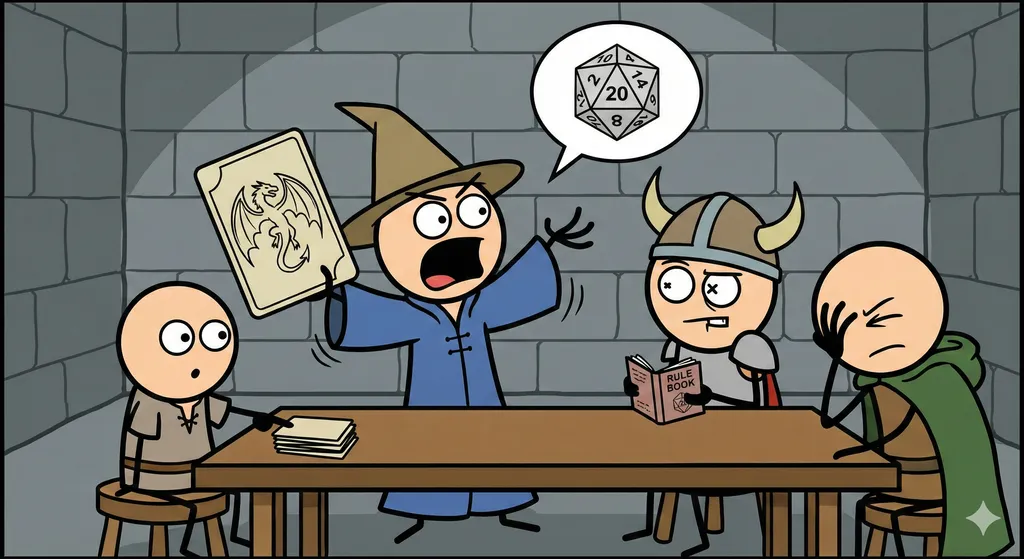
Gnome Stew's Gnomecast 247, "Problem Proofing One-Shots," isn't just another podcast episode; it's a masterclass in the often-underestimated art of the convention TTRPG experience. Hosts Ang, Andy Jaksetic, and Carl Lehmann, seasoned GMs all, offer invaluable counsel on transforming potentially chaotic single-session games into polished, engaging adventures. For any Game Master who has ever stared down the barrel of a convention slot, this conversation is less a friendly chat and more a tactical briefing on how to ensure your table isn't just surviving, but thriving.
At the core of problem-proofing lies a rigorous, yet adaptable, approach to preparation. The 'crunch' here isn't about dice rolls, but about the structural integrity of your game. The first major point is character pre-generation. This isn't just about handing out stat blocks; it's about crafting player characters with clear motivations, existing narrative hooks, and a built-in reason to engage with the scenario. A well-designed pre-gen minimizes decision paralysis and provides immediate agency, preventing the dreaded "what do I do?" syndrome that can cripple a tight one-shot. Furthermore, the scenario itself demands a focused scope: a clear objective, a manageable number of key encounters, and distinct fail states that still lead to an interesting conclusion. The discussion implicitly advocates for 'soft' fail states over TPKs (Total Party Kills), especially in a convention setting where the goal is usually a satisfying narrative arc, not a brutal attrition test. Time management is another mechanical pillar; GMs must ruthlessly pace their sessions, understanding that a three-hour slot means roughly two hours of actual play once introductions and wrap-up are factored in. This necessitates a 'less is more' approach to content, ensuring every scene serves a purpose and moves the plot forward without wasted breath. Contingency planning, too, moves beyond mere improvisation; it's about having pre-baked branching paths or modular encounters ready for when the players inevitably zag where you expected them to zig. This proactive strategy ensures the GM always has a tool in their kit, much like understanding the nuanced application of specific monster abilities when you consult resources like The Monsters Know What They're Doing, making every encounter feel deliberate.
Beyond the mechanics, there's the 'lore' of the convention one-shot itself—the unique social contract and shared expectations. A convention table is often a crucible of diverse playstyles and experience levels, where players might be meeting for the first time. The 'setting' isn't just the fantasy world you've built, but the temporary community forming around your table. The podcast's insights resonate with the unspoken agreement: players are there for a complete, satisfying narrative arc, often compressed into a few hours, and the GM is the architect of that experience. This calls for a certain level of 'meta-awareness' from the GM—understanding that the goal is often to showcase a system, tell a compelling micro-story, and leave players feeling accomplished, rather than embarking on a sprawling campaign. It's about creating a 'shared memory' that can stand alone, unburdened by the need for future sessions. This context frames every mechanical decision, from character design to encounter balance, ensuring it serves the specific demands of the convention environment.
So, is this good for the game? Unequivocally, yes. The advice offered by Gnome Stew is foundational for elevating the TTRPG experience, particularly in the high-stakes, time-constrained environment of convention play. By emphasizing proactive problem-proofing, GMs reduce their own stress and, critically, enhance player satisfaction. A smooth, well-run one-shot isn't just enjoyable in the moment; it's an advertisement for the hobby itself, attracting new players and reinforcing the passion of veterans. This approach fosters a more professional, polished, and ultimately, more enjoyable TTRPG landscape, demonstrating that thoughtful preparation is not a chore, but a crucial component of masterful Game Mastering.
Top Pick: Return of the Lazy Dungeon Master
For a philosophy on efficient and impactful GM prep
Check Price on Amazon →Related Stories
Yatagan: A New Grimdark TTRPG Forged in Iron and Ash
Yatagan, the new grimdark TTRPG from Grimdark Forge Games, promises a brutal universe akin to Warhammer 40k. We delve into its unique mechanics and lore, assess
The Perfect Score: Mastering Blades in the Dark's Final Act
Discover the profound impact of a planned campaign finale in Blades in the Dark. We analyze how proactive conclusions elevate player satisfaction and group long
For All Mankind: A Hybrid Vision Emerges at PAX West 2026
Bad Cat Media's 'For All Mankind' showcased at PAX West offers a compelling fusion of tabletop strategy and narrative depth. We analyze its innovative mechanics