
Midrange Royalty: Jund 2009 Collides with Mono-Black 2013
Analyzing the historic clash between the Alara-era Jund powerhouse and the Theros-era Mono-Black Devotion to determine which midrange king truly rules the Standard format history.
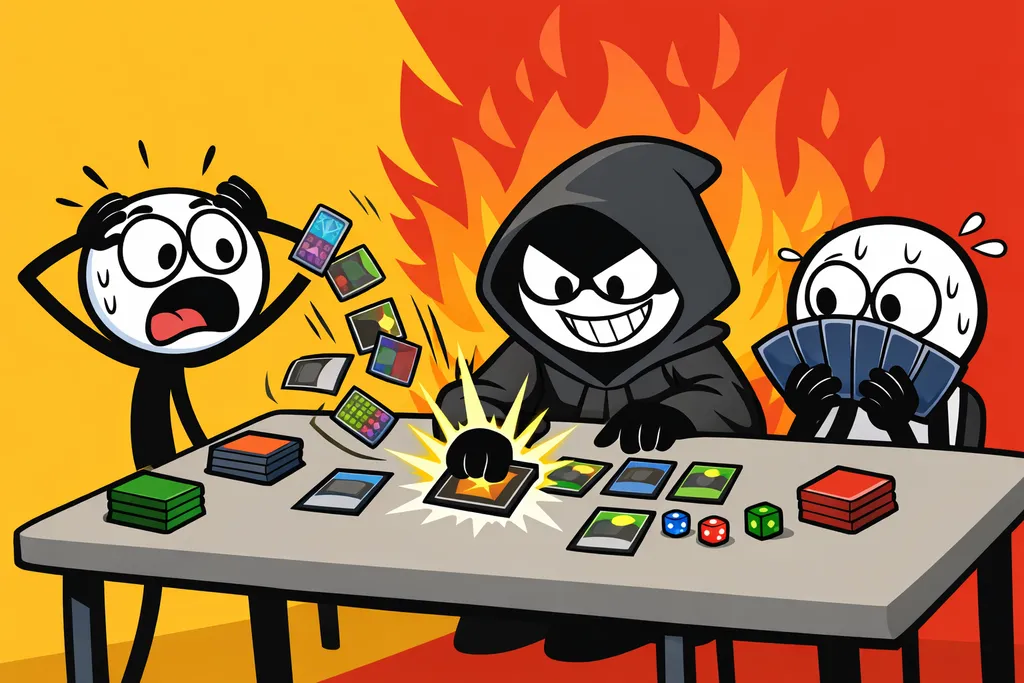
Magic: The Gathering, published by Wizards of the Coast, is currently witnessing a theoretical collision of titans in the Best Standard Deck Ever bracket, pitting the Alara-block Jund menace against the Theros-era Mono-Black Devotion. This isn't just a nostalgia trip; it is a clinical examination of how midrange strategy evolved over four years of design philosophy. On one side, we have the 2009 Jund deck, a pile of raw efficiency that defined the Shards of Alara era. On the other, the 2013 Mono-Black Devotion list, a deck that turned the devotion mechanic into a relentless drain-and-gain engine. These decks represent two different ways to solve the same problem: how to out-value an opponent in a fair game of cards.
Let’s talk crunch. The 2009 Jund list was built on the back of the Cascade mechanic, specifically the ubiquitous Bloodbraid Elf. In a game of resource management, getting a free spell off the top of your library is the ultimate value proposition. Jund wasn't trying to be clever; it was trying to bury the opponent in two-for-ones. Between Blightning stripping hands and Maelstrom Pulse answering any non-land permanent, the deck had no true weaknesses. It utilized Sprouting Thrinax to ensure the board stayed populated even after a sweep, and Putrid Leech provided an early clock that forced opponents to react. It was a deck that rewarded aggressive mana-fixing and punishing on-curve plays.
Conversely, the 2013 Mono-Black Devotion deck operated on a different axis of card advantage. It used Thoughtseize to dismantle the opponent's plan early, then stabilized with Underworld Connections. The engine of the deck was the devotion mechanic, which counted the number of black mana symbols you had in play. The win condition was often the Gray Merchant of Asphodel, colloquially known as Gary, who scaled his impact based on that devotion. While Jund was about explosive turns, Mono-Black was about the slow squeeze. It used Pack Rat to turn dead draws into an overwhelming army, forcing the opponent to find an answer immediately or perish to a swarm of vermin.
From a lore perspective, these decks represent the zenith of their respective planes. Jund is the shard of Alara where life is cheap and only the strongest survive—a philosophy reflected in the deck’s willingness to trade life for tempo with cards like Putrid Leech. It feels like a predatory ecosystem where every card is a hunter. Mono-Black Devotion, meanwhile, captures the grim inevitability of the Theros underworld. It represents the unwavering worship of Erebos, where every permanent on the field adds to the divine power of the God of the Dead. When Gray Merchant enters the battlefield, it isn't just a spell; it’s a tithe paid in blood, a mechanical representation of a deity's favor being earned through persistence.
At the table, these decks offer vastly different experiences for the pilot. Jund is a deck of high-variance adrenaline; every Cascade trigger is a slot machine pull that usually hits the jackpot. It forces the opponent to play a defensive game from turn two. Mono-Black is a slow-motion car crash for the person across the table. You watch your resources dwindle while the black player draws extra cards every turn. It’s a grind in the purest sense of the word. If you enjoy tactical precision and protecting your assets, you’ll want to secure your cards with premium deck boxes before shuffling up for a match this intense.
Which one holds the crown? While Jund has the raw power of the Cascade era, Mono-Black Devotion has better synergy. In a head-to-head, the hand disruption of 2013 might actually pick apart the 2009 curve before it can get off the ground. However, the sheer aggression of a turn-four Bloodbraid into a Blightning is a sequence that few decks in the history of Magic can withstand. For the veteran player, this matchup is a masterclass in the Who's the Beatdown philosophy. Jund wants to end the game before Gary can drain them for ten, while Mono-Black wants to survive the initial onslaught to reach its inevitable endgame. It is a battle of the ages that reminds us why the Standard format remains the heart of competitive play.
Top Pick: Magic: The Gathering Foundations
The best way to revisit these classic archetypes in a modern context
Check Price on Amazon →Related Stories
The Commander Resurrection: Sorting Through the Cardboard Chaos
A veteran player returns to Magic: The Gathering, tackling the logistical nightmare of a 2,000-card collection to build a custom Commander deck.
The Snail's Stampede: Boros Aggro's New Token Titan
The latest reveal for Magic: The Gathering introduces Gigantic Elemental Snail, a hefty Boros creature poised to reshape token strategies. Paired with Regal Bun
Beyond the Bloom: Redefining Commander Value at $45
MTGGoldfish's latest collection of 45 Commander decks under $45 challenges the notion of budget play. This initiative highlights accessible entry points and cre