
The Commander Resurrection: Sorting Through the Cardboard Chaos
A veteran player returns to Magic: The Gathering, tackling the logistical nightmare of a 2,000-card collection to build a custom Commander deck.

Wizards of the Coast’s Magic: The Gathering has always been a game of cycles, but none are as potent as the return of a lapsed player to the Commander Format. It is a story as old as the Revised Edition: a player learns the ropes, optimizes their playstyle, burns out on the competitive treadmill, and eventually finds their way back through the kitchen table’s siren song. The transition from a chaotic bin of 2,000 loose cards into a cohesive, 100-card singleton machine is more than just an organizational hurdle; it is a fundamental shift in how we approach the game’s internal logic and our own history with the hobby.
The crunch of building for the Commander Format requires a different mental framework than the standard 60-card, four-copy limit archetypes. When you are sifting through a decade of cardboard, you aren't looking for the four-of-a-kind consistency that defines Modern or Standard. Instead, you are hunting for synergies that scale in a multiplayer environment. The mechanical heart of this process is the identification of the Commander itself—the legendary creature that dictates your color identity and serves as the repeatable engine of your deck. In this specific journey of "Breaking Eggs," the builder moves from vague suppositions about card types to the hard reality of card pools. You have to account for mana rocks, board wipes, and targeted removal, all while ensuring your eggs—the individual components of your strategy—actually hatch into a viable win condition.
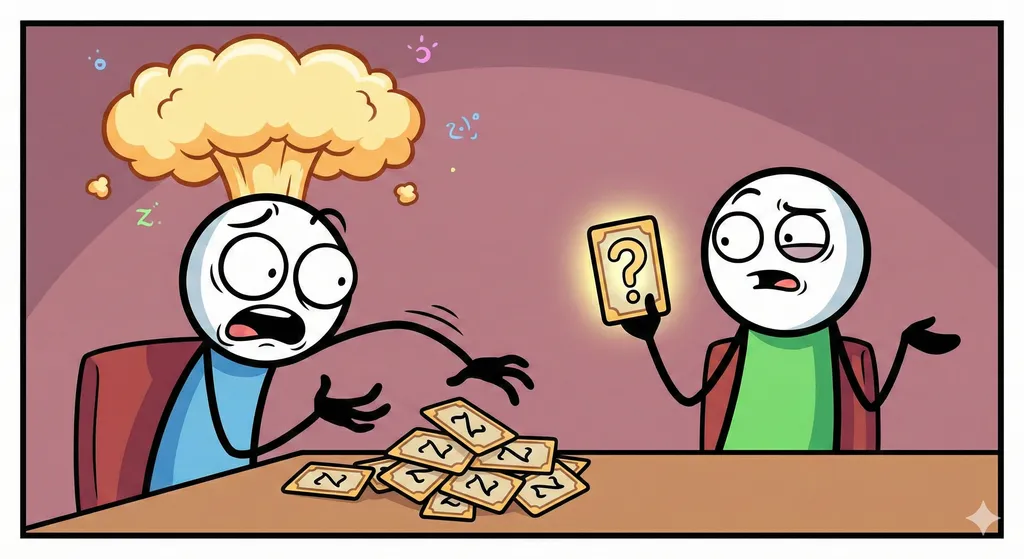
The organization of a 2,000-card collection isn't just busywork; it's a mechanical audit. You cannot build a high-functioning EDH deck if you don't know your inventory. The move to trading card storage boxes represents the first step in mastering the pile. By categorizing by color, type, or rarity, a brewer begins to see the gaps in their strategy. Are you heavy on high-mana-value creatures but light on early-game ramp? Your bin will tell you the truth that your memory obscures. This is the crunch of the hobby that happens away from the table, where the deck’s mana curve is forged in the fires of categorization.
From a lore perspective, the return to the table is often sparked by a narrative hook. Magic has spent decades building a multiverse, but for the veteran player, the true fluff is the personal history attached to the cards. That beat-up rare from a high school draft or the gift from a spouse isn't just a game piece; it’s a tether to the community. In the Commander Format, the deck becomes an expression of the player’s history. You aren't just playing a deck that won a Pro Tour; you are playing a curated museum of your own time in the hobby. The commander isn't just a mechanic; it's the protagonist of your personal gameplay story.
The table feel of a self-built Commander deck is incomparable. There is a specific satisfaction in watching a Rube Goldberg machine of your own design actually function. When you move from the wrong rules of your youth to the sophisticated stack-interaction of modern Magic, the game opens up. It ceases to be a simple race to zero and becomes a political and mechanical puzzle. Sorting those 2,000 cards is the price of admission for that experience. It is the breaking of eggs required to make the omelet. For the veteran GM or player, this process is a reminder that the game is as much about the preparation as it is about the execution.
Ultimately, this methodical approach to deck building is exactly what the community needs. It moves away from the net-decking culture that can stagnate competitive play and returns to the roots of the hobby: experimentation, discovery, and the tactile joy of the cards themselves. If you have a bin of cards gathering dust, the Commander Format is the best excuse you will ever have to get organized and get back to the table. It turns a disorganized collection into a toolbox for endless social interaction.
Top Pick: BCW 3200ct Storage Box
Essential for cataloging a chaotic 2,000-card collection and protecting your investment.
Check Price on Amazon →Related Stories
Midrange Royalty: Jund 2009 Collides with Mono-Black 2013
Analyzing the historic clash between the Alara-era Jund powerhouse and the Theros-era Mono-Black Devotion to determine which midrange king truly rules the Stand
The Social Contract: When Shuffling Becomes Intimate
An analysis of the physical rituals within Magic: The Gathering and how the Commander format's social proximity creates unexpected table dynamics during deck ra
Beyond the Box: Optimizing Lorwyn Eclipsed Commander Precons
Lorwyn Eclipsed's Commander preconstructed decks offer a solid foundation, but unlocking their true potential requires strategic upgrades. This deep-dive explor