
Resource Warfare: The Unseen Economy of Every Tabletop Game
Card Kingdom's latest deep-dive into Magic: The Gathering Draft strategy unveils universal truths about resource management. We dissect how these principles of net loss and gain apply far beyond the card table, into the very heart of TTRPG design and play.
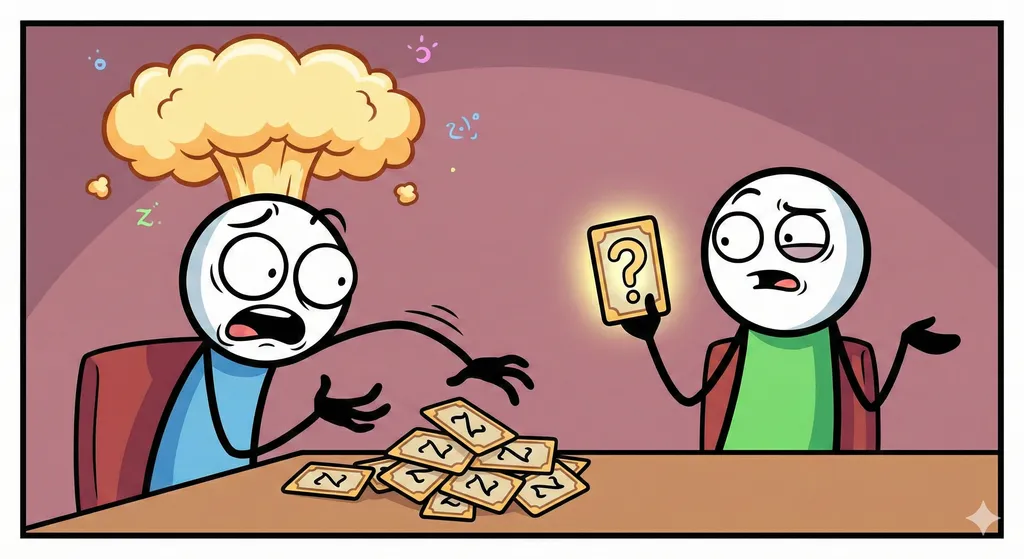
The Crit Sheet is cracking open the strategic bedrock of Magic: The Gathering, as elucidated by Card Kingdom's recent article, “Trade Wars Part 2: Draft Like a Pro.” This masterclass in resource management, though framed for Wizards of the Coast’s premier collectible card game, offers insights that directly translate to the tactical decisions made at every TTRPG table. A veteran GM knows that beneath the narrative, every compelling encounter is a delicate balance of resource exchange, and understanding this fundamental concept elevates both design and play.
Card Kingdom’s piece meticulously breaks down the core resources in Magic: The Gathering Limited formats: life, cards in hand, available mana, and board presence. Their central thesis, that competent play hinges on making trades ultimately more painful for your opponent, is not just sound advice for Draft; it's a universal truth of game design. In the context of a TTRPG, these resources manifest differently but hold identical strategic weight. Hit Points, Sanity, or Stress are our “life total.” Our “cards in hand” become available spell slots, daily abilities, limited-use items, or even narrative currencies like Inspiration or Fate Points. “Available mana” translates to our action economy – the precious actions, bonus actions, and reactions that define a turn, or the narrative leverage characters can exert. Crucially, “board presence”—the creatures and permanents on the battlefield—is mirrored by character positioning, controlled minions, environmental advantages, and the sheer number of active participants in a combat or challenge. Just as in Magic, this “board presence” often proves to be the most vital resource, dictating control and potential for victory. A well-placed fighter or a strategically isolated enemy can shift the entire ledger of an encounter.
But why do these resource economies exist? What is the “lore” of their design? They are the very language through which a game communicates risk, reward, and meaningful choice. The story a game tells isn't just in its narrative; it's in the scarcity or abundance of its resources. A setting where magic is rare and spell slots are precious inherently creates a different player experience than one where every character is a walking arcane battery. This underlying design philosophy ensures that every decision, from whether to use a healing potion now or save it, to expending a powerful ability on a minor threat, carries weight. It’s the implicit contract between designer and player: every action costs something, and every cost must be weighed against its potential gain. This systemic narrative is what makes games engaging, forcing players to think critically and adapt. For instance, the careful management of spell slots in Player's Handbook isn't just a mechanical restriction; it's a narrative device that emphasizes the power and fragility of magic in that world.
So, what’s the verdict for the table? This understanding of resource trading is profoundly beneficial for both Game Masters and players. For GMs, it provides a framework for designing encounters that aren't just challenging, but strategically rich. Crafting scenarios where players are forced to make tough decisions about their resources—do they take the damage to protect an ally, or spend a powerful ability to mitigate an immediate threat?—transforms combat from a series of dice rolls into a tactical chess match. It empowers GMs to tune difficulty not just by adjusting enemy stats, but by manipulating the resource curve of an adventure, creating natural ebbs and flows of tension and relief. For players, recognizing these resource trades means moving beyond reactive play to proactive strategy. It’s about knowing when to press an advantage, when to cut losses, and when a “bad trade” in the short term might be a winning move in the long game. This isn't about min-maxing; it's about informed decision-making, deepening engagement, and ultimately, more satisfying victories (and defeats) across any system, from crunchy D&D to narrative-focused Indie TTRPGs where narrative currencies are the primary resource for influencing outcomes.
Top Pick: The Crit Sheet's Guide to Balanced Encounters
Essential reading for GMs looking to master resource management across all systems.
Check Price on Amazon →Related Stories
The Crit Sheet: Trading Up at the Tabletop
The strategic principles of resource management, often honed in competitive card games like Magic: The Gathering Draft, offer profound lessons for TTRPG players
D&D's Ayoub on OGL: Rebuilding Trust at the Table
Dan Ayoub, Head of Dungeons & Dragons, addresses the lingering OGL crisis, acknowledging the fragile nature of community trust. This editorial explores what his
Belladonna's Blitz: Aggro Tactics for Your TTRPG Table
The latest Magic: The Gathering reveal, Belladonna Took, highlights a potent Boros aggro strategy. We dissect how its core principles—rapid token generation and