
Sly Flourish Unveils Adventure Types: Master GM Prep
Sly Flourish's Rise of the Lazy Gamemaster introduces structured adventure types, promising to revolutionize GM preparation. This deep dive explores how these frameworks empower GMs to deliver compelling narratives with minimal prep.
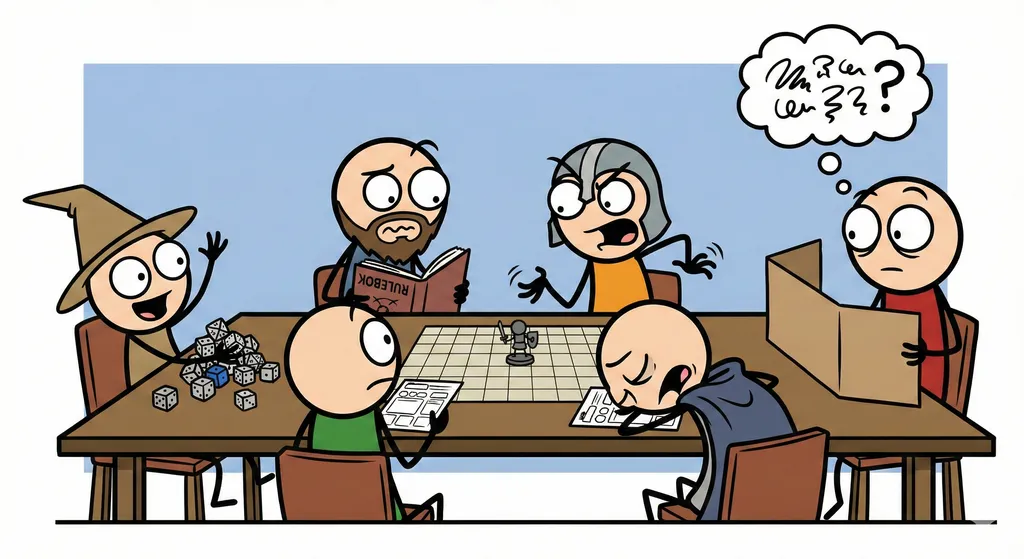
The TTRPG community is abuzz with the continued success of Sly Flourish’s Kickstarter for Rise of the Lazy Gamemaster, a project poised to once again redefine how we approach Game Mastering. While the core philosophy of efficient, impactful preparation remains, the introduction of formalized "Adventure Types" within this new tome stands out as a particularly compelling innovation, offering a structured scaffold for GMs drowning in prep work.
At its heart, the concept of Adventure Types isn't a new set of rules for players, but a robust meta-mechanic for the Game Master. It’s a classification system, a taxonomy for the myriad forms a tabletop adventure can take. Instead of facing a blank page, GMs are presented with established frameworks: perhaps a "Pointcrawl Narrative," emphasizing key locations and the transitions between them; a "Mystery Arc," built around clues, suspects, and revelations; or a "Sandbox Scenario," prioritizing player agency within a dynamic, reactive environment. The 'crunch' here lies in the actionable guidance each type provides. For a Mystery, the advice might focus on designing three distinct clues per major revelation and ensuring multiple paths to discovery. For a Pointcrawl, it’s about populating each point with a distinct encounter or discovery and considering the narrative connective tissue. This isn't about rigid adherence but about providing a mental shortcut, a pre-fabricated mental template that guides targeted preparation, ensuring GMs focus on what truly matters for that specific kind of adventure.
The ‘fluff’ or lore surrounding these Adventure Types isn't about a fantasy world, but about the evolving lore of effective GMing itself. This system is a direct descendant of the "Lazy GM" philosophy that Sly Flourish has championed for years: maximize impact, minimize wasted effort. These types serve as archetypal story structures, allowing a GM to quickly grasp the narrative intent and player experience of an adventure before diving into the minutiae. It acknowledges that a dungeon delve demands different preparatory focus than a political intrigue, and by categorizing these demands, it empowers the GM to allocate their precious prep time optimally. This isn't just about saving time; it's about making that time more productive, more focused, and ultimately, more creatively fulfilling. It's about providing a common language and a shared understanding for GMs to discuss, design, and even troubleshoot their adventures, moving beyond vague notions into concrete structural principles.
So, what's the verdict for the table? This is an unqualified win. The immediate benefit is a dramatic reduction in GM burnout. How many times have GMs started a new campaign with grand ambitions, only to falter under the weight of endless, unstructured prep? By providing a toolkit of proven adventure structures, Rise of the Lazy Gamemaster equips GMs to quickly identify the core elements of their next session, allowing for more consistent, engaging play. Players benefit from more cohesive narratives, even those improvised on the fly, because the underlying structure provides a foundation of reliability. A GM employing an Adventure Type can improvise with confidence, knowing the framework will catch them. This translates to more dynamic sessions, where the GM can focus on player engagement and reactive storytelling rather than frantically scrambling for what comes next. It elevates the craft of Game Mastering, making sophisticated adventure design accessible to GMs of all experience levels. For those looking to streamline their prep and elevate their campaigns, I strongly recommend checking out the free 36-page PDF preview to see the foundational ideas in action.
Related Stories
Aetherbound Expeditions: Charting the Sundered Isles
Arcane Foundry Games' latest crowdfunding effort for Aetherbound Expeditions promises sky-high adventure and deep tactical play. We dissect how its new 'Zephyr
Echoes of the Sundered Star: A Deep Dive into Astral Forge's Sci-Fantasy Gem
Astral Forge Games launches 'Echoes of the Sundered Star,' a promising sci-fantasy TTRPG on crowdfunding. We dissect its innovative Echo Pool mechanics and rich
Guilded Paths: A Cinematic TTRPG Vision Beyond the Screen
The Guild's crowdfunded film unveils 'Guilded Paths,' a TTRPG designed to extend its narrative universe. We dissect its innovative mechanics and lore, evaluatin