
The Cardboard Sea: Ausloos' Rival Seas & Intuitive Design
David Ausloos, known for Dreamscape, reveals his unique, tactile design process for Rival Seas. Discover how emergent mechanics from a 'cardboard playground' promise a truly intuitive tabletop experience.
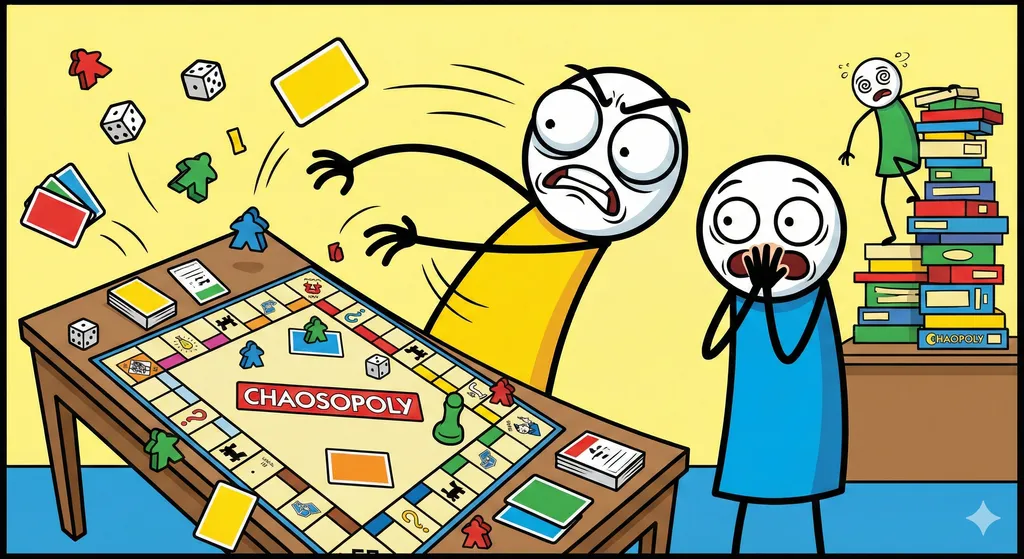
The venerable David Ausloos, known for his evocative titles like Dreamscape, has once again pulled back the curtain on his creative process for his upcoming title, Rival Seas. What he revealed isn't just a designer diary; it's a manifesto for a tactile, play-first approach that promises to shake up how we perceive game development and, more importantly, how we experience the final product at our tables.
Forget the sterile spreadsheet or the meticulously plotted flowchart. Ausloos' method for Rival Seas begins not with rules, but with raw, physical interaction. He describes an 'improvised cardboard playground' – a sandbox, quite literally, where pieces are pushed, pulled, and placed without preconceived notions. This isn't mere prototyping; it's a foundational act of discovery, allowing the game's true nature to reveal itself through tactile engagement. The 'crunch' of Rival Seas, then, isn't born from theoretical frameworks or abstract calculations but from the very act of play itself. This implies a game where rules feel less like arbitrary decrees and more like natural consequences of the components' inherent affordances. We can anticipate mechanics that are deeply intuitive, perhaps even spatial, demanding player interaction with the board and pieces in a fluid, organic manner. Think less about static rulebooks laden with exceptions and more about a living system that evolves with each interaction. The 'spectacularly wrong' initial board shape isn't a failure; it’s a testament to this iterative, physical refinement, suggesting a game that isn't afraid to break conventions or challenge traditional board layouts. This 'play-first' ethos often results in systems where the core loop is incredibly satisfying and immediately understandable, even if the strategic depth is immense. It's the difference between being told how to sail and actually feeling the wind in your sails, where the tactile feedback guides your decisions as much as any written rule. This kind of tinkering sparks ideas far more naturally than staring at a notebook, a lesson he first applied successfully to Dreamscape and has since refined, promising a seamless blend of action and consequence.
If the mechanics emerge from the tangible, then the lore of Rival Seas is likely to be equally vibrant and deeply integrated. A game born from such an intuitive process often finds its narrative threads woven directly into its gameplay. Imagine a world where the very landscape shifts and responds to player actions, much like Ausloos's cardboard playground adapted to the pieces moved across it. 'Rival Seas' itself conjures images of exploration, territorial disputes, and the unpredictable nature of maritime adventure. This design approach suggests a setting that isn't just a backdrop but an active participant in the game. Perhaps the 'spectacularly wrong' board shape evolved into a dynamic, modular sea map, where islands rise and fall, currents shift, and new trade routes or dangers emerge organically. This fluid approach to design could manifest as emergent storytelling at the table, where the players' interactions with the game's systems don't just resolve turns but actively build the world's narrative. It's a setting that feels less like a pre-written novel and more like an ongoing saga, co-authored by the designer's initial spark and the players' unfolding choices.
For us veteran GMs and players, the implications of Ausloos’s methodology for Rival Seas are profound. This isn't just another game; it's a promise of a deeply engaging experience where the 'table feel' transcends mere strategic decision-making. We can expect a game that encourages experimentation, where players are rewarded for intuitive understanding rather than rote memorization of rules. The joy will come from discovering the game's rhythms, not just mastering its minutiae. This emergent design philosophy fosters a sense of creative play that mirrors a child's interaction with toys on the kitchen floor – unburdened by rigid expectations, open to possibility. This is where the magic happens: when the game disappears, and all that's left is the immersive experience. It speaks to the core of what makes tabletop gaming so compelling: the shared journey of discovery, the unfolding narrative that emerges from player agency. If Rival Seas delivers on the promise of its design genesis, it will be a game that feels alive, responsive, and infinitely replayable, encouraging players to explore its depths with the same curiosity that Ausloos brought to his initial cardboard sandbox. It’s a testament to the power of physical interaction in game design, proving that sometimes, the best way to find the game is to simply play with it, letting the mechanics and lore coalesce naturally around the tactile experience. This approach, eschewing corporate fluff and embracing the raw essence of play, is precisely what we champions of the tabletop community crave.
Top Pick: Gloomhaven: Jaws of the Lion
Excellent example of emergent narrative and tactile gameplay in a campaign setting
Check Price on Amazon →Related Stories
Wireless: The Network Grid - A Deep Dive into Signal Strategy
Marco Canetta's 'Wireless: The Network Grid' from Cranio Creations promises a tight Eurogame experience. We dissect its innovative mechanics and the strategic d

Níjar's Olympic Pivot: A Designer's Journey from Global to Local
David Bernal's Níjar, published by Perro Loko Games, reveals a fascinating design evolution. We analyze how a shift from Olympic grandeur to regional developmen
World Order: When Global Systems Become Tabletop Reality
Dive into World Order, a grand strategy game simulating global geopolitics and economics. We analyze its intricate mechanics and the profound implications for y