
The Elusive Art of Casual Commander: A Community Reckoning
The Spike Feeders episode with GLHFCommander sparks renewed discussion on 'casual Commander.' We dissect the social contracts, player expectations, and community ethos shaping this beloved Magic: The Gathering format.
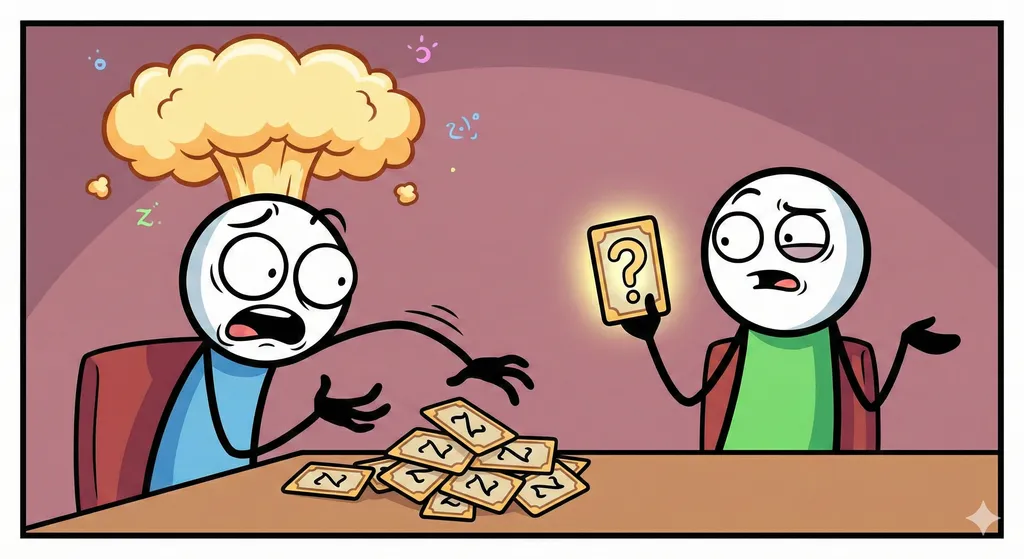
The recent episode of The Spike Feeders, featuring the insightful Meghan and Maria of GLHFCommander, has once again illuminated the often-murky waters surrounding 'casual Commander' within the sprawling universe of Magic: The Gathering, a format overseen by Wizards of the Coast. As veteran players and Game Masters, we've all sat at tables where the definition of 'casual' felt less like a consensus and more like a collective shrug, leading to everything from delightful chaos to outright disappointment. This conversation is not merely academic; it’s fundamental to the health and longevity of Commander as a social game.
From a purely mechanical standpoint, defining 'casual' in Commander is less about specific card exclusions and more about the meta-mechanics of player interaction and expectation management. Unlike a sanctioned tournament where the rules are ironclad, casual Commander operates on a nebulous social contract. The primary 'crunch' here is 'Rule 0' – the explicit agreement players make before a game begins. But even Rule 0 is often a shorthand for a deeper, unstated set of agreements. Does 'casual' mean no infinite combos? No land destruction? No oppressive stax pieces? The answers vary wildly from pod to pod, and therein lies the mechanical friction. Players are implicitly, and sometimes explicitly, negotiating the acceptable power level and play patterns. This isn't about *what* cards are played, but *how* their effects are leveraged. A 'casual' deck might still run powerful cards, but the pilot's intent is to create fun, interactive games rather than to achieve the most efficient win condition possible. This player-driven regulation of interaction is perhaps the most fascinating, and often frustrating, 'mechanic' of the format. Effective casual play hinges on clear pre-game communication, a Session 0, if you will, to align expectations on deck power and desired play experience. For those looking to fine-tune their decks within these social contracts, resources like EDHREC can be invaluable for understanding common card choices and synergies.
The lore of Commander itself is deeply intertwined with this 'casual' ethos. Originally known as Elder Dragon Highlander (EDH), it began as a fan-made variant, a kitchen-table format emphasizing singleton deck construction and legendary creatures. Its very genesis was an act of community creativity, a desire for a different kind of Magic experience—one focused on epic plays, unique interactions, and social camaraderie rather than cutthroat optimization. The 'spirit of Commander' that so many players champion isn't found in a rulebook; it's an oral tradition, a shared understanding of what makes the format special. It’s the thrill of a wild, multi-player swing, the politicking at the table, the unexpected synergies that emerge from 100-card singleton decks. This community-forged lore stands in stark contrast to the highly optimized, often deterministic play of competitive EDH (cEDH), which, while valid in its own right, prioritizes efficiency and victory above all else. Casual Commander, then, is a living narrative, shaped by countless individual tables and the evolving stories players create together.
So, is this ongoing discussion about 'casual Commander' ultimately good for the game? Absolutely. While the lack of a universal, codified definition can lead to awkward moments, the very act of discussing it—as The Spike Feeders and GLHFCommander have done—is vital. It forces players to articulate their expectations, to understand the diverse ways people enjoy the format, and to practice the crucial skill of pre-game communication. For a format that prides itself on being a social experience, this dialogue reinforces that the players, not just the cards, define the game. It encourages empathy, broadens perspectives on 'fun,' and ultimately strengthens the bonds within the community. It ensures Commander remains a welcoming space for new players and a diverse playground for veterans, where the joy of the game isn't just in winning, but in the shared journey to get there. The 'casual' conversation isn't a problem to be solved, but a healthy, ongoing negotiation that keeps the format vibrant and player-centric.
Top Pick: Any recent Commander Precon Deck
Excellent entry point for new players and a solid foundation for casual play.
Check Price on Amazon →Related Stories
Beyond the Blind Eternities: Avatar & FF in Commander
The upcoming Magic: The Gathering Universes Beyond sets featuring Avatar: The Last Airbender and Final Fantasy spark critical discussion among veteran players.
Eldraine's Ember: Heartflame Duelist Ignites Imodane Burn
A new card, Heartflame Duelist, emerges to redefine red's aggressive strategies in Magic: The Gathering. Paired with Imodane, the Pyrohammer, this duo promises
Strixhaven Charms: Modal Marvels or Market Mayhem?
Early *Secrets of Strixhaven* spoilers hint at powerful uncommon Charms, sparking debate on their impact. We delve into their mechanics, lore, and potential to