
The Enduring Saga: Adapting TTRPGs for Aging Tables
Gnome Stew's recent article 'As Your Table Ages' sparks a crucial discussion on the longevity of TTRPG groups. We delve into how veteran players adapt their playstyles and campaigns to keep the dice rolling through decades.
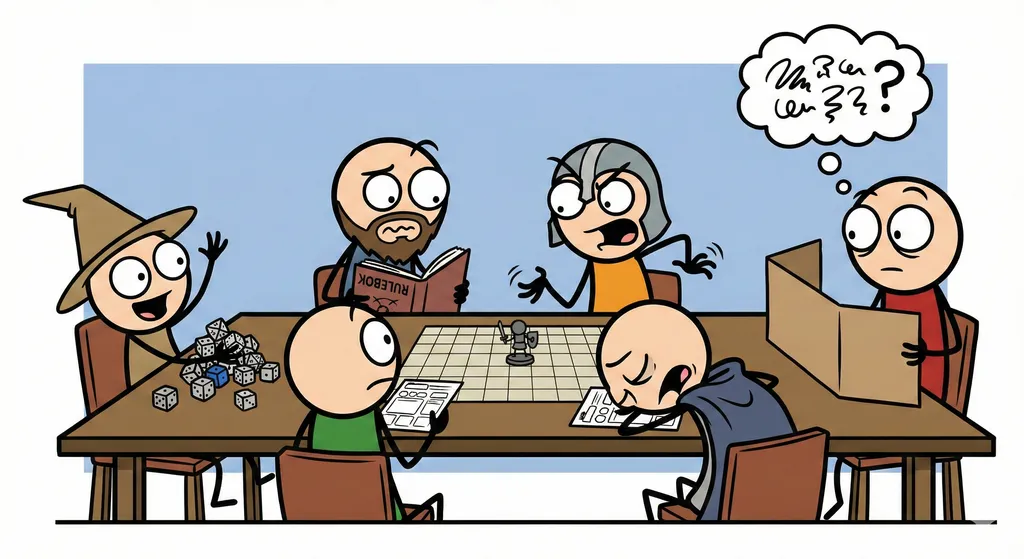
Gnome Stew’s recent reflection, "As Your Table Ages," isn't just a nostalgic look back; it's a vital prompt for every veteran Game Master and player about the evolving nature of our beloved hobby, specifically the *longevity of gaming groups*. This isn't about fading glory; it's about the deep, resonant hum of decades-long campaigns and the practicalities of keeping those stories alive as life inevitably shifts.
The "crunch" of an aging table isn't found in a stat block or a new feat, but in the subtle, yet profound, shifts in how we actually *play*. Shorter sessions, for one, become a necessity. Gone are the all-night D&D marathons mentioned in the article's source; replaced by focused 2-3 hour slots. This demands a tighter narrative, a more efficient GM, and players who understand the value of concise role-playing.
Complexity can also shift. While some groups embrace systems like GURPS for their granular detail, others find solace in lighter, narrative-driven games or streamlined versions of their old favorites. The mechanics of engagement become paramount: how do we keep everyone invested when attention spans might be shorter, or responsibilities outside the game are heavier? This often means a move towards rotating GM duties, shared worldbuilding, or even collaborative storytelling where the burden of narrative generation is distributed.
Accessibility is another mechanical consideration. Physical discomforts can make traditional table setups less appealing. VTTs like Foundry or Roll20, once seen as compromises, become essential tools, offering comfort, ease of access, and often, enhanced visual aids that keep the game vibrant. The "mechanics" of scheduling, once a simple matter of "who's free Friday?", morph into a delicate dance of family commitments, work schedules, and differing energy levels across a multi-decade friendship. This requires robust communication and a willingness to adapt the sacred game night.
The lore of an aging table is the richest tapestry any campaign could hope for. It's not just the stories of dragons slain or empires founded within the game world; it's the meta-lore of *our* shared history. It's the inside jokes that span twenty years, the knowing glances when a player references a character from a long-forgotten 2nd Edition adventure, or the collective memory of that one time the dice betrayed everyone spectacularly.
This shared history creates a unique narrative context. Characters gain depth not just from their in-game actions, but from the real-world experiences of the players portraying them. A paladin played by someone who’s now a parent brings a different gravitas to protecting the innocent. A rogue whose player has navigated complex career paths might approach stealth and negotiation with a nuanced perspective that wasn't present in their youth. The game world itself becomes infused with real-life wisdom, humor, and even pathos.
The setting is no longer just a backdrop; it's a living archive of friendship. Every NPC, every ruined tower, every recurring villain holds layers of personal meaning, tied to moments shared around a table, through different life stages. This is the ultimate "fluff"—the emotional resonance that binds a group together, making each session a continuation not just of a story, but of a shared legacy.
Is this phenomenon good for the game? Absolutely. The aging table represents the ultimate proof of TTRPGs' enduring power. It demonstrates that these games aren't just fleeting pastimes, but deep, meaningful social constructs that adapt and grow with us. The "table feel" shifts from youthful exuberance and boundless energy to a more considered, deeply personal, and often more emotionally resonant experience.
While the pace might slow, the depth often increases. Players, having lived more, bring a richness to their characters and a patience to the narrative that younger tables might lack. GMs, seasoned by years of improvisation and worldbuilding, can craft more intricate plots and compelling NPCs, knowing their players will appreciate the nuance. It fosters a powerful sense of community and continuity, proving that TTRPGs can be a lifelong pursuit, offering connection and creative outlet across decades. It challenges the industry, too, to think beyond the next big release and consider how games can facilitate long-term engagement.
Top Pick: The Crit Sheet's Guide to Long-Term Campaigns
Essential strategies for GMs running multi-year sagas
Check Price on Amazon →Related Stories
Collaborative Worlds: Unlocking Player Agency at the Table
Gnomecast's 'Worldbuilding in the Moment' offers GMs a potent framework for player-driven narrative. This deep dive explores how leveraging player input enriche
Dragon Kings: A Harsh New Dawn for 5th Edition
The original architects of Dark Sun bring their brutal vision to 5th Edition with Dragon Kings. This deep dive examines how a world of psionics and scarcity res
Belladonna's Blitz: Aggro Tactics for Your TTRPG Table
The latest Magic: The Gathering reveal, Belladonna Took, highlights a potent Boros aggro strategy. We dissect how its core principles—rapid token generation and