
The Forge vs. The Printer: GW's Evolving Stance
Games Workshop's latest announcements hint at a shifting strategy regarding 3D printing. We dissect the implications of their new Armageddon releases and promotional tactics on the community.
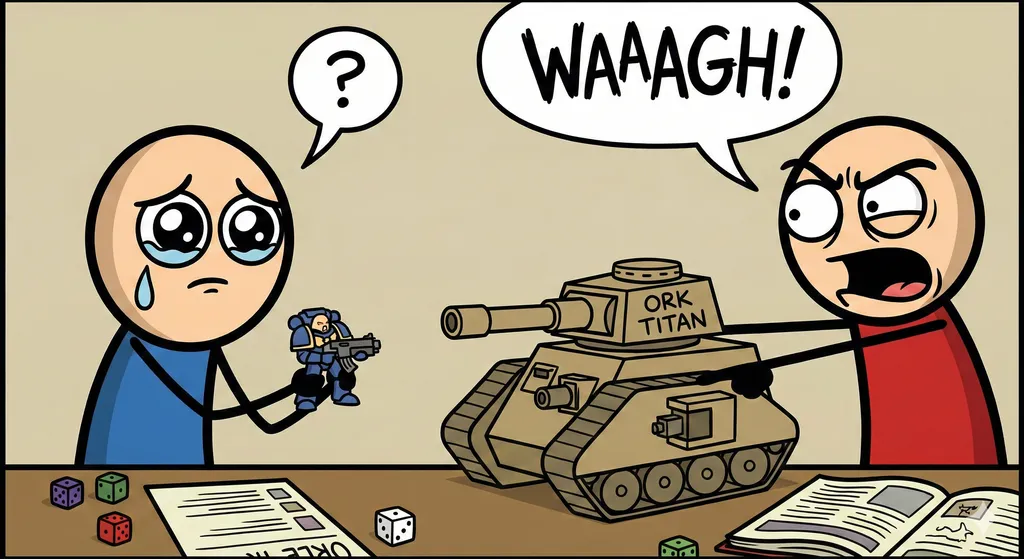
The recent Armageddon reveals from Games Workshop, hot on the heels of their latest promotional push, once again bring into sharp focus the ongoing, often contentious, relationship between the monolithic publisher and the burgeoning world of 3D printing. As veterans of the tabletop, we understand that this isn't merely a corporate squabble; it's a fundamental debate impacting player creativity, accessibility, and the very future of the hobby.
Games Workshop's traditional model relies on tight control over its intellectual property, from the sculpts themselves to the very lore that defines the Warhammer 40,000 universe. This strict adherence provides a consistent brand identity and protects their primary revenue stream: plastic miniatures. However, the advent of affordable 3D printing technology has introduced a paradigm shift. Players now possess the tools to generate proxies, bespoke conversion parts, or even entire armies with an unprecedented degree of customization and, often, at a fraction of the cost. For those looking to dive into the hobby without breaking the bank, exploring reputable third-party bitz suppliers can be a great starting point.
The 'free minis' and 'big 40k giveaway' initiatives, while appearing as generous gestures, can also be interpreted as a strategic play. By offering genuine Games Workshop products directly to the community, they aim to reinforce the perceived value of their official range and perhaps lure hobbyists away from the siren song of the resin printer. This isn't just about charity; it's about market share, IP defense, and maintaining the narrative that official products are the definitive way to engage with the Warhammer 40,000 setting. The mechanics of this conflict are clear: GW offers high-quality, official products and experiences, while 3D printing offers unparalleled customization and cost-efficiency, often challenging the very concept of 'official' components.
From a lore perspective, the conflict between official production and community-driven creation holds a fascinating mirror to the Warhammer 40,000 setting itself. The Imperium of Man, with its rigid dogma and vast, industrial manufacturing apparatus, represents the monolithic publisher. Its doctrine is one of conformity and sanctioned production. Yet, the very soul of the Grimdark often thrives in the shadows: the rogue tech-priest, the Ork Mekboy’s 'kustom' creations, the resourceful Imperial Guard regiment scrounging for parts on a besieged world like Armageddon. These narratives celebrate ingenuity, adaptation, and the ability to wage war with whatever can be salvaged or fabricated. In a way, the 3D printing community embodies this spirit of resourcefulness, creating unique narratives and models that might never see official production, filling gaps, or simply realizing wilder visions for their forces that resonate deeply with the spirit of the 41st millennium.
For the player at the table, this tension manifests in tangible ways. On one hand, official Games Workshop miniatures offer unparalleled quality, consistent scale, and the assurance of tournament legality. Supporting the company directly ensures the continued development of the Warhammer 40,000 universe, its rulesets, and its expansive lore. On the other hand, the accessibility of 3D printing lowers the barrier to entry for many, enabling hobbyists to field armies they might otherwise never afford, or to customize their forces with unique flair that truly makes them their own. As a Game Master, I see the value in both. Narrative campaigns flourish with bespoke terrain and character models, regardless of their origin, enhancing the storytelling experience. Competitive play, however, demands a more uniform approach, making official models a necessity for fair and consistent events.
The true 'table feel' here hinges on mutual respect and clarity. The ideal scenario is a symbiotic relationship where Games Workshop continues to innovate and provide compelling products, while the community’s creative spirit, often fueled by 3D printing, enriches the hobby ecosystem without directly undermining the publisher’s core business. The challenge for Games Workshop is to find a way to embrace, or at least coexist with, this creative surge, perhaps by offering licensed STL files for customization or by focusing their own product lines on innovative designs that 3D printing cannot easily replicate with the same quality or convenience. Until then, the shadow of the resin printer will continue to loom large over the official forge, shaping the future of our beloved hobby in ways both predictable and wildly imaginative.
Top Pick: Warhammer 40,000 Core Rulebook
Essential lore and rules for building your own narrative on the tabletop
Check Price on Amazon →Related Stories
11th Edition Leaks: Space Marines Adapt, Paints Perfect Tone
Whispers of Warhammer 40,000's 11th Edition reveal a tactical overhaul for Space Marines, promising dynamic gameplay. Concurrently, new Tone Pro Paints aim to r
Beyond the Sprues: Abnett's Hive, Lore's Enduring Power
This week's Warhammer Sunday Preview offers no new plastic, but a special edition of Dan Abnett's 'Hive' reminds us of lore's profound impact. It's a crucial mo
11th Ed Land Speeder: Speed, Purgation, & Shifting Skies
Games Workshop reveals new Land Speeder rules for 11th Edition Warhammer 40,000, promising a faster, more dynamic anti-grav gunship. A 14-inch move, 'Purgation