
The Great Unplayed: Decoding Our Collective Gaming Backlogs
The silent phenomenon of unplayed games, dubbed 'The Great Unplayed,' is a systemic challenge woven into the fabric of the tabletop hobby. This deep dive explores its mechanics, lore, and true impact on the player experience.
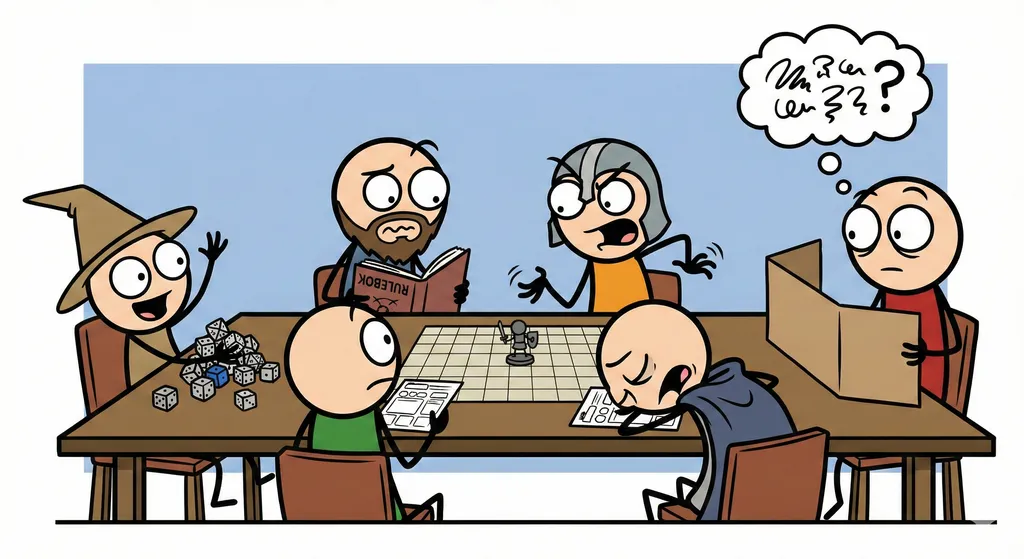
“The Great Unplayed,” published not by a single studio but by the collective gaming conscience, represents perhaps the most insidious, yet widely accepted, challenge facing our hobby today. It’s the formidable backlog of games – miniatures skirmishes unboxed, TTRPG modules unread, eurogames unpunched – that gather dust, not on a “shelf of shame” (a term I find overly dramatic), but in what many of us more charitably call “the maybe pile.” This phenomenon, far from being a personal failing, is a systemic quirk of the tabletop ecosystem, one that warrants a deep dive into its mechanics, its lore, and its ultimate impact on the very essence of play.
At “The Crit Sheet,” we're less interested in self-flagellation and more in the cold, hard crunch of why this happens. The *mechanics* of The Great Unplayed are surprisingly robust, an intricate dance between acquisition and actualization. Consider the 'Acquisition Loop': the dopamine hit of a successful Kickstarter campaign, the allure of a new release, the collector’s impulse to complete a set. Publishers, naturally, feed this with constant new product cycles, limited editions, and the ever-present fear of missing out. For many, the act of *owning* the game provides a significant portion of the satisfaction. Then comes the 'Prep Loop': unboxing, punching out tokens, sleeving cards, reading the rulebook. My own approach, like many veterans, is to tear off the shrink-wrap the moment a game arrives, punch it all, and integrate it into the collection, ready for play. This is a crucial step that many skip, leaving games in pristine, unplayable mausoleums. The final, and often most challenging, is the 'Play Loop': finding players, agreeing on a game, scheduling a session, teaching the rules, and running a compelling experience. The friction points here are manifold, from the cognitive load of mastering a complex new system to the ever-present challenge of adult scheduling. These interwoven loops create a powerful inertia, often preventing even the most dedicated player from pushing a new game to the table.
The *lore* surrounding The Great Unplayed is equally fascinating. It’s the narrative we tell ourselves: “I’ll get to it eventually,” “This is for a special occasion,” or “I’m collecting for future me.” This isn’t just about consumerism; it’s about aspiration. Our collections become a physical manifestation of our gaming identities, representing potential adventures, strategic triumphs, and shared stories yet to be told. The shiny new box isn’t just cardboard and plastic; it’s a promise. The culture of sharing new acquisitions on social media further reinforces this, subtly shifting the focus from playing to possessing. There’s a quiet pride in a well-stocked shelf, even if half of it remains untouched. This collective mythology helps normalize the backlog, transforming it from an anomaly into an accepted rite of passage for the serious hobbyist.
So, what’s the verdict on the “table feel” of this pervasive phenomenon? Is The Great Unplayed good for the hobby? I contend that while it reflects a healthy market and passionate community, its unchecked growth can actively detract from the very joy of play. A constantly growing backlog can induce decision paralysis, leading groups to stick with familiar titles rather than exploring new ones. It can foster guilt, turning what should be a source of relaxation into a chore. More critically, it means countless innovative designs, carefully crafted narratives, and intriguing mechanics never see the light of day, never generating the crucial player feedback that drives the hobby forward. For Game Masters, this can be particularly acute; balancing prep for ongoing campaigns with the desire to try a new system or adventure path often leaves the latter languishing. My advice? Prioritize integration. Embrace tools that streamline the 'Prep Loop' and 'Play Loop.' Consider digital aids like streamlined virtual tabletop platforms to reduce physical setup time and facilitate easier scheduling. Most importantly, reframe your collection not as a monument to acquisition, but as a living library of playable experiences. Challenge yourself to get those games to the table, even if it means a dedicated “New Game Night” once a month. The true value of a game isn’t in its pristine shrink-wrap, but in the stories it helps you create.
Top Pick: Shadowdark RPG
For its elegant, quick-to-learn ruleset that drastically reduces the 'Play Loop' friction for TTRPGs
Check Price on Amazon →Related Stories
The 'New-ish' Paradigm: Sustaining TTRPG Worlds Beyond Hype
Justin Bell's 'Cult of the New-ish' paradigm offers a compelling lens for TTRPGs, emphasizing the value of robust, recently established games over fleeting, bra
Sandy Petersen Unveils Modern CoC: The 1920s Were Never the Point
Sandy Petersen, the legendary creator of Call of Cthulhu, is returning to his beloved system with a contemporary twist. His upcoming 'Big C' project will drag i
The Ground Between: WW1 Wargaming, No Fat, Just Fun
Felix Sonne's 'The Ground Between' offers a free, low-complexity Print and Play hex-and-counter wargame set on the Western Front of World War 1. This editorial