
The Imperium Goes Digital: GW's 3D Print Pivot & 40k's Future
Games Workshop's rumored 3D printing pivot could redefine Warhammer 40,000, empowering hobbyists with new customization options. This shift might even reshape the iconic status of models like the Baneblade.
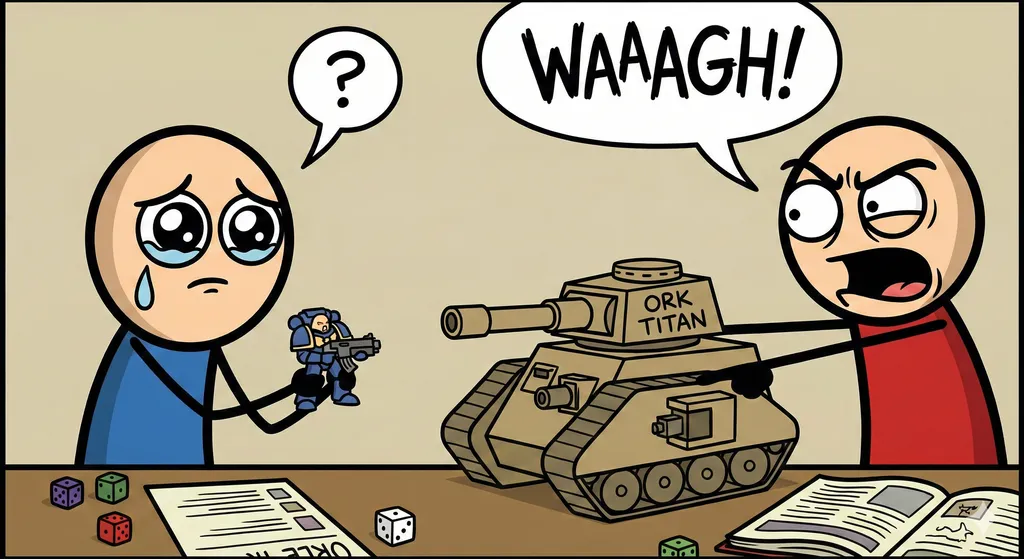
The whispers have turned to roars: Games Workshop, the venerable titan behind Warhammer 40,000, appears to be charting a new course with 3D printing. This isn't merely an incremental policy adjustment; it's a potential seismic shift that could redefine model acquisition, community creativity, and even the fate of iconic war machines like the venerable Baneblade.
For decades, Games Workshop maintained a firm, almost monastic grip on its intellectual property, particularly when it came to the production of physical miniatures. The '3D printing pivot' alluded to isn't about opening the floodgates to entire official model STLs overnight – that's a bridge too far for a company built on physical plastic sales. Instead, the real mechanics of this shift likely involve a strategic softening, perhaps through officially sanctioned accessory packs, licensed third-party creators, or even a 'community content' platform for approved digital files. Imagine being able to legally download and print bespoke armour plates for your Space Marine vehicles, or unique weapon options for your Astra Militarum regiments, designed by GW or licensed partners. This directly addresses the 'new 40k models hidden in plain sight' – the ability for players to create variations and new options that slot seamlessly into existing lore and rules, rather than waiting years for new plastic kits.
The 'RIP Baneblade' is where the crunch truly gets interesting. If Games Workshop leans into modularity and digital design, the monolithic, single-kit super-heavy might see its dominance challenged. Why acquire one fixed Baneblade when you could print custom sponsons, turrets, or even entirely new chassis variations that still fit the super-heavy tank profile? This isn't about replacing the beautiful plastic kit; it's about expanding the definition of what a super-heavy can be on the table. Rulesets would need to adapt to account for this newfound flexibility, perhaps by providing more generic stat blocks for 'super-heavy gun platforms' with points costs for specific weapon loadouts, rather than rigidly defined unit entries. This would be a boon for narrative play and custom army building, allowing for unparalleled personalization.
Within the grim darkness of the far future, the Imperium of Man is a vast, decaying empire reliant on ancient STC (Standard Template Construct) patterns. Yet, necessity is the mother of invention, even for humanity's most dogmatic institutions. This 'pivot' can be elegantly woven into the lore. Imagine Forge Worlds, long isolated, beginning to share digital schematics for field-expedient repairs or localized weapon variants. The 'new models hidden in plain sight' aren't just player creations; they become the desperate, ingenious adaptations of beleaguered Imperial Guard regiments, or the rediscovered patterns of long-lost Mechanicus archives, now accessible via digital means.
The Baneblade, a symbol of Imperial might and engineering prowess, could find its 'demise' not in destruction, but in evolution. Perhaps its fixed design is simply too rigid for a galaxy constantly tearing itself apart. Newer, more adaptable super-heavies, built upon modular chassis and quickly fabricated components – a reflection of a galaxy in constant flux – could emerge. This doesn't diminish the Baneblade's legendary status; it merely places it within a broader context of Imperial ingenuity and desperation, where even the sacred STC patterns must sometimes yield to the brutal realities of war.
For the average player, this pivot could be a revelation. The barriers to entry for customization, long a hallmark of the hobby, would drop dramatically. Imagine being able to field truly unique regiments or warbands without resorting to expensive resin kits or complex scratch-building. Narrative campaigns would explode with creativity, as GMs and players craft bespoke units tailored to their specific stories. Competitive play, however, presents a significant hurdle. Ensuring fairness and consistency with a proliferation of custom or semi-official 3D printed components would require robust guidelines from GW, potentially leading to 'approved STL lists' for official events.
The community's response will be fascinating. While some purists may lament any departure from traditional plastic, many will embrace the newfound freedom. This isn't just about reducing costs; it's about empowering the hobbyist, fostering a deeper connection to their models, and allowing their imagination to truly take flight on the tabletop. It’s a bold move, one fraught with both opportunity and peril, but if managed correctly, it could usher in an unprecedented era of creativity and accessibility for Warhammer 40,000.
Top Pick: Warhammer 40,000 Leviathan Box
For a fantastic core experience with diverse miniatures and the latest ruleset
Check Price on Amazon →Related Stories
The Iron Gauntlet: GW's Latest 3D Printing Enforcement
Games Workshop's recent crackdown on 3D printing creator PropaneProd has ignited a fiery debate within the community. This incident puts a harsh spotlight on th
Puppetswar's Orc Chieftain STL: WAAAGH! for Personal Expression
Puppetswar's new Orc Rider Chieftain STL brings a distinct, anti-establishment vibe to your 40k Ork forces. This deep dive examines its mechanical implications,
GW's 11th Ed Roadmap: A Strategic Shift for 40k
Games Workshop unveils a comprehensive roadmap for Warhammer 40,000's 11th Edition, alongside crucial Necromunda pricing updates and the highly anticipated Asta