
The Legend Rule: A Limited Legend or a Limiting Factor?
Magic: The Gathering's iconic Legend Rule, designed to make unique characters shine, is facing scrutiny in Limited formats. With an increase in lower-rarity legendary creatures, players are grappling with its impact on drafting strategy and gameplay feel.
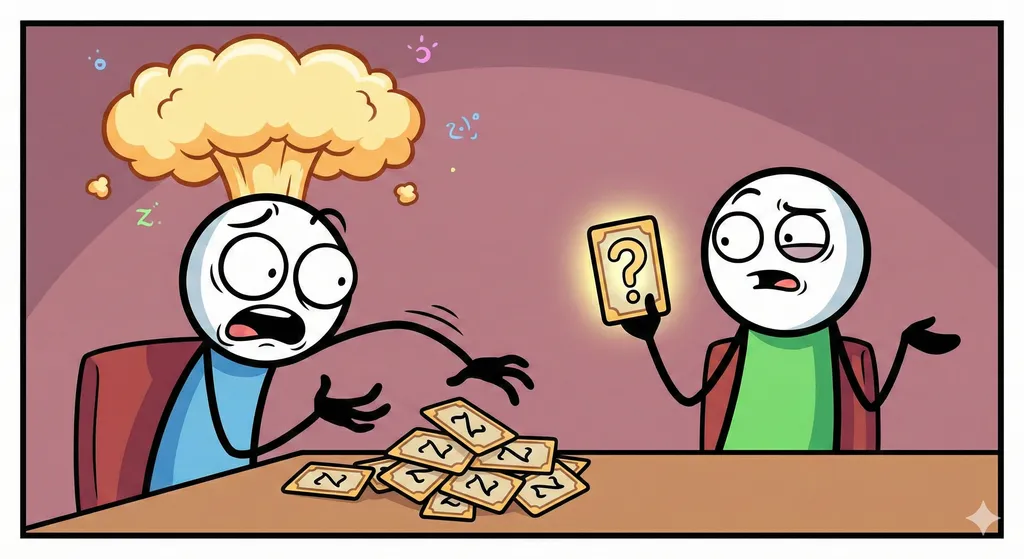
Magic: The Gathering, from Wizards of the Coast, has always prided itself on evolving its core mechanics, but few rules carry as much historical weight and current controversy as the 'Legend Rule.' What was once a simple, elegant solution to maintain the gravitas of iconic characters is now, in the crucible of Limited play, presenting a compelling design challenge. The recent proliferation of lower-rarity legendary creatures has forced a critical re-evaluation: Is the Legend Rule still serving the best interests of Draft and Sealed, or has it become an anachronism that actively hinders the format?
For the uninitiated, the Legend Rule dictates that if a player controls two or more legendary permanents with the exact same name, they must choose one to keep and put the rest into their owner's graveyard. This isn't a 'destroy' effect; it's a state-based action that ensures only one copy of a specific legendary character, artifact, or land can exist under a single player's control at any given moment. Historically, this was rarely an issue in Limited. Legendary creatures were almost exclusively found at rare or mythic rare, making it highly improbable for a player to draft, let alone play, multiple copies of the same legend.
However, design philosophy has shifted. Recent sets have seen a significant increase in uncommon and even common legendary creatures. This change, while offering exciting build-arounds and flavorful commanders for Constructed formats, has a profound and often frustrating ripple effect in Limited. Suddenly, players are faced with difficult decisions in the draft. Do you take that second powerful uncommon legend, knowing full well it will clash with the first if both hit the battlefield? Or do you pass on a strong pick for a lesser card that won't create a legendary 'logjam'? This isn't theoretical; it's a frequent occurrence. The strategic depth it adds is debatable; the frustration it causes when a key legendary creature is 'self-destructed' by its identical twin is undeniable. Effects like Mirror Box exist to mitigate this, but they are rare and often too slow for the tempo of a typical Limited game, making them a non-factor in this discussion.
The very concept of a 'legend' in Magic's lore is steeped in uniqueness and power. A legendary creature isn't just a powerful spell-slinger; it's a planeswalker, a god, an ancient dragon, or a pivotal character within the plane's ongoing narrative. They are singular entities whose presence warps reality. The Legend Rule was born from this narrative necessity, ensuring that Jhoira, Weatherlight Captain, felt like *the* Jhoira, not one of three identical Jhoiras fighting alongside each other. It cemented their status as individuals of unparalleled significance.
But what happens to that narrative weight when every other uncommon in a pack is legendary? Does the term 'legendary' lose its punch when you're forced to bin a powerful creature because you drew its identical twin? The lore suggests these are unique entities, yet the game's current card distribution in Limited implies a glut of them. This dissonance between mechanical application and thematic intent is where the current debate finds its sharpest edge. The rule aims for flavor, but the current card design can sometimes undermine it, making 'legendary' feel less like a badge of honor and more like a conditional drawback.
So, is the Legend Rule still a net positive for Magic: The Gathering Limited? The answer, as with many nuanced design questions, isn't a simple 'yes' or 'no.'
On one hand, keeping the Legend Rule forces players to think more carefully about their picks and deck construction. It adds a unique strategic layer to drafting, where assessing the probability of drawing multiple copies of a legendary permanent becomes a skill test. It can lead to interesting moments of resource management, deciding when to deploy a second copy as a 'bluff' or to bait removal. For veteran players who relish intricate decision-making, this can be seen as a feature, not a bug. Furthermore, it prevents scenarios where a player could simply stack multiple copies of a powerful uncommon legend, potentially leading to repetitive and less interactive board states.
However, for a significant portion of the player base, particularly those newer to the game or those who simply want to enjoy a more straightforward game of Magic, the Legend Rule in its current application can feel punitive. It's frustrating to open or draft a powerful rare or uncommon, only to have it effectively 'counter' itself. This often leads to 'dead' cards in hand or on the battlefield, diminishing the perceived value of an otherwise exciting pick. The current design trend of more lower-rarity legends amplifies this problem, turning what was once a rare occurrence into a common frustration.
Perhaps the solution isn't to abolish the Legend Rule entirely for Limited, but to re-evaluate the frequency and power level of lower-rarity legendary creatures. Or, more controversially, introduce a specific 'Limited Legend Rule' that allows players to control multiple copies of legendary permanents *if* they were drafted or opened in the same event. This would preserve the 'uniqueness' in Constructed while alleviating the friction in Limited. The core of Magic's appeal is its depth, but that depth should enhance, not detract from, the joy of playing. As Limited strategy guides often highlight, the best formats strike a balance between complexity and intuitive play. The Legend Rule, as it stands in modern Limited, is leaning precariously towards the wrong side of that balance. It's time for Wizards to consider whether the flavor it preserves is worth the mechanical friction it creates at the casual table.
Top Pick: Magic: The Gathering Gift Bundle
Perfect for new and returning players looking to jump into the game with a curated collection.
Check Price on Amazon →Related Stories
Standard Stays Fast: WotC's Latest B&R List Raises Eyebrows
Wizards of the Coast released its latest Banned and Restricted list, notably leaving Standard untouched despite previous concerns. While Pauper and Legacy saw t
Ultron's Artifact Army: Analyzing a New Commander Overlord
Ultron, Artificial Malevolence, from the new Marvel Super Heroes set for Magic: The Gathering, offers a unique colorless Commander experience. This deep dive ex
Legacy Feels the Burn: Candelabra of Tawnos Banned
Wizards of the Coast has announced a significant shift in the Magic: The Gathering Legacy format, removing Candelabra of Tawnos from play. This move targets spe