
The LFG Conundrum: Forging Your Gaming Community
The Tabletop Bellhop recently tackled the age-old question of finding a gaming group. We dissect the practicalities and social nuances of building a thriving community, from online forums to local game stores.
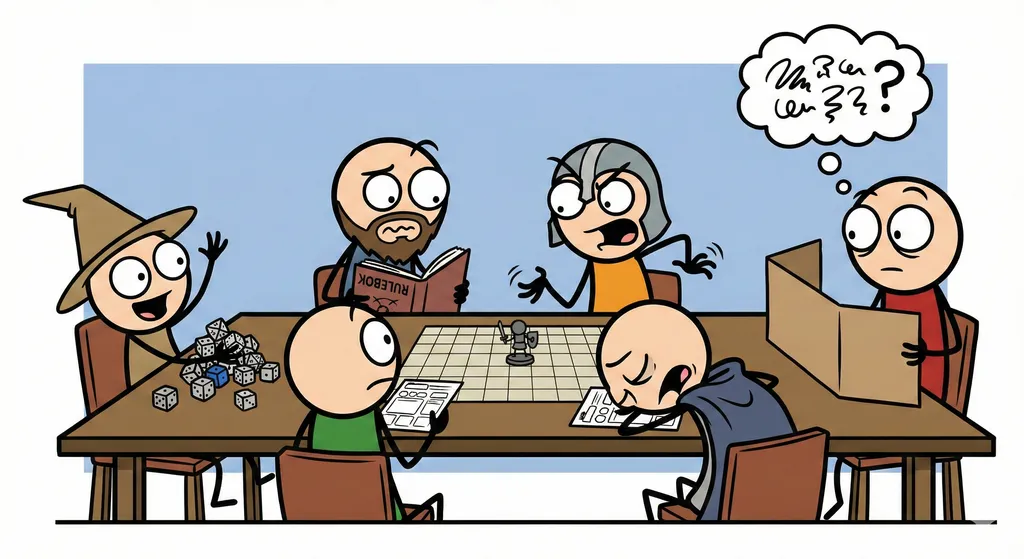
The Tabletop Bellhop Gaming Podcast, in its 310th episode, "Looking for a Group: Finding people to play board games with," recently dropped a much-needed conversation for the tabletop community. It's a universal truth: no matter how many rulebooks you own, how many miniatures you paint, or how intricate your worldbuilding, the greatest game remains unplayed without a table to bring it to life. This isn't just about finding *any* warm bodies; it's about forging the right connections, building a cohesive unit that elevates shared experience above mere mechanics. Whether you're a seasoned GM seeking intrepid adventurers for a sprawling campaign or a newcomer hoping to crack into the complex social dance of a dedicated Commander Format playgroup, the quest for a group is often the first, and most daunting, challenge.
From a purely mechanical standpoint, the "how" of finding a group has evolved dramatically beyond the old bulletin board at the comic shop. Yet, the principles remain surprisingly robust. Your Local Game Store (LGS) is still king for organic, face-to-face connections. Attend open game nights, check their community boards, or simply strike up conversations while browsing the shelves. Many stores host regular D&D Adventurers League or Warhammer 40,000 skirmish days, which are prime opportunities to mingle. Online, the landscape is vast and varied. Dedicated virtual tabletop platforms like Roll20 and Fantasy Grounds boast robust LFG tools. Discord servers, whether for specific games like Kill Team 2024, publisher communities, or general tabletop hubs, are bustling with activity. Reddit's r/lfg remains a powerhouse for both local and online searches, allowing for highly specific requests. Apps like StartPlaying.Games connect players with professional Game Masters, offering curated, paid experiences that often guarantee a certain quality of play and commitment. The "crunch" here is about casting a wide net, clearly articulating what you're looking for – system, playstyle, frequency, even your preferred power level – and being prepared to commit to a "session zero" that establishes expectations. Don't underestimate the power of social circles; friends of friends, work colleagues, or even community groups can harbor hidden gamers.
The "lore" of a gaming group, the unwritten social contract, is as vital as any character sheet or spell list. It's the shared history, the inside jokes, the collective memory of triumphs and defeats that truly defines a table. A group functions on trust – trust that everyone will show up (or communicate if they can't), trust that the GM has prepared, and trust that players will engage with the narrative collaboratively. Dealing with anxiety, a common hurdle, often boils down to starting small. Join a one-shot, or an existing group that's open to new members, rather than trying to organize a full campaign from scratch. Age gaps, too, become largely irrelevant when players share a genuine passion for the game and mutual respect for each other's perspectives. The "lore" dictates that a good group isn't just about playing a game; it's about building a miniature society, a temporary fellowship united by shared imagination. It's the meta-narrative that underpins every roll of the dice, every strategic decision in a Eurogame, or every tactical maneuver in a skirmish.
So, is this advice good for the game? Unequivocally, yes. The Tabletop Bellhop's discussion reinforces the fundamental truth that our hobby is inherently social. By dissecting the practicalities and acknowledging the common anxieties, they empower players to overcome the initial hurdle. A thriving tabletop community, built on accessible advice for group formation, is crucial for the health of the entire industry, from indie TTRPGs to blockbuster D&D 5th Edition releases. When players can easily find compatible groups, engagement deepens, retention improves, and new products find eager tables. A well-formed group transforms a rulebook into an epic saga, a handful of cards into a strategic masterpiece, or a collection of miniatures into a living battlefield. The "table feel" isn't just about the tactile satisfaction of dice in hand; it's the electric energy of shared discovery, the camaraderie forged in the crucible of collaborative storytelling. For GMs, a cohesive, respectful group is the ultimate reward, turning the often-arduous task of preparation into a joyous act of co-creation. Ultimately, the advice offered by Tabletop Bellhop is a foundational spell in the GM's grimoire, a critical insight for anyone looking to truly experience the magic of tabletop gaming.
Top Pick: Your Local Game Store
The best place to start building local connections and discovering new games.
Check Price on Amazon →Related Stories
Chronos Engine: Echoes & Agency in TTRPG Storytelling
Aetherforge Games' Chronos Engine introduces a revolutionary Dynamic Causality System. This mechanic empowers players to collaboratively shape game lore and his
The Holiday TTRPG Dilemma: Streamlining for the Table
Every veteran GM knows the struggle: introducing complex hobby games to casual players. We dissect how games like 'Mythic Mirth: The Holiday Helper Edition' tac
Aetherbound Expeditions: Charting the Sundered Isles
Arcane Foundry Games' latest crowdfunding effort for Aetherbound Expeditions promises sky-high adventure and deep tactical play. We dissect how its new 'Zephyr