
The Spike Feeders Crown: A Deep Dive into Commander's Competitive Soul
The Spike Feeders and Star City Games bring competitive Commander to the fore with their Champions Bracket. We dissect the mechanics and meta-implications of crowning a true champion in a format known for its variability.
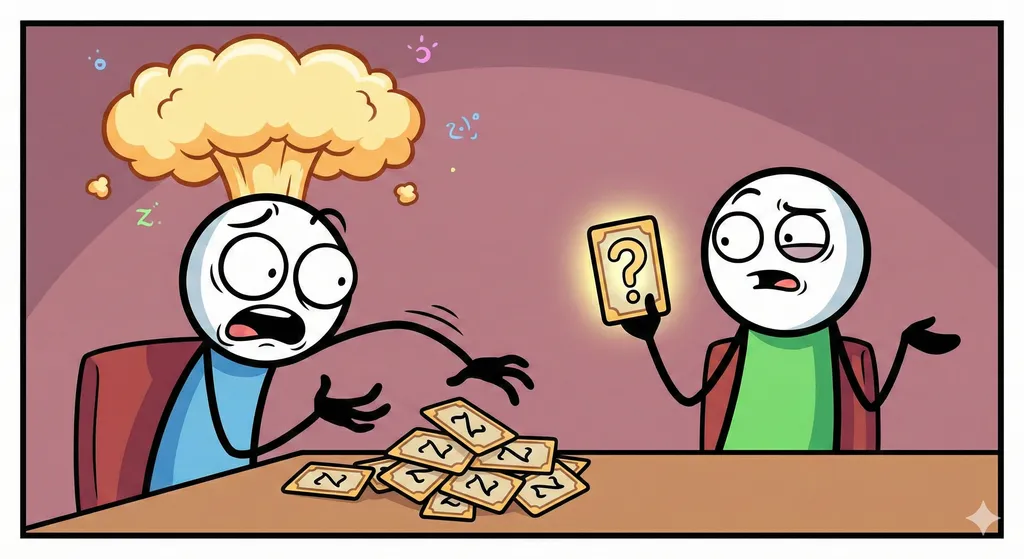
The gauntlet has been thrown, and the battle lines drawn: The Spike Feeders, in collaboration with Star City Games, have unfurled their Commander Champions Bracket, promising to crown the undisputed champion of champions in Magic: The Gathering's most beloved format. This isn't just another casual pod; it's a calculated clash of titans, a high-stakes demonstration of deck construction, strategic prowess, and the nuanced interplay that defines competitive Commander.
At first glance, a 'Champions Bracket' for Commander might seem a contradiction. The format, after all, is famously designed for social interaction and varied power levels, not rigid elimination. Yet, The Spike Feeders have consistently navigated these waters, showcasing what a truly competitive iteration of Commander can entail. The 'crunch' here isn't just about individual card interactions, but the meta-game of the bracket itself. What constitutes a winning strategy in a multi-game, multi-opponent format? Is it pure speed, overwhelming resource denial, or a carefully constructed stax lock that grinds opponents to a halt?
The implicit ruleset for such a bracket demands a level of transparency and agreement that extends beyond the official Commander Rules Committee's guidelines. We're talking about 'Rule 0' elevated to an art form. Decks entering this arena are almost certainly operating at cEDH (competitive Elder Dragon Highlander) power levels, where infinites are expected, fast mana is ubiquitous, and interaction is paramount. The 'mechanics' of the bracket likely involve predetermined pod assignments, potentially a points system for initial rounds, culminating in a single-elimination final pod. Crucially, the unspoken mechanic is adaptation: how does a player pilot their established 'champion' against unfamiliar archetypes, or against known rivals who might have teched specifically against them? The true mechanic isn't just the cards, but the metagame read, the threat assessment, and the political maneuvering inherent in a four-player free-for-all. The pressure of a tournament setting amplifies every decision, turning common interactions into critical junctures.
Beyond the cold calculus of win rates and turn counts lies the rich 'fluff' that transforms a mere tournament into a compelling narrative. Each 'champion' deck isn't just a pile of 99 cards and a commander; it's a character, a story. Think of the legendary commanders themselves: Kenrith, the Returned King, a beacon of multi-color flexibility; Najeela, the Blade-Blossom, a relentless engine of aggression; or even a more niche choice, piloted to perfection, becoming an underdog legend. These decks carry the legacy of their pilots, their countless hours of tuning, their triumphs and defeats in previous games. The bracket itself becomes a saga: the plucky contender upsetting a seasoned veteran, the dominant force sweeping through their opponents, the dramatic top-deck that snatches victory from the jaws of defeat. This is the emergent storytelling that TTRPG players know and love, translated into the card table. The community, watching these games unfold, isn't just observing; they're invested. They're rooting for their favorite commanders, debating lines of play, and celebrating the moments of brilliance. It's a collective narrative, woven live, demonstrating the power of shared experience in tabletop gaming.
So, what does a Commander Champions Bracket mean for the average player at their kitchen table or local game store? It's a double-edged sword, but overwhelmingly a positive one. On one hand, it showcases the pinnacle of competitive Commander, offering invaluable insights into high-level deck construction, optimal sequencing, and advanced threat assessment. Aspiring cEDH players or those looking to 'power up' their casual decks can learn volumes from watching these masters at work. It demystifies the often-intimidating world of competitive play, making it accessible through engaging content. On the other hand, it reinforces the notion that Commander *can* be brutally competitive, a fact some casual players prefer to ignore. However, this isn't a detraction; it's a clarification. The bracket doesn't dictate how *you* play Commander; it simply illustrates *a way* to play it, a path for those who seek the thrill of high-stakes optimization.
The 'table feel' derived from watching this bracket is one of intense engagement and learning. It sparks conversations about the meta, about card choices, about the very philosophy of Commander. It encourages players to think critically about their own decks and playstyles, without necessarily forcing them into a competitive mold. It’s a masterclass in strategic thinking, demonstrating how every decision, from deck construction to in-game actions, ripples through the outcome. For me, as a GM, it's a testament to how established systems can be stretched, adapted, and re-contextualized to create new, compelling experiences. It's a vibrant expression of community creativity and competitive spirit, proving that even a format as diverse as Commander has its champions. Commander Legends: Battle for Baldur's Gate.
Top Pick: The Lord of the Rings: Tales of Middle-earth Commander Decks
Beautifully crafted precons with potent new cards and beloved lore.
Check Price on Amazon →Related Stories
The Price of Power: Commander's Shifting Social Contract
A recent Star City Games feature highlights high-stakes Commander, sparking debate on the format's core identity. We examine how competitive play and card value
Fan Decks: Commander's True Architects Revealed
Star City Games' latest Commander VS episode highlights fan-submitted decks, proving that the format's most innovative strategies often emerge from its vibrant
Unleashing the Pack: A Deep Dive into Magic's Canine Commander Potential
The buzz around 'Canine Commander' hints at a powerful new tribal archetype for Magic: The Gathering's EDH format. We dissect the mechanics, lore, and table fee